Inspiration
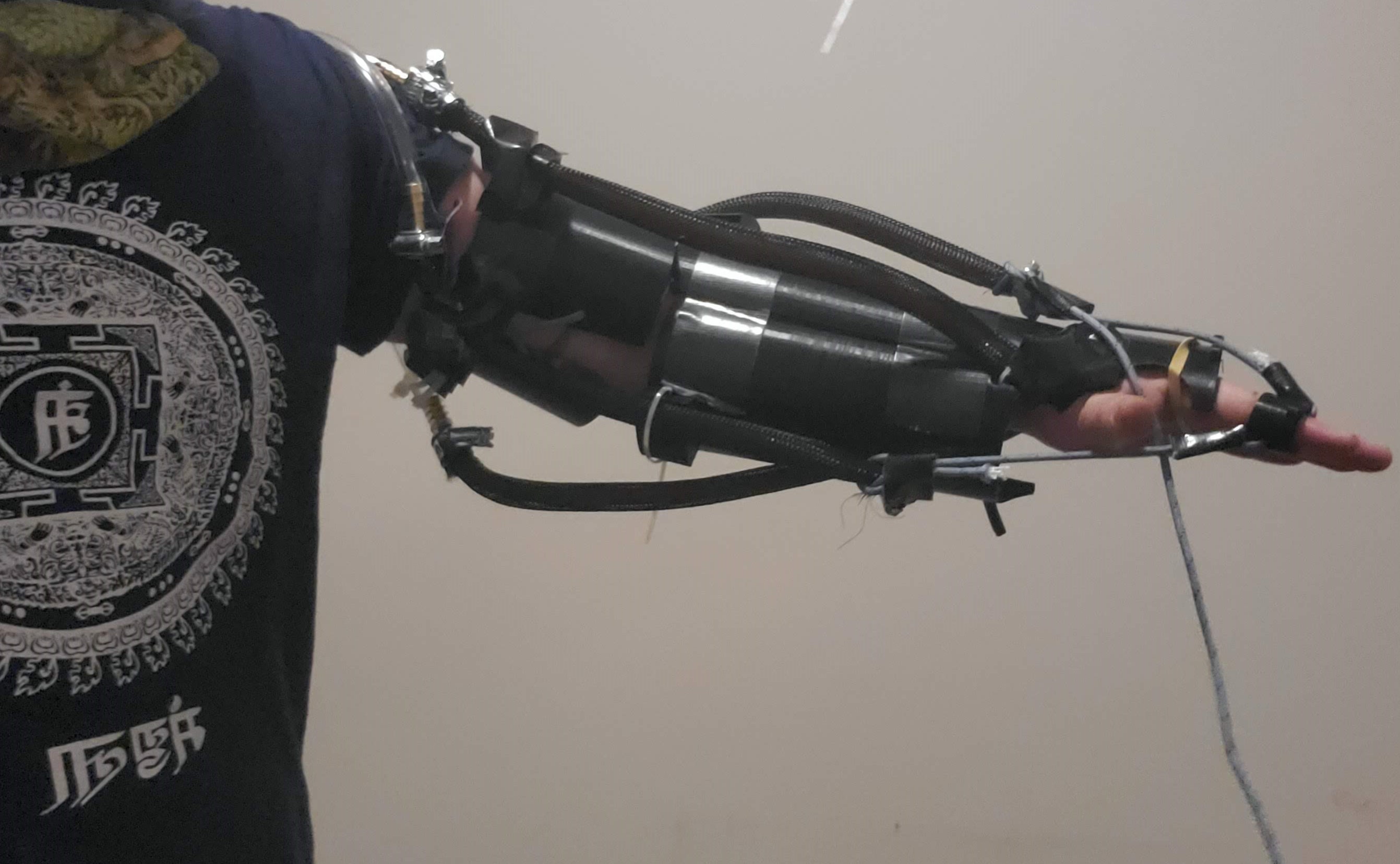
This device addresses the need for assistive technology for people who've lost control of their upper limbs as well as people who are undergoing rehabilitation. The inspiration behind this was a friend of one of the teammates, Max who could use this piece of Assistive Tech. Loss of upper limb control causes a lack of functionality and difficulty especially for many people in developing countries with fewer available and affordable technology. So, we've developed a modern but low-cost prosthetic device specifically under 300$ that has been rapidly manufactured using three-dimensional printing (3D printing) of plastic materials, rubber muscles, solenoid, pressure regulation using an air compressor and can be easily controlled by users using an android application.
What it does
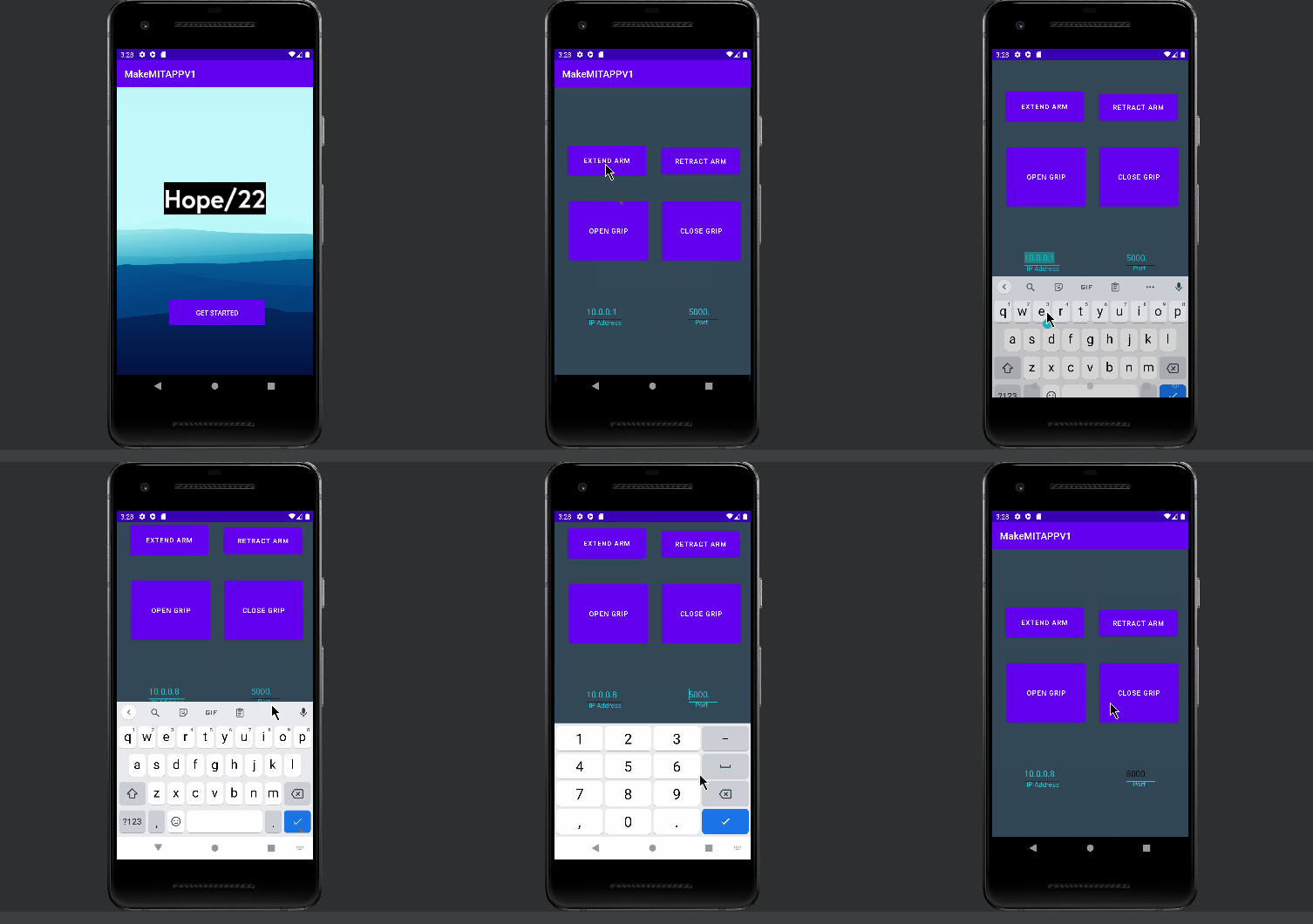
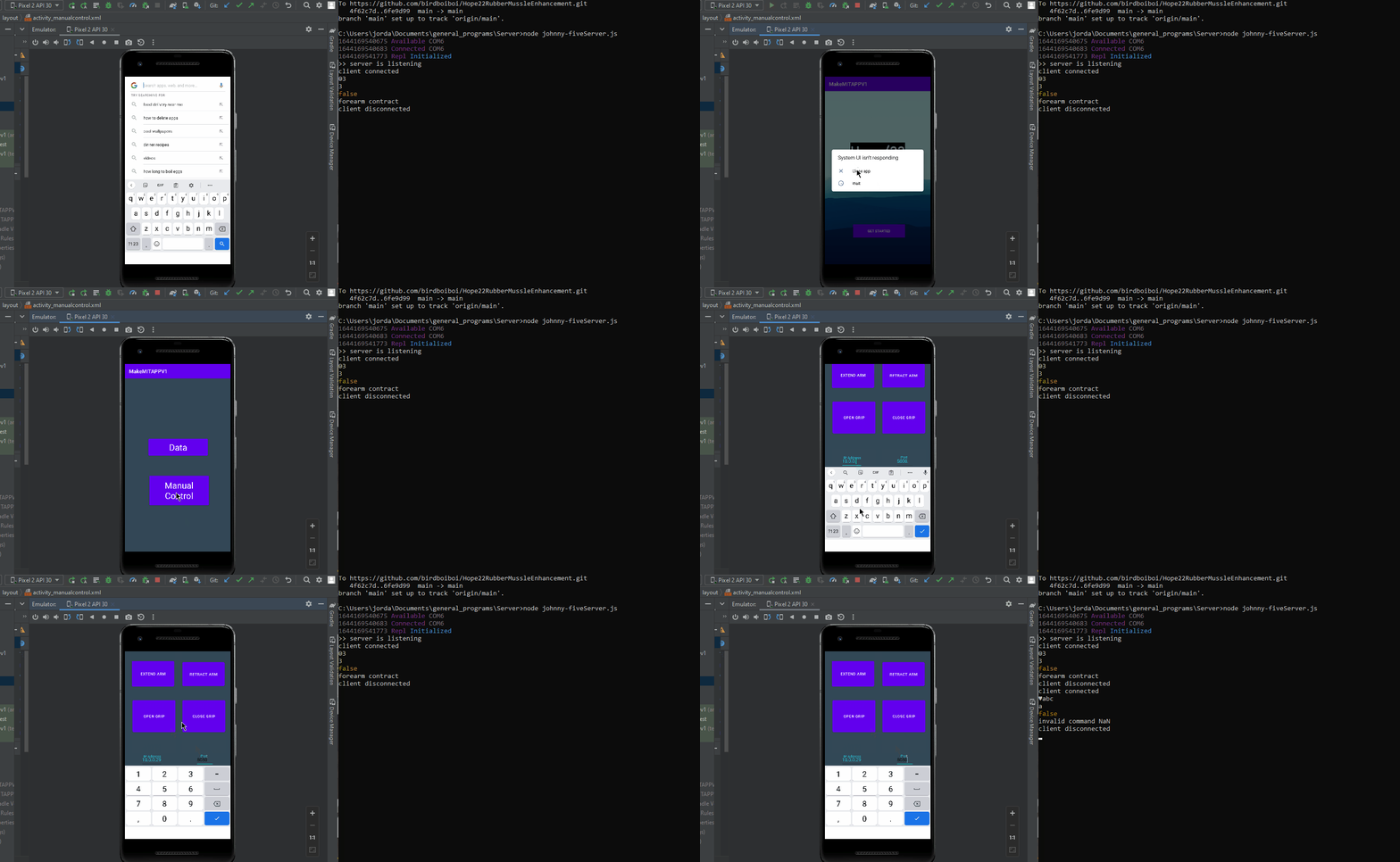
The Soft Rubber Muscles contract and pull the string attached to it on receiving the electrical signals generated by the muscles from the sensors and Tension in the string amplifies the motion hence serving the purpose. In addition, an android app can be used to connect to the node.js server and manually control the air pressure outputs using TCP socket programming.
How we built it
We built it using 3-D printed parts supporting the 4 long rubber muscles constructed with rubber tubing, gorilla tape, 1/4" fittings, 1/4" aluminum shaft, and mesh sleeve. These muscles contract when pumped up with air. The muscles were fastened with tape and zip ties. Android studio was used to build the mobile application and Jhonny-five dependency was used with a node.js server.
Challenges we ran into
The Hardware challenges included The EMG sensor being not optimal which was solved by slowing down the refresh rate leading to improved accuracy. Another problem was Mounting the actuators and preventing leaks with metal clamps and Teflon tape. The Software challenges included the networking using TCP socket program to be refined to a workable code and connection across different devices asynchronously with the required delay. We had to change the first choice of the server to Node.js and code that from scratch for the backend.
Accomplishments that we're proud of
Reaching a workable device with an effective application sync seemed far-fetched until it was done within the given time frame, mostly over a weekend with no teammate having previous knowledge/work with socket programming.
What's next for Hope/22
The next step would be extending it to serve a full-body exoskeleton and addition of more sensors with subsequent changes in the mobile application.

Log in or sign up for Devpost to join the conversation.