-
-
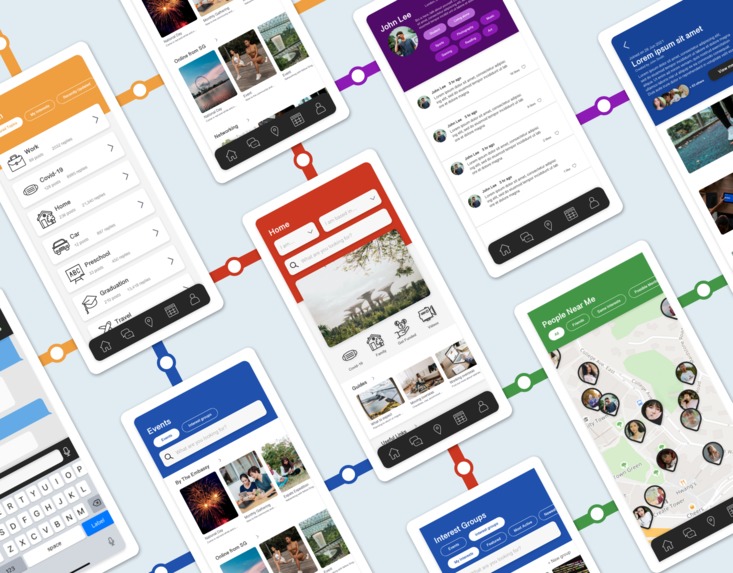
Adobe XD Prototypes
-
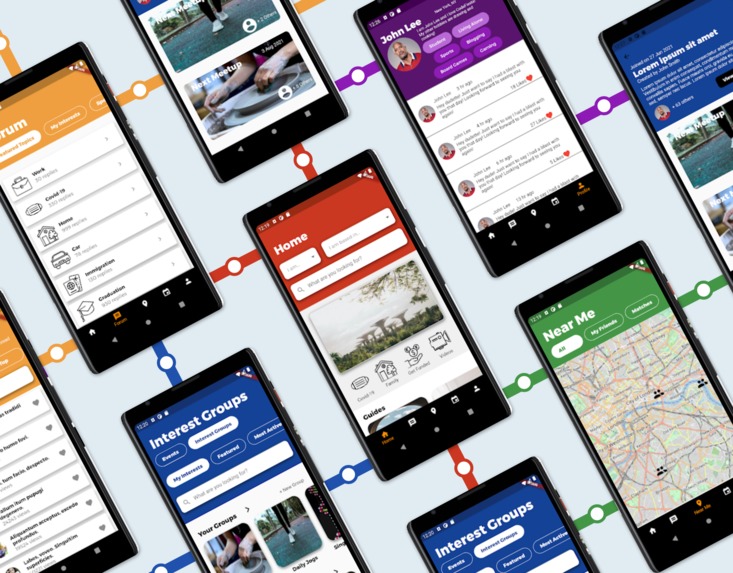
Flutter Prototypes
-
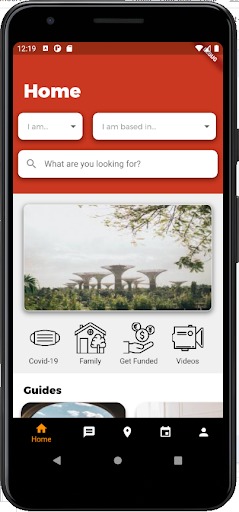
Homepage
-
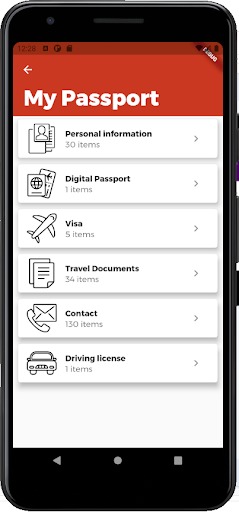
My Passport
-
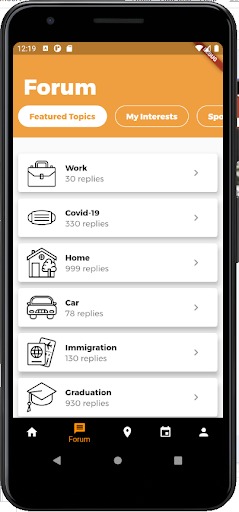
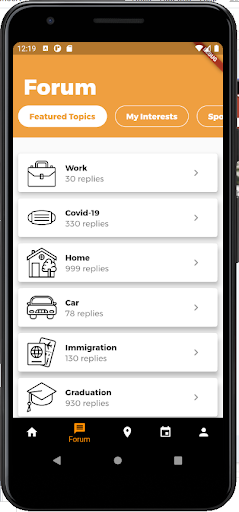
Forum
-
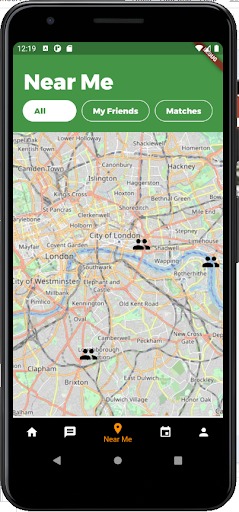
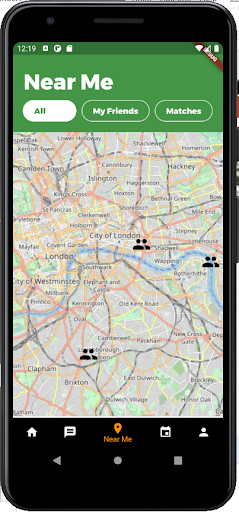
Near Me
-
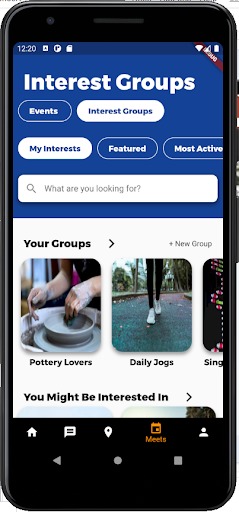
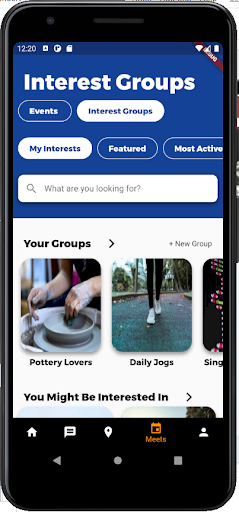
Interest Groups
-
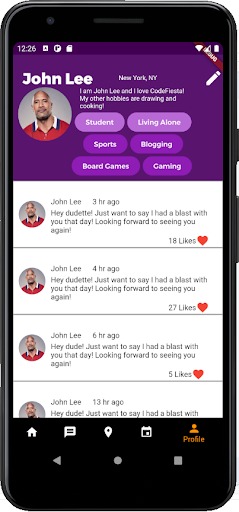
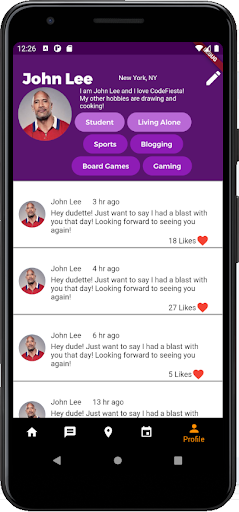
Profile
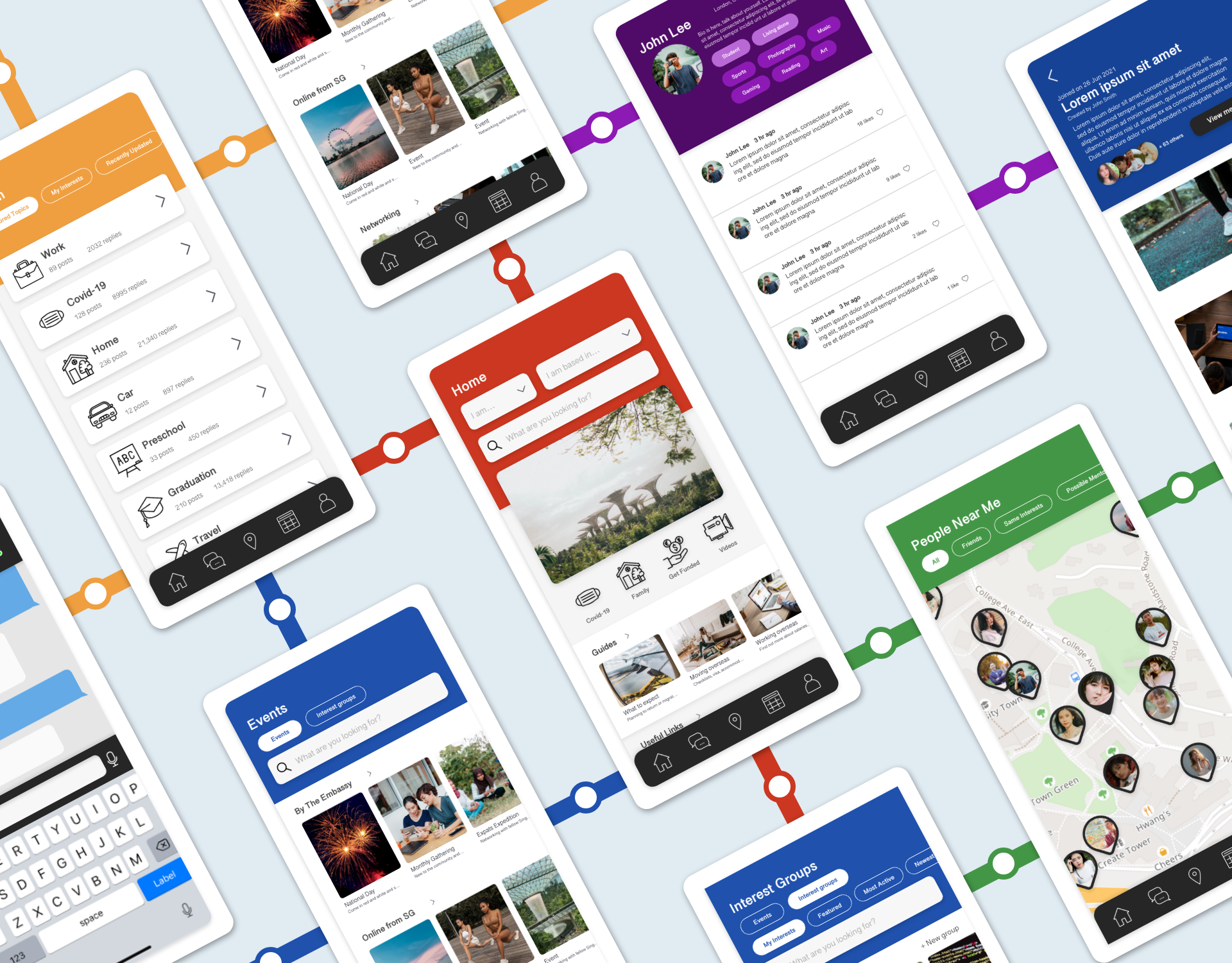
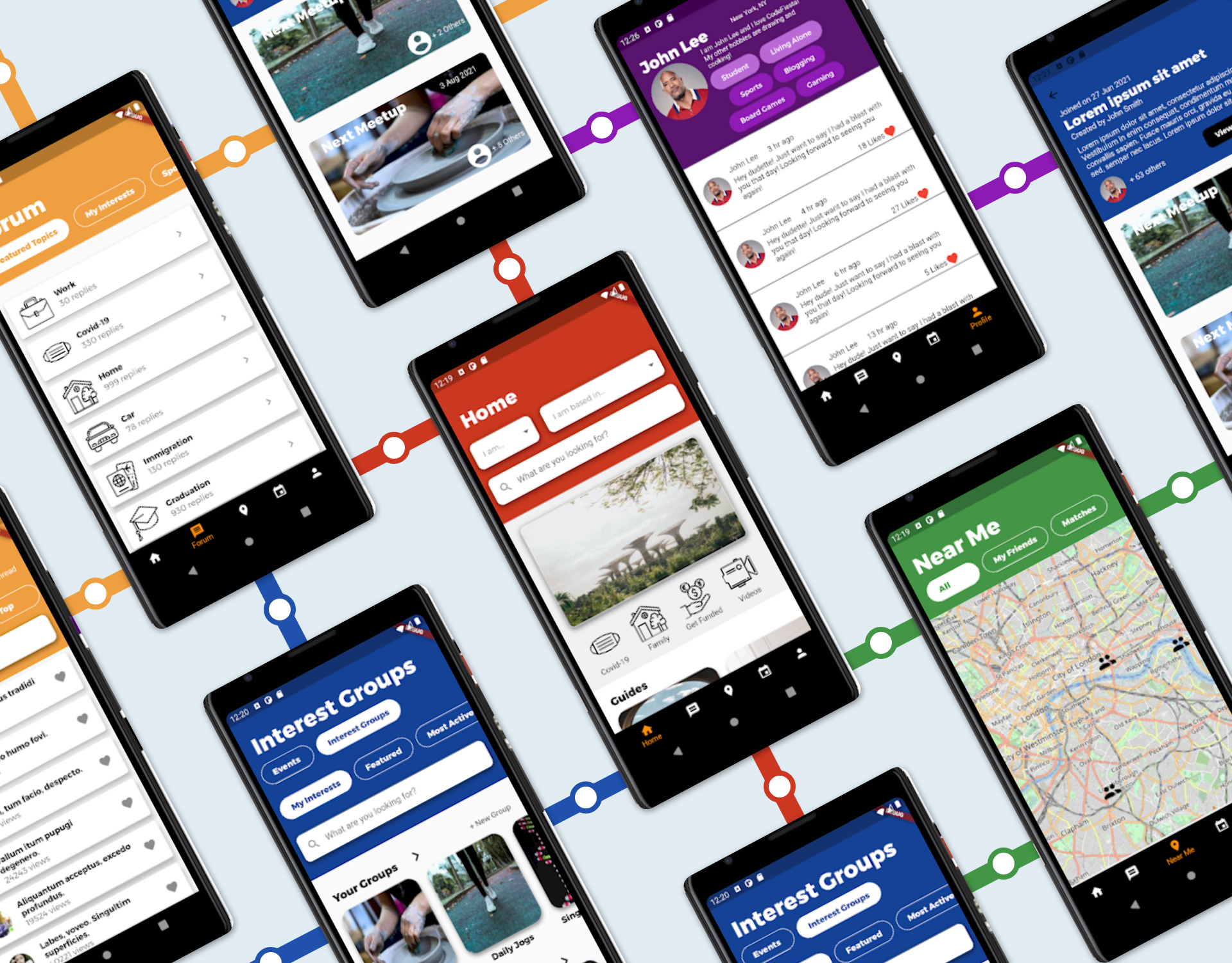
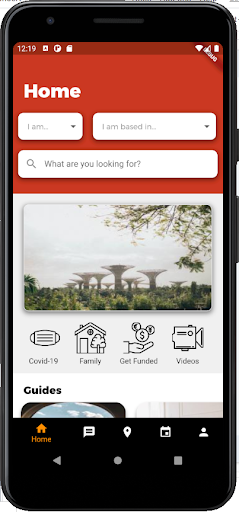
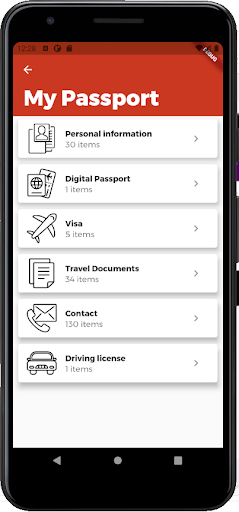
Tagline
Connects You To Home While You’re Away
Inspiration
To ease the transition of relocating and improve the quality of life while living abroad, it is common for travellers to make preparations ahead of time by turning to platforms such as Facebook, Reddit, Hardwarezone and the websites of embassies, the Ministry of Foreign Affairs (MFA), Immigration & Checkpoint Authority (ICA) and Ministry of Health (MOH). During which, travellers often find themselves getting overloaded with information they simply do not need, feeling lost and unable to find a familiar Singaporean community that share similar interests in the destination country/state/city.
Through qualitative analyses, their problems were distilled into informational and social needs. Using a human-centric approach, our team asked how might we streamline existing, reliable information from the various government agencies, yet leverage upon the effectiveness of forums and social media platforms to create an all-in-one application to satisfy these needs, improving the quality of life overseas, even before travellers were to depart.
What it does
Based on the needs of travellers, the core features include enabling users to find useful information, keep track of essential information, find and join Singaporean communities who share similar interest groups and participate in events organised by Singaporeans or the Singaporean embassy abroad.
In acknowledging the importance of user retention in driving scalability and sustainability, we added personalisation, privacy and security features, so as to deliver a pleasant and satisfying user experience.
How we built it
Using the theme of “Connects You To Home While You’re Away”, we were inspired by design elements of the MRT, the rail network in Singapore that connects us together. Incorporating similar typography and colour schematics, we translated our sketches for HomeAway into an interactive interface using Adobe XD. After several iterations of development, the interface was assembled into a mobile application using Flutter, written in Dart on the frontend, and powered by Firebase on the backend.
Challenges we ran into
Everyone in the team was new to hackathons, hence we were unfamiliar with the process of research, ideation, implementation and refinement of ideas. In the domains where we found ourselves to be lacking, we had to be adaptive to learn fast by reading documentation and internalising tutorials, so as to be better equipped to articulate and present our ideas.
In light of the pandemic, maintaining clear communication was a hurdle to overcome as we held all our meetings online. Some of us worked part-time jobs, some had classes to attend, some fell ill after getting vaccinated. All these played a part in delaying progress towards our objectives. Despite these factors, we were not afraid to ask questions when in doubt and remained patient when answering these questions. In doing so, we maintained communication lines and managed to remain on task.
From the technical perspective, we encountered issues with exporting Adobe XD designs to Flutter. As a result, we abandoned the idea of building HomeAway with the assistance of importing Adobe XD elements, and had to resort to constructing HomeAway from scratch. On top of that, some of us had no prior experience using Flutter and had to learn how to use the platform on the spot, while trying to create the application. This was a significant obstacle as we worked tirelessly to implement our prototype into a usable mobile application.
Accomplishments that we're proud of
In all honesty, we did not expect our team to complete the development cycle, let alone qualify for the finals. It was only halfway through the hackathon, during our consultation with our mentor, did we realise that our ideation was far from ideal. That kicked us into overdrive. In a short span of time, we managed to research, ideate, design and construct HomeAway, along with the deck of slides that showcased and explained our thinking process.
What we learned
The team learnt the importance of user journey mapping in design thinking to identify potential problems that could be solved with technology. In addition, empathising with the target user by asking questions such as “What would I say?”, “What would I think?”, “How would I feel?” and “What would I do?” proved to be useful in assessing our effectiveness of mapping user journeys.
Since everyone in the team was new to hackathons, participating in CodeFiesta was akin to travelling on uncharted waters. To keep our ship afloat, we had to learn to tap and leverage on the different strengths that each member brings to the team. We learnt that a clear segregation of roles and responsibilities, with the autonomy to be flexible when required, could be useful especially during time-sensitive situations.
What's next for HomeAway
The team is passionate about HomeAway and there are endless possibilities to take our ideas further. We come from diverse academic backgrounds and experiences, giving us an edge on innovation. We have also begun brainstorming on stages of implementation such as growth and marketing strategy, sustainability and user retention methods, refining through user testing to reach maturity and many more!
While HomeAway is still in its infancy stage, we’re confident of HomeAway’s potential for public good, and its potential to impact Singaporeans in a meaningful way.


Log in or sign up for Devpost to join the conversation.