-
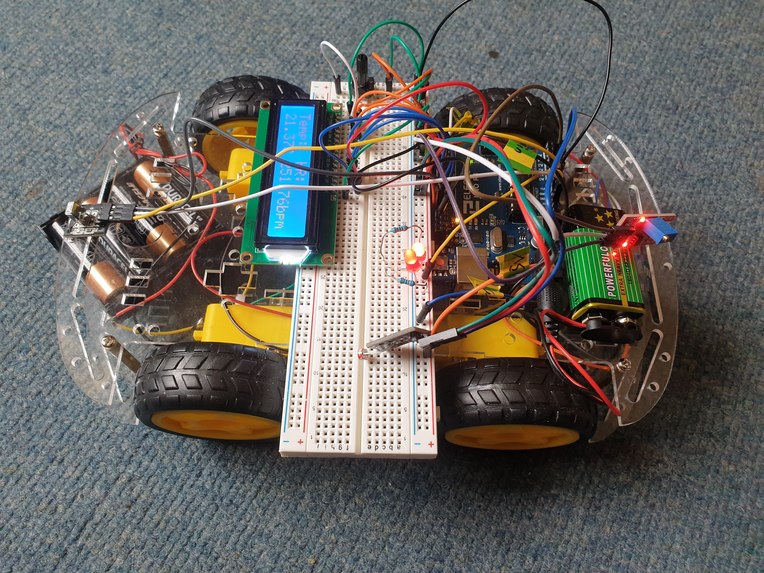
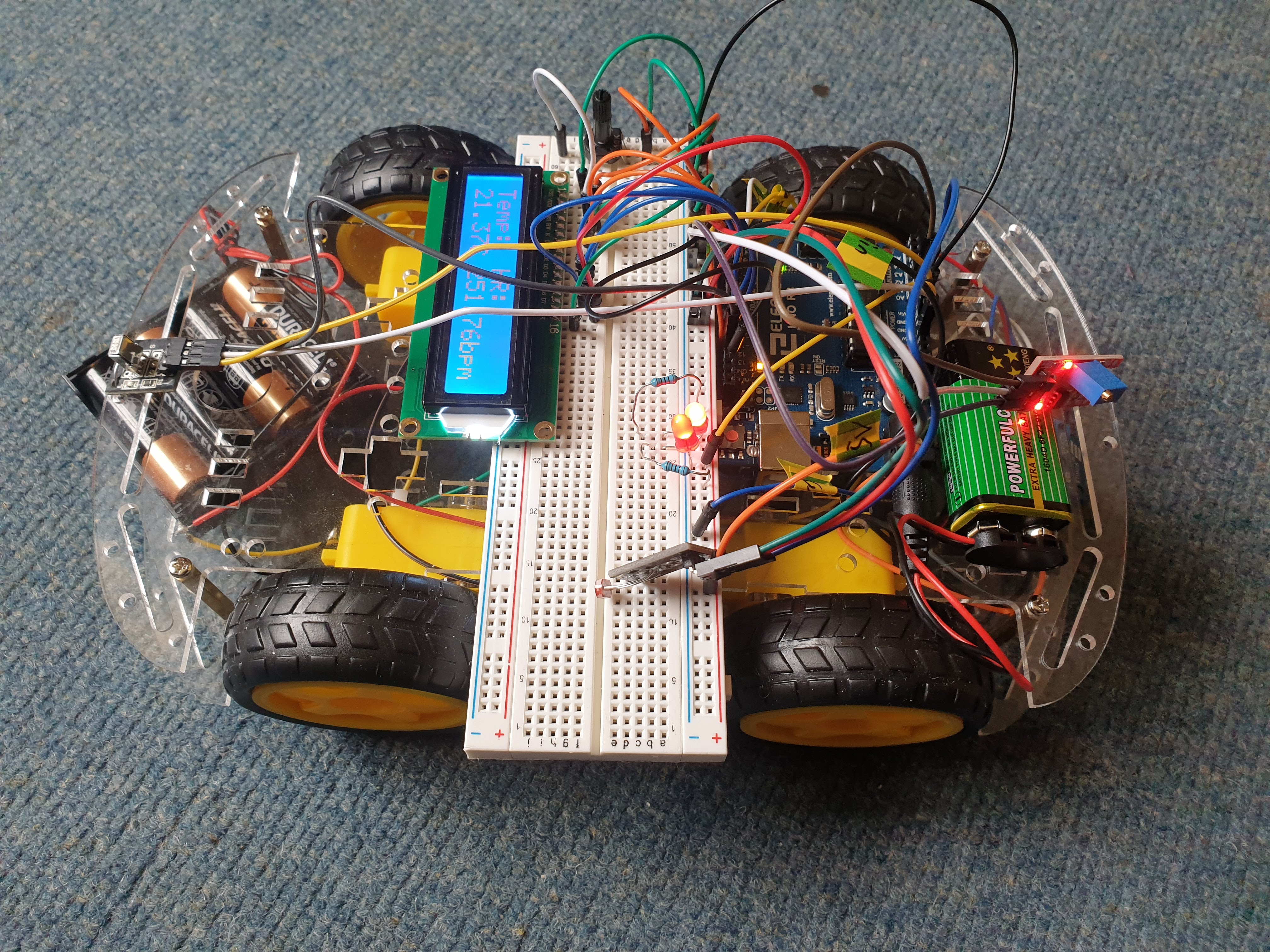
Side View
-
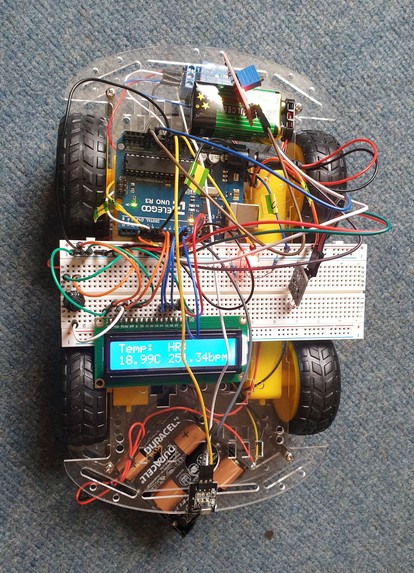
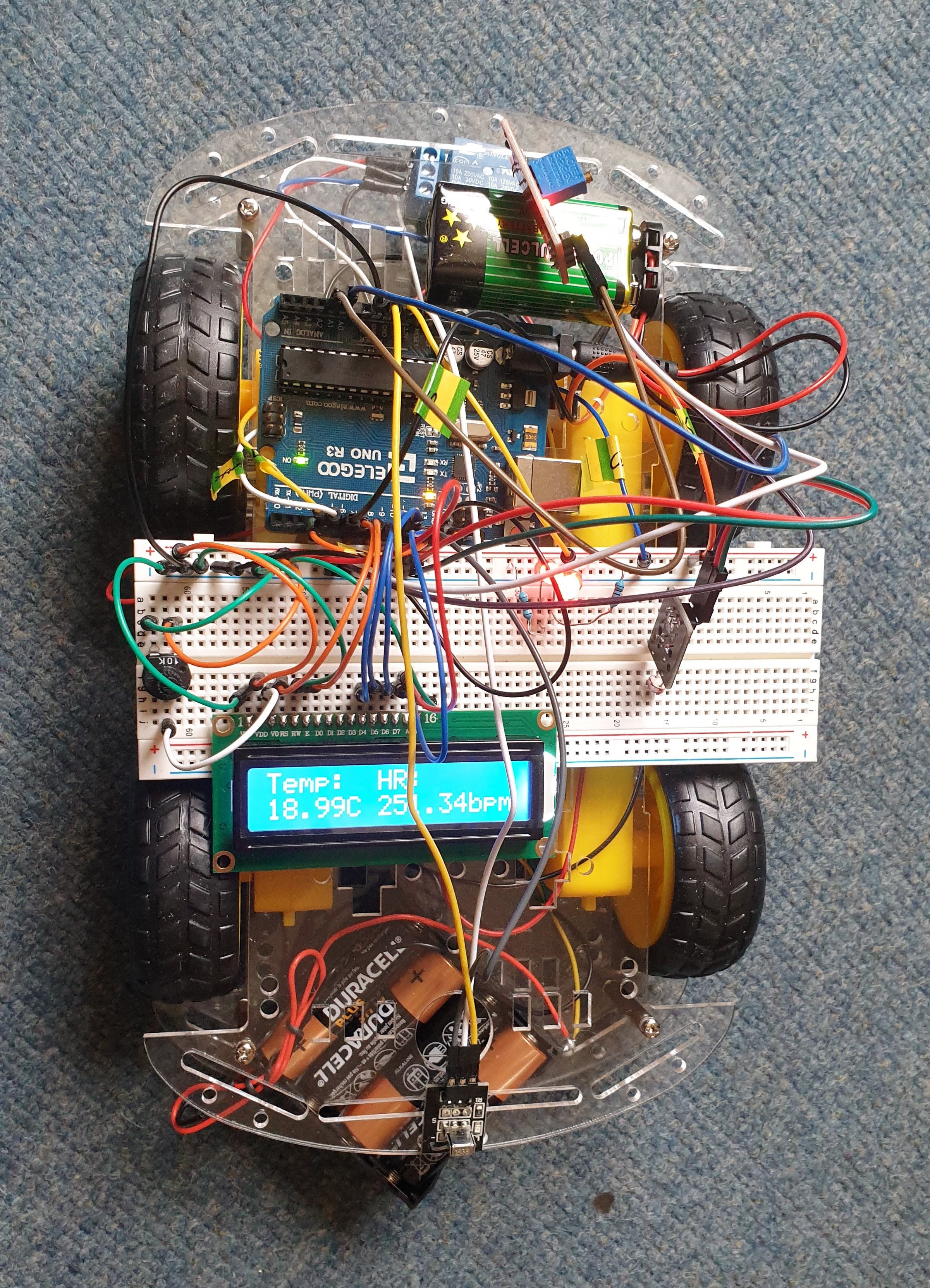
Top View
-
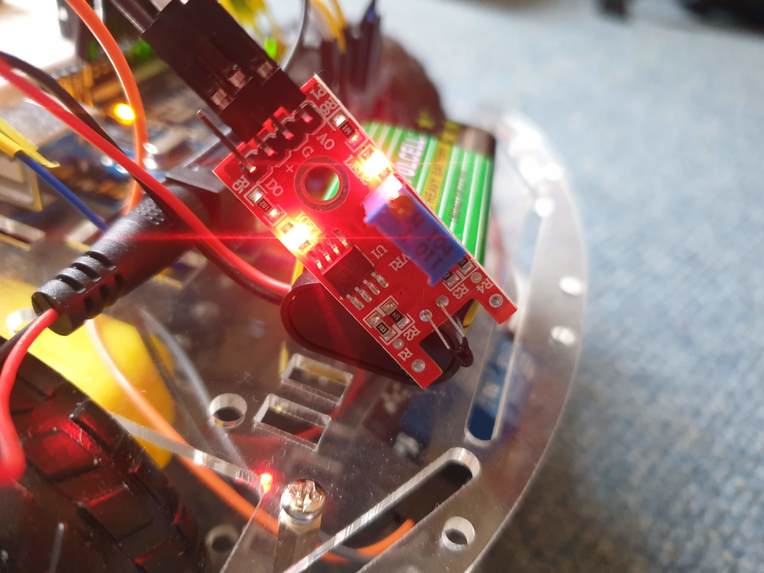
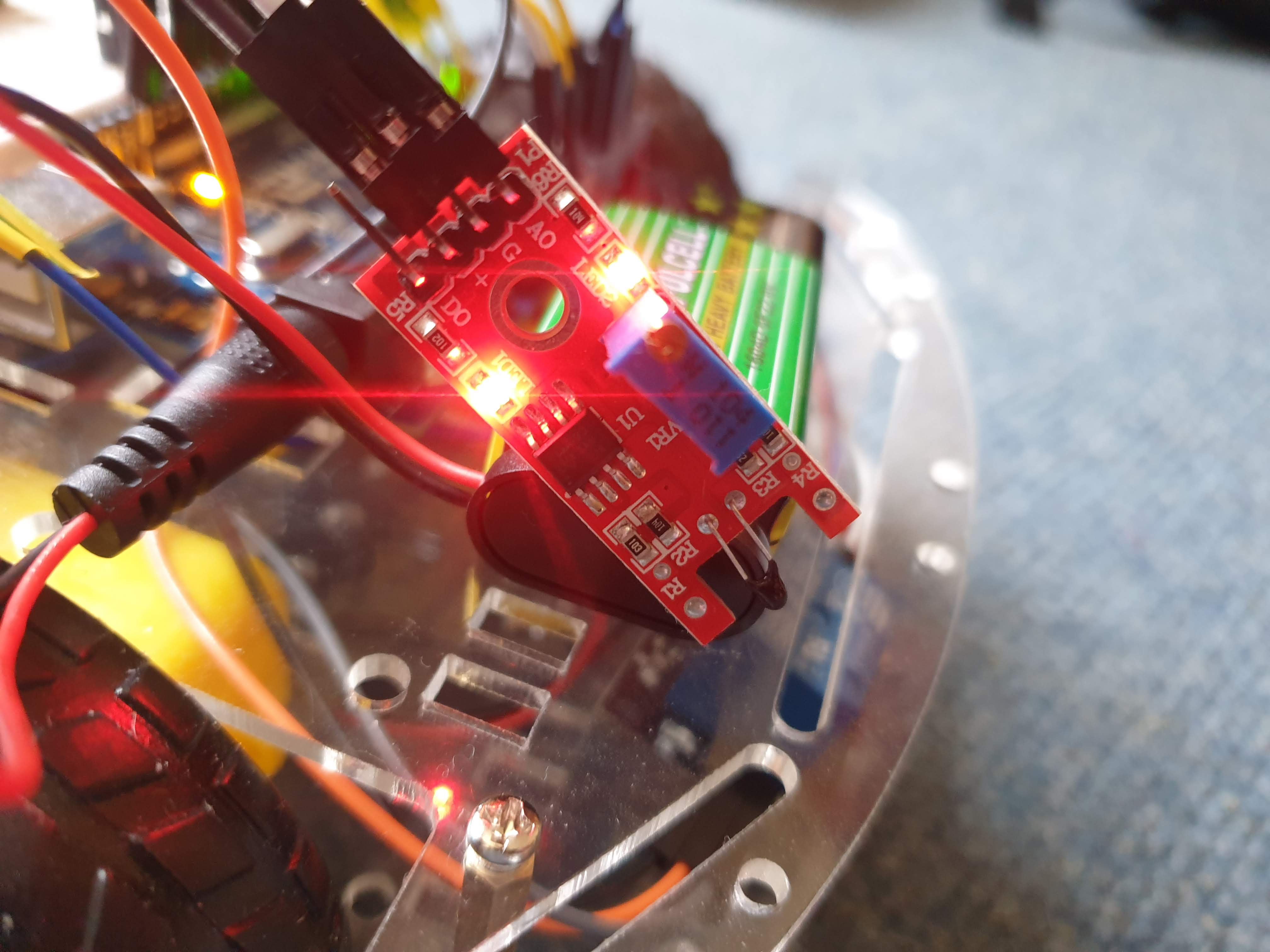
Temperature Sensor
-
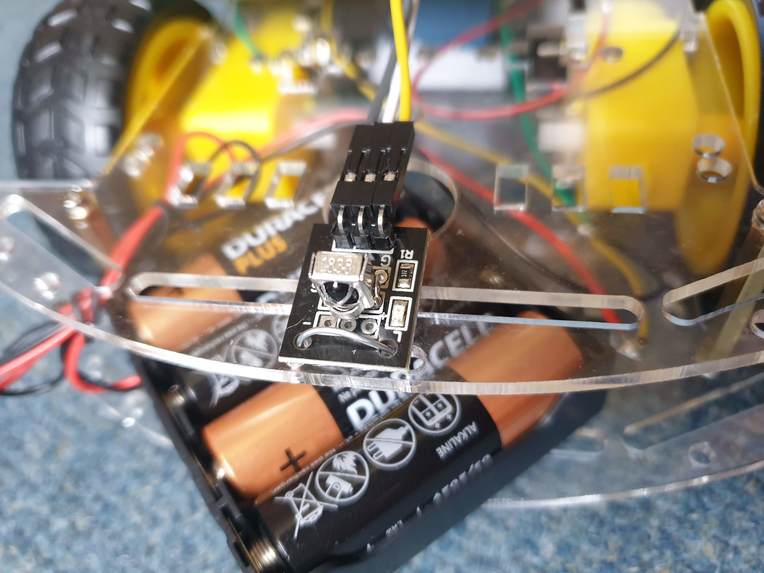
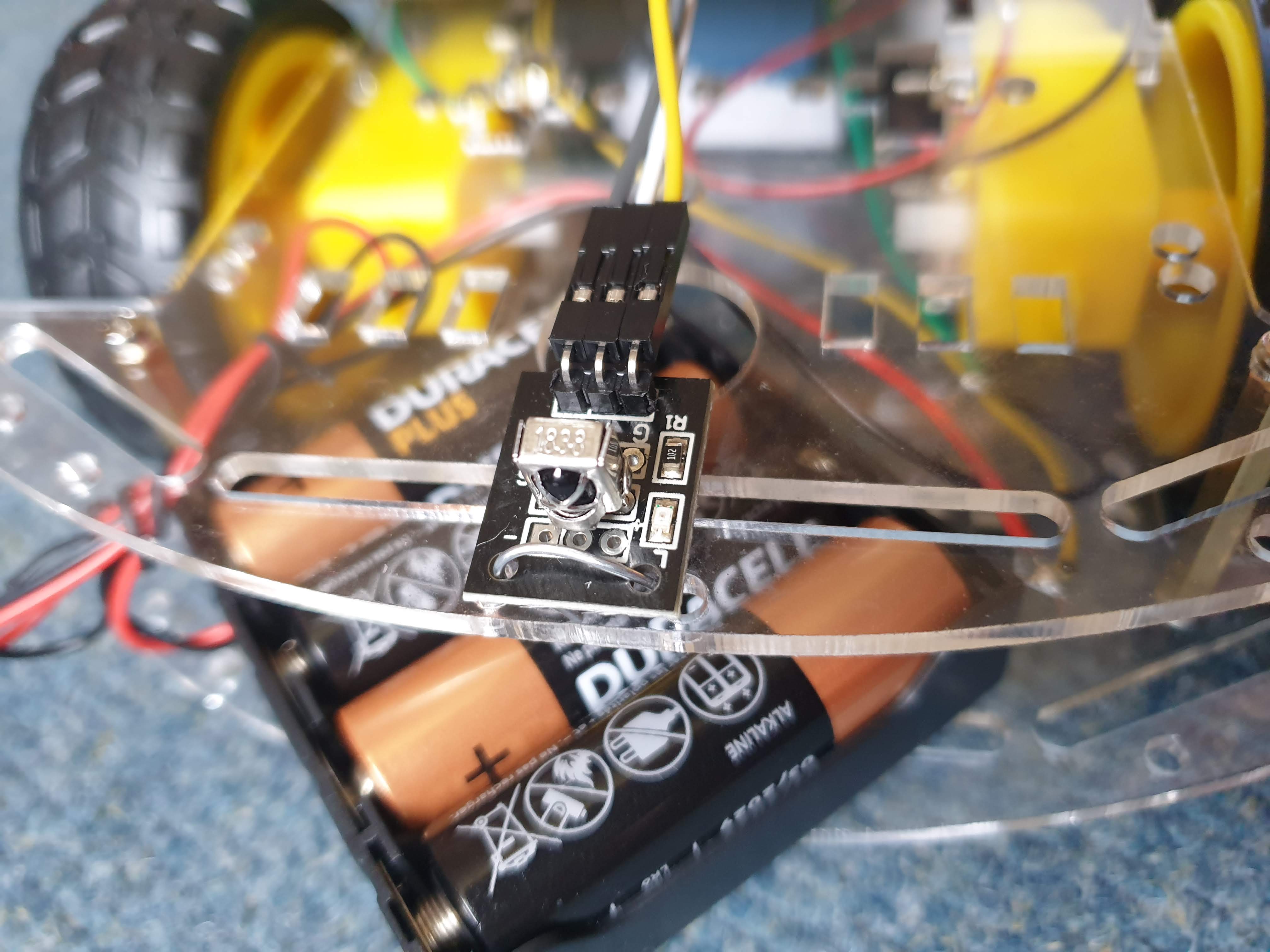
Infrared Receiver
-
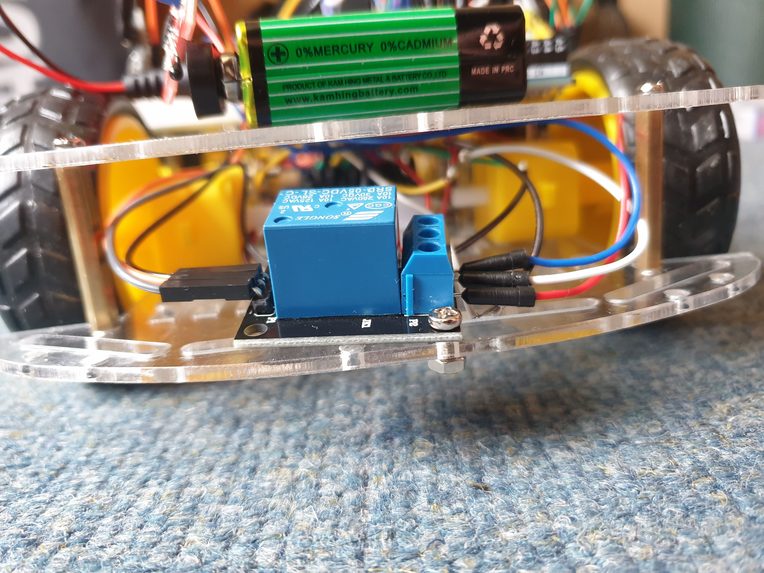
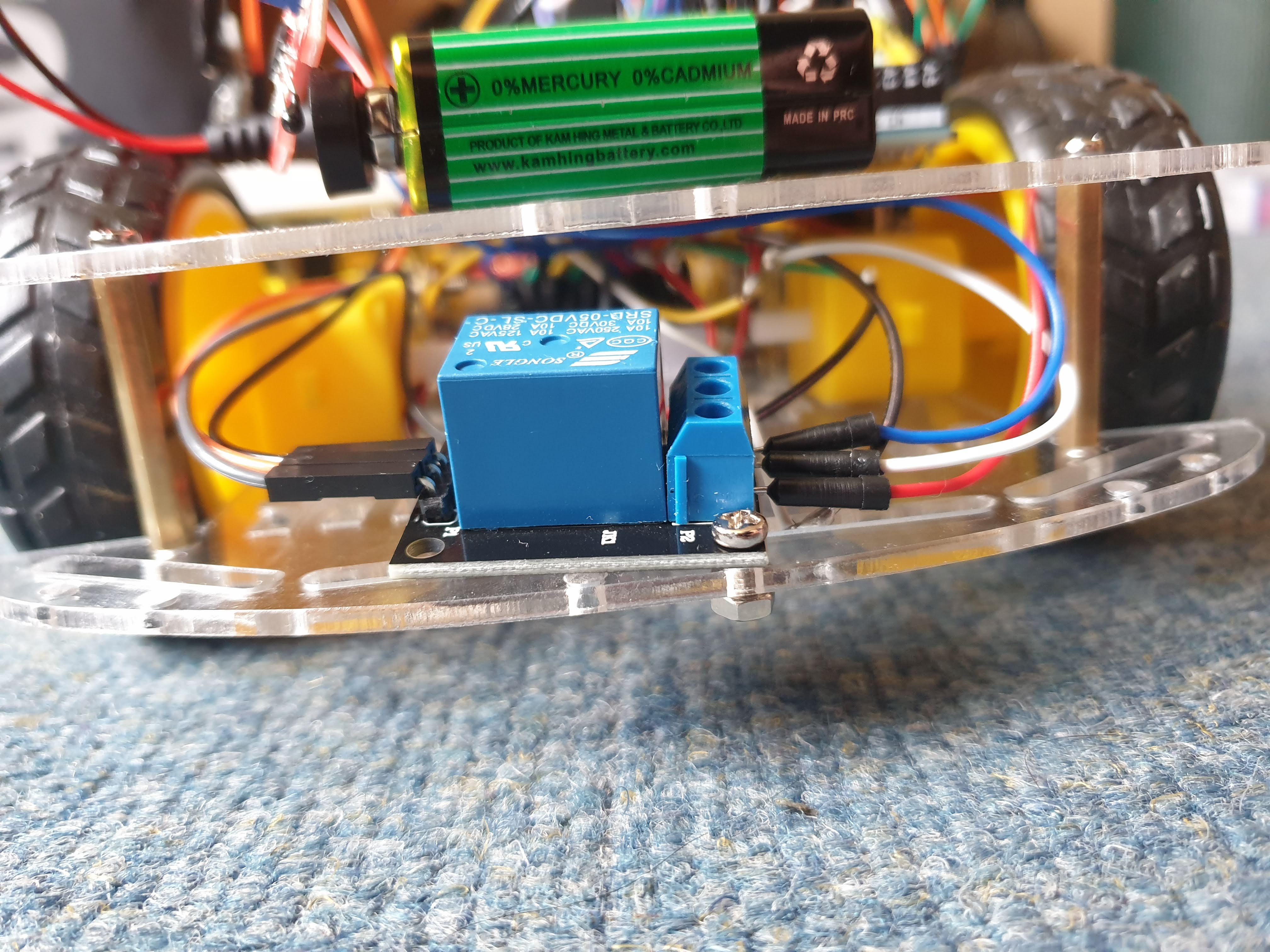
Relay Module
Project Motivation
Healthcare workers are among the most susceptible to contracting COVID-19 due to the long periods of time spent around COVID-19 patients. To reduce this risk, we came up with the idea that a health monitoring robot would allow contact time to be minimised. It would also reduce the manpower requirements, alleviating the pressure on overwhelmed healthcare systems during the pandemic.
Product Function
This robot will serve to measure multiple key health parameters. Such parameters may include temperature, height, weight, blood pressure, heart rate and blood oxygen saturation level.
The robot is first initialised through a patient identification input, such as identification numbers through barcodes or RFID cards. Next, the user will be guided to perform the measurements of these health parameters via instructions on a digital user interface. Upon completion of all measurements, the data will then be displayed to the user through the same interface and uploaded to the patient’s medical file on a cloud database.
The above robot is mounted on a mobile vehicle and can be programmed to autonomously navigate between users in a fixed area, such as a hospital ward.
Our Prototype
We built a small-scale prototype of the health monitoring robot using an Arduino controller and components from an off-the-shelf home electronics kitset, and decided to focus on implementing two specific health parameters: temperature and heart rate.
- Temperature was measured by using the voltage across an NTC thermistor and applying a calibration factor based on the Steinhart-Hart equation.
- Next, heart rate was measured by placing the user’s finger on both a red LED and a photoresistor. Blood circulation from each heartbeat causes variations in the amount of light that passes through the finger, which in turn varies the measured voltage across the photoresistor. This data is then continuously processed over a 20-sample cycle to give a measurement of the user’s heart rate.
These measurements were then programmed onto an LCD display that updates in real-time as each measurement cycle is completed.
Thereafter, a simple vehicle platform was assembled. This vehicle had 4 wheels, each connected to a separate DC motor. These DC motors were then programmed to allow for 360 degree movement of the vehicle through relay switches. The vehicle was also programmed to be controlled with a remote control and an infrared receiver.
The final prototype is a simple health monitoring machine on a vehicle that can be independently controlled. While we acknowledge that this prototype is minimal and lacks certain features and aesthetics, it is effective in showing how such a robot might function through a scaled-down model built using an Arduino controller.
Issues during Prototyping
It was not easy to build and program the prototype, given our lack of experience with Arduino. Moreover, we were limited by the parts and sensors that were available from the home electronics kitset, and so were unable to implement many of the useful features that a health monitoring robot might have.
Two notable technical issues that we encountered are described below:
- We first tried to use driver chips to control all 4 DC motors, but found that they drew too much power away from the motors.
- We also tried to create an oximeter to measure blood oxygen saturation level using the same principles as the heart rate monitor. However, the data was too inconsistent to give a reliable reading.
Challenges of Implementation
For a health monitoring robot to be implemented in a practical setting, the following issues arise:
- The robot must be compact despite the numerous sensors attached to ensure that it is able to manoeuvre with ease.
- In view of COVID-19, self-sanitising features may also be needed to reduce human contact between readings and prevent virus transmission.
- The user interface of the robot can be improved to make it easier for users to carry out the measurements by themselves.
Future Extensions
This robot has potential to be expanded into many applications, making them deployable in settings which require routine health surveillance. For example, this could be in wards, to make the monitoring of patients’ vitals more efficient and streamlined.
Such robots can even be used in more sophisticated patient care. For example, they may be able to provide predictive diagnoses through the use of artificial intelligence and machine learning.
Credits
We obtained inspiration for the heartrate and oximeter monitor from Johan Ha and Giulio Pons.

Log in or sign up for Devpost to join the conversation.