-
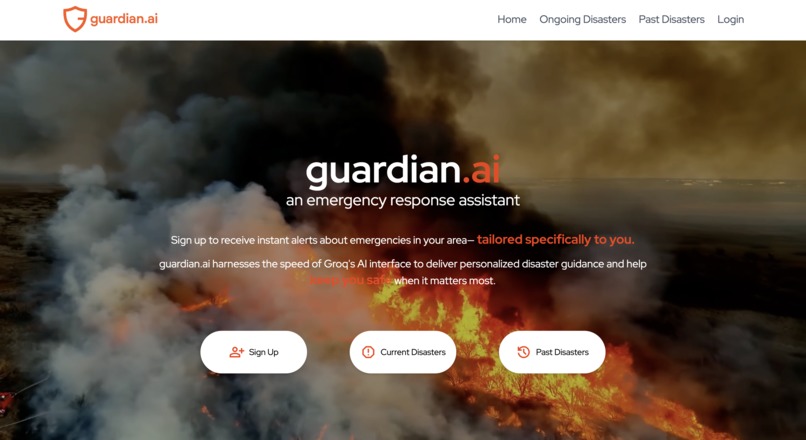
home page
-
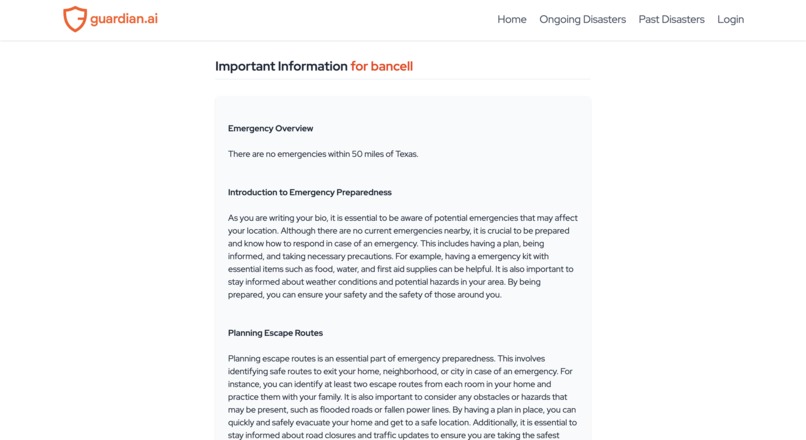
disaster summary screen
-
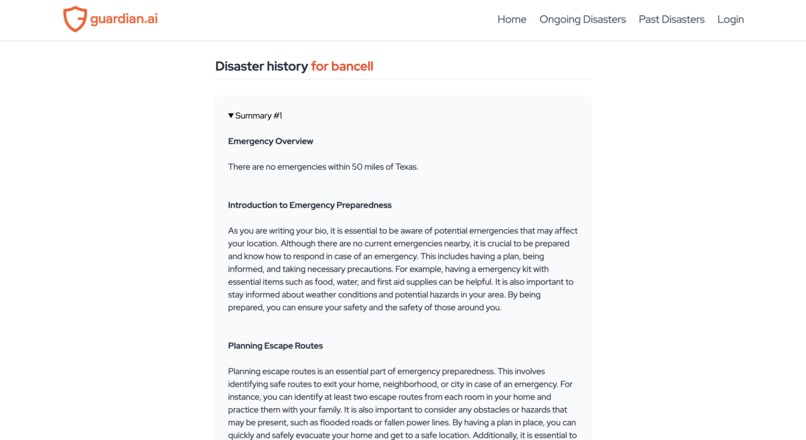
past disasters screen
-
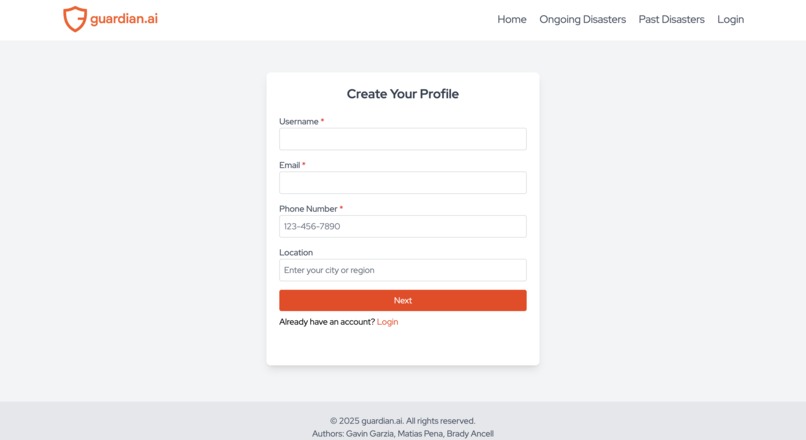
login1
-
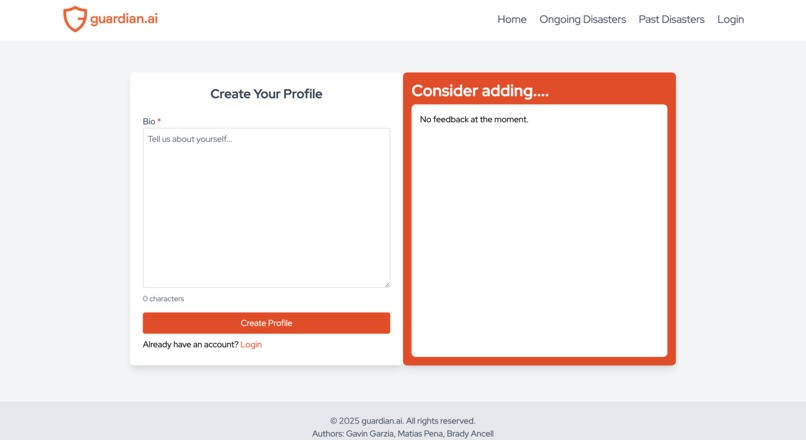
login2
-
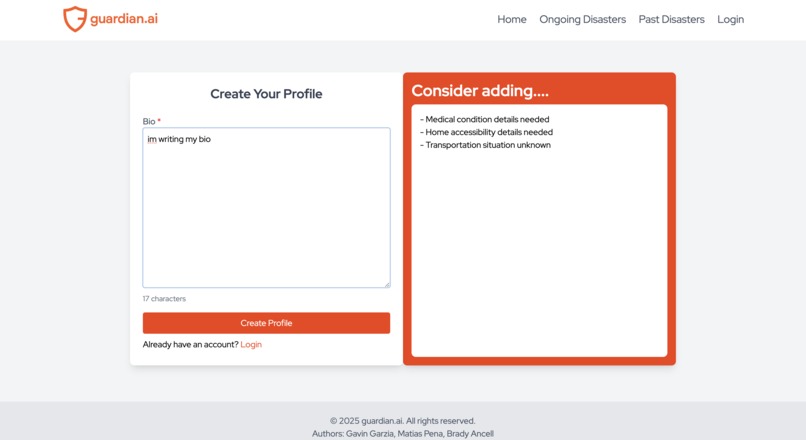
login feedback



Inspiration
We were inspired by the increasing need for accessible, fast, and personalized disaster response tools. Many individuals don't have time or expertise to interpret emergency alerts or track their risk based on location. Guardian.ai was built to fill that gap — to act as an intelligent assistant during critical moments, especially for communities that need quick summaries and alerts that are easy to understand.
What it does
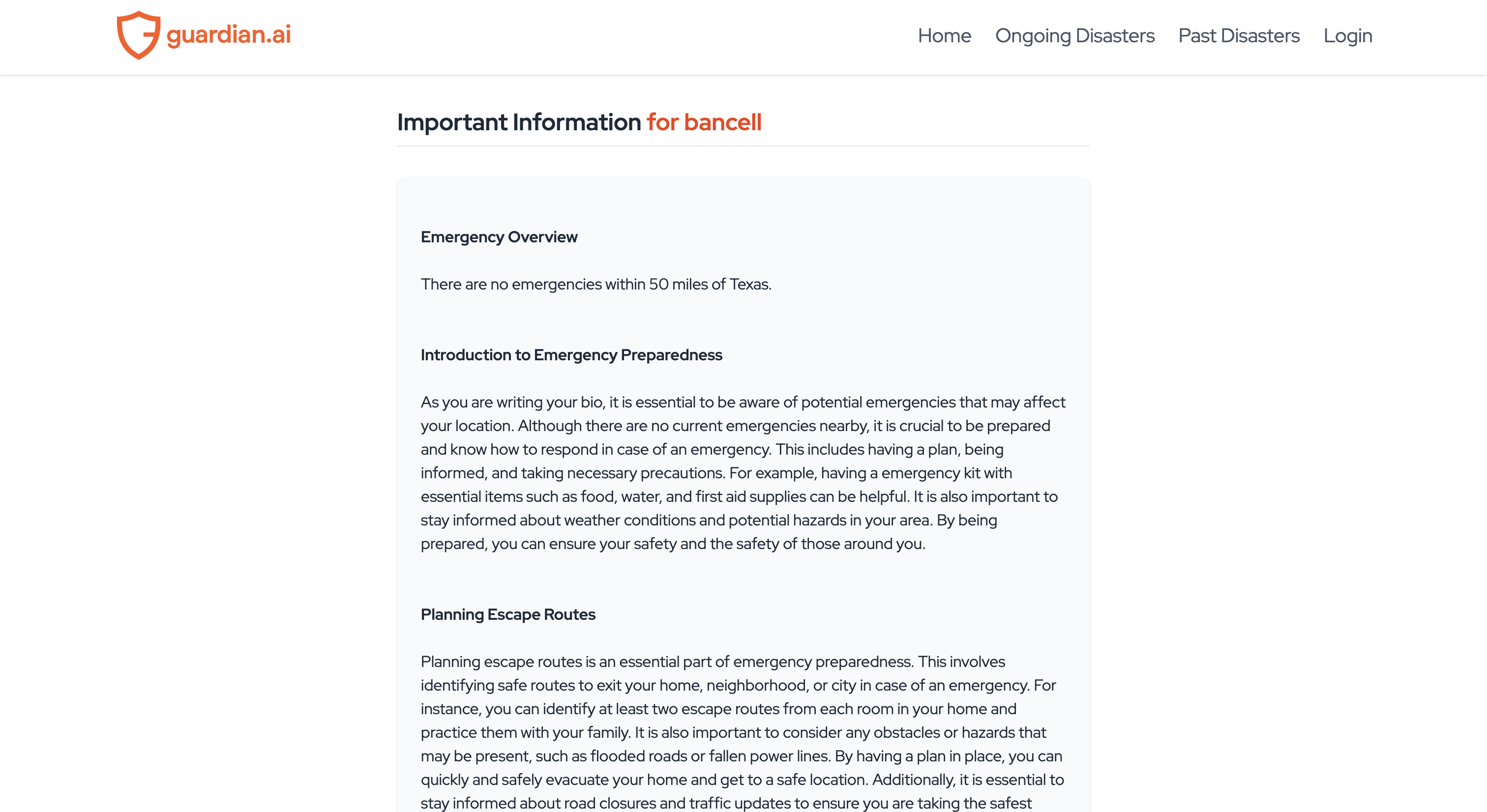
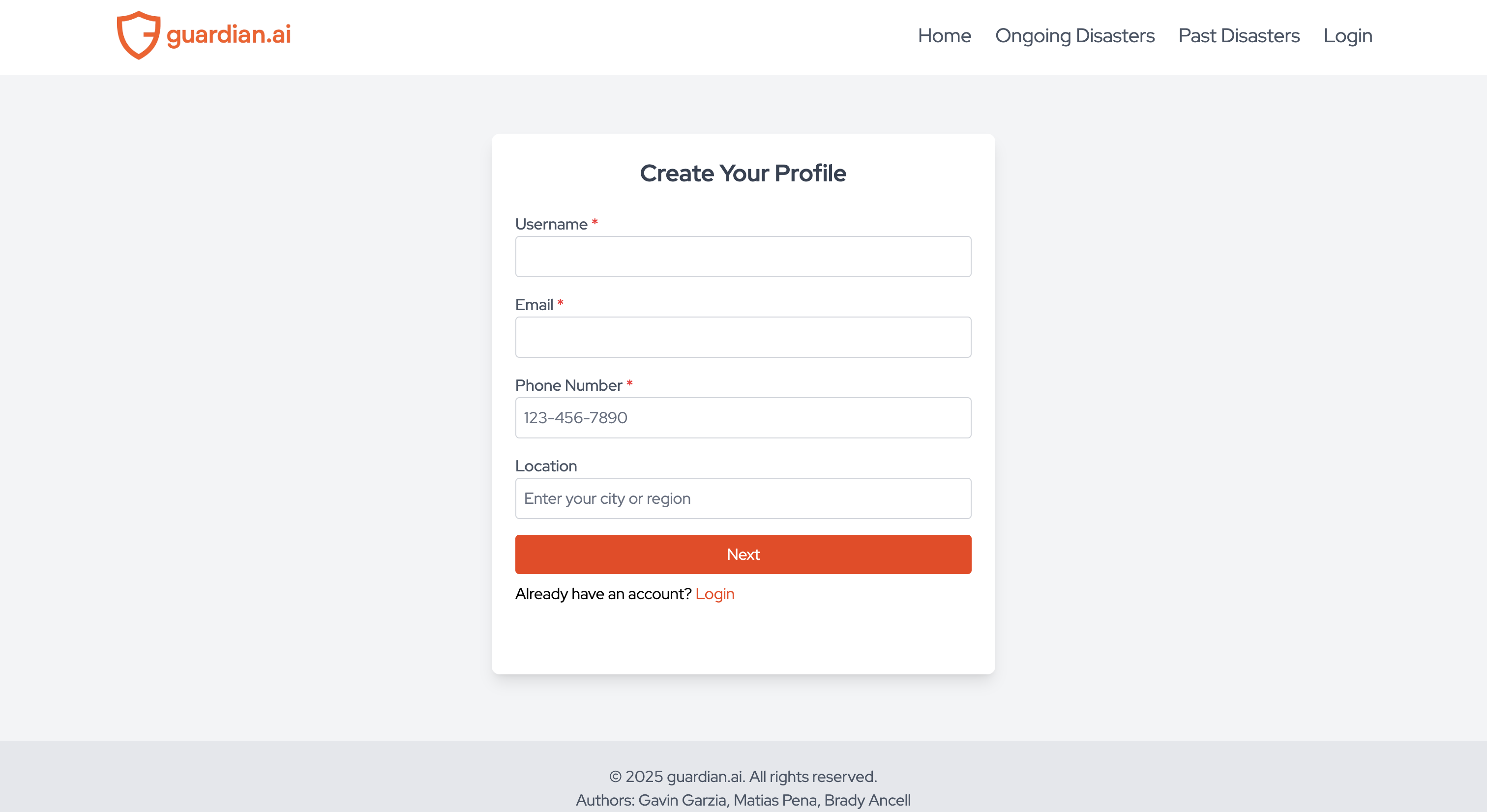
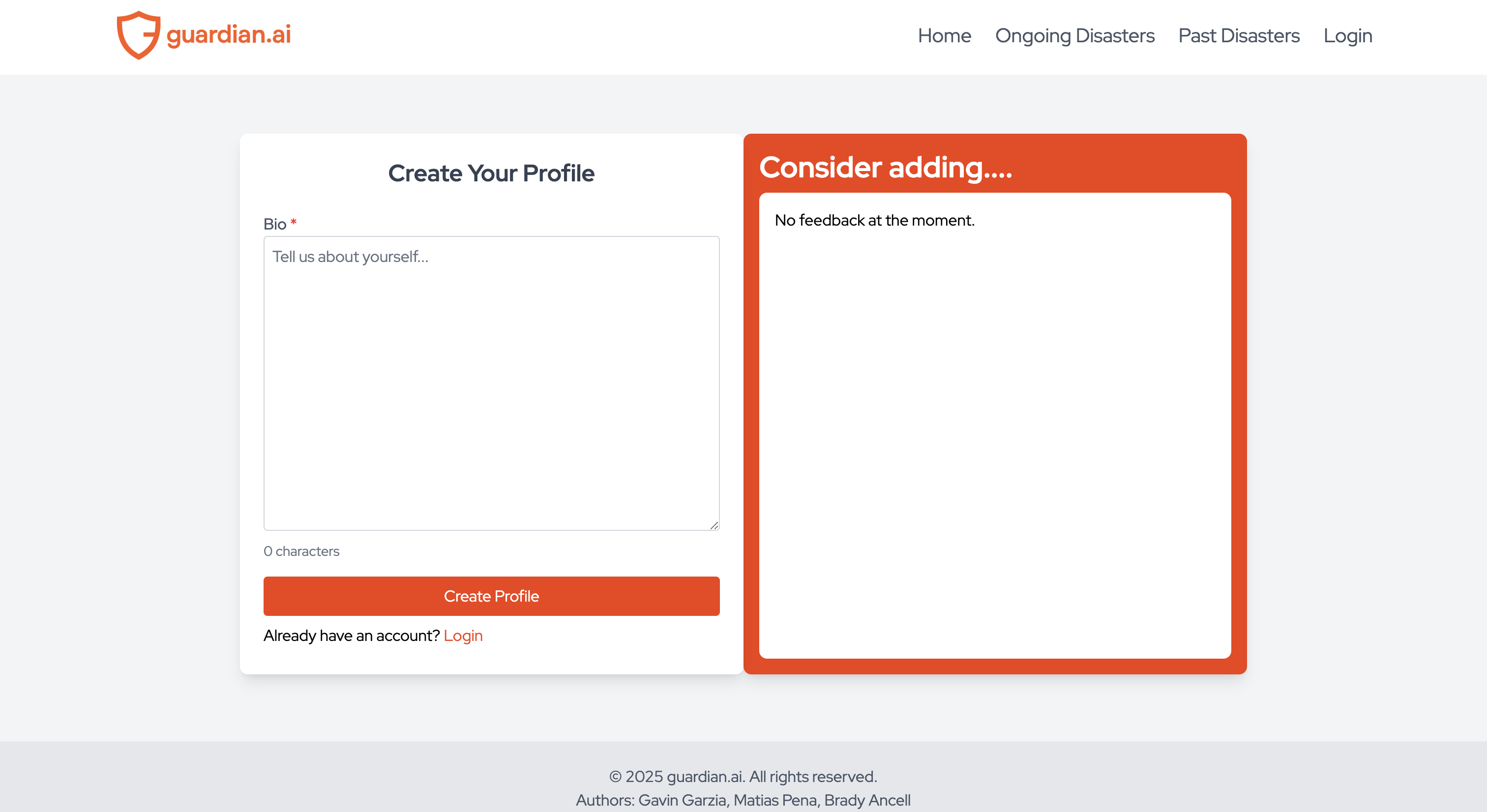
Guardian.ai allows users to receive real-time, AI-generated summaries of ongoing disasters personalized to their location and interests via phone and email. Users can log in, see the most recent disaster summary tailored to them, and view a history of past summaries. Behind the scenes, it aggregates data, parses it through an AI model, and delivers a clear and human-readable summary.
How we built it
The backend is built using FastAPI running in a Docker container, with SQLite as the database. The frontend is built using SvelteKit, providing a lightweight, reactive UI. We use custom logic to gather and summarize disaster data (real or simulated), then store and serve it through REST API endpoints. Authentication and session management are simplified with a local login system.
Challenges we ran into
CORS configuration between Docker-hosted backend and the SvelteKit frontend took longer than expected to debug. Managing routing and dynamic parameters in SvelteKit required trial and error. Structuring the database to track users, summaries, and historical data in a way that would scale was more complex than anticipated. Ensuring good UX while maintaining clean async logic between frontend and backend.
Accomplishments that we're proud of
Completing first hackathon. Working, pretty cool project that looks good.
What we learned
Learned how to manage svelte with a fastapi backend. We also learned docker to help with cross-platform development.
What's next for guardian.ai
Some potential features we would like to add: Integrating live data feeds from emergency sources like FEMA, USGS, and NOAA. Adding map visualizations and risk zones. Improving AI summaries with more detailed context and user-specific preferences. Enabling role-based access (e.g., for first responders vs. civilians) with tailored dashboards.

Log in or sign up for Devpost to join the conversation.