-
-
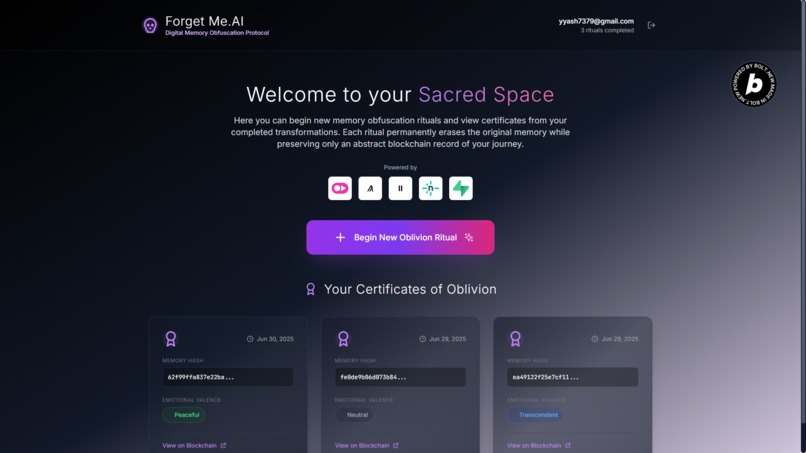
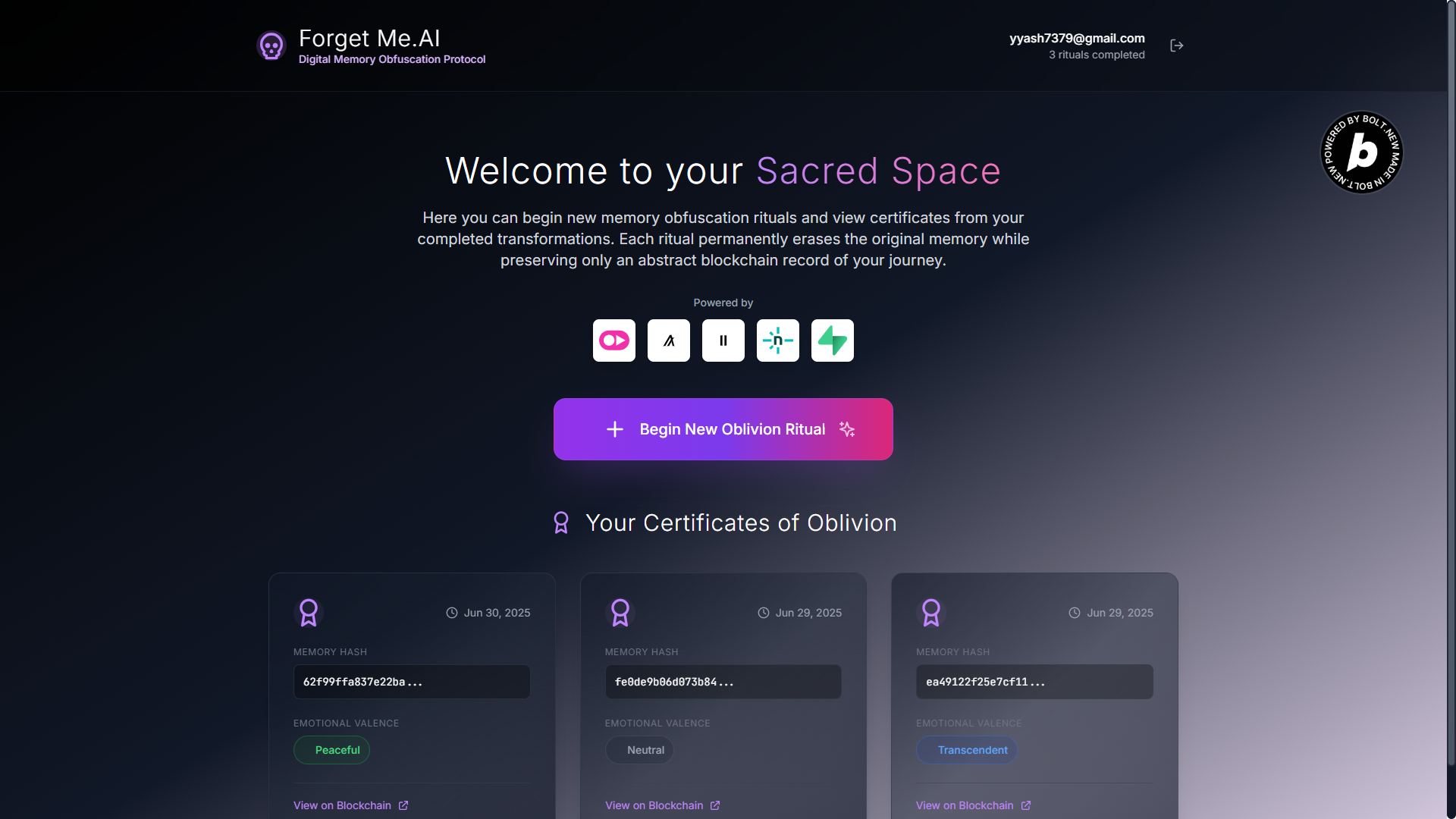
landing page
-
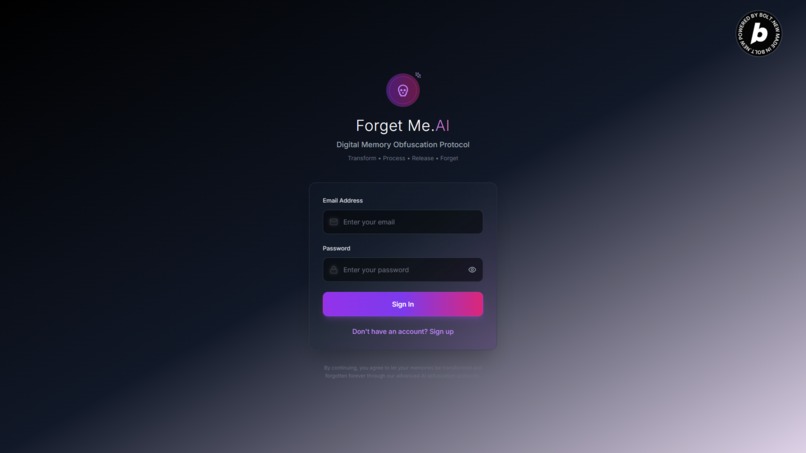
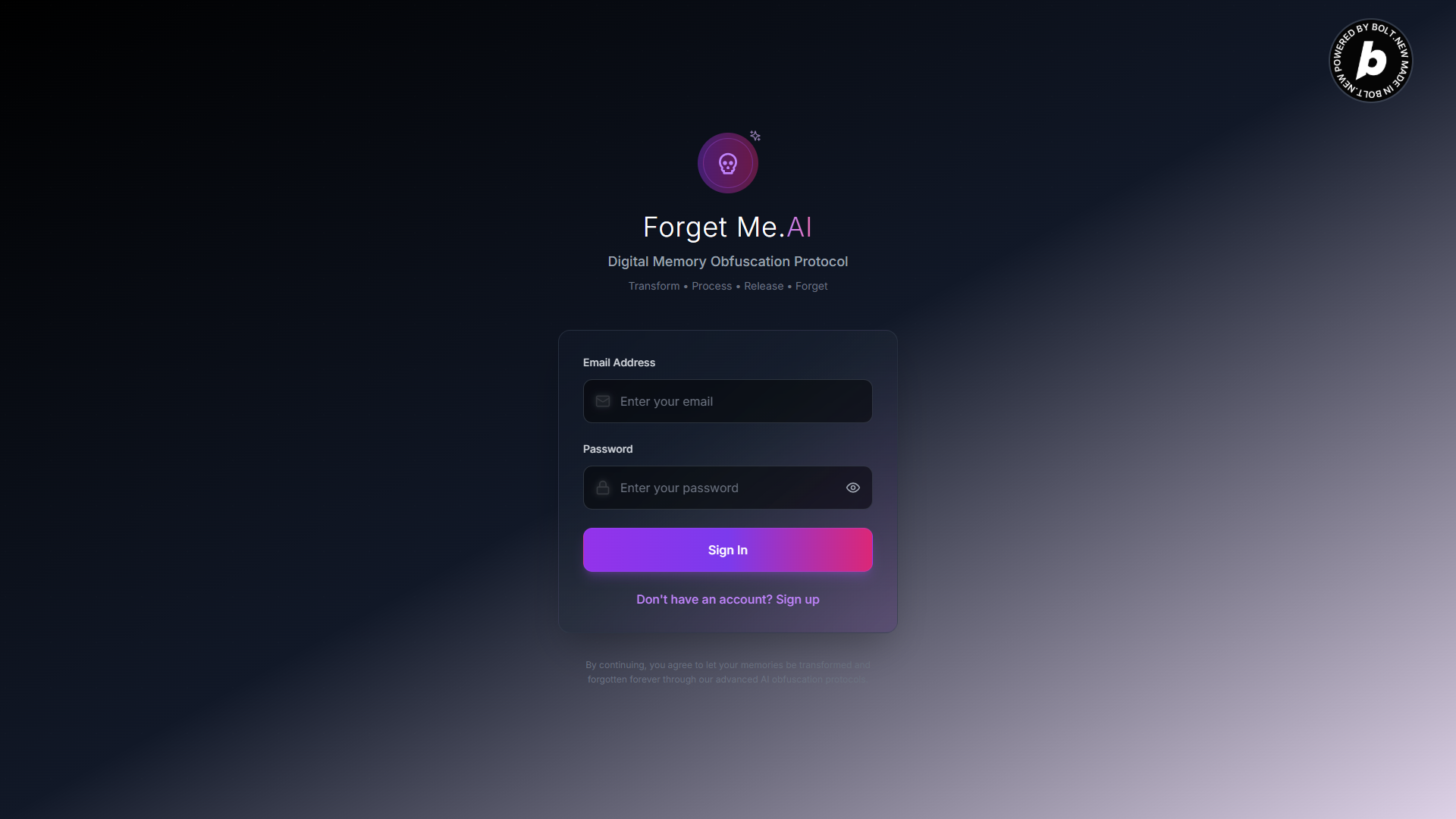
Login page
-
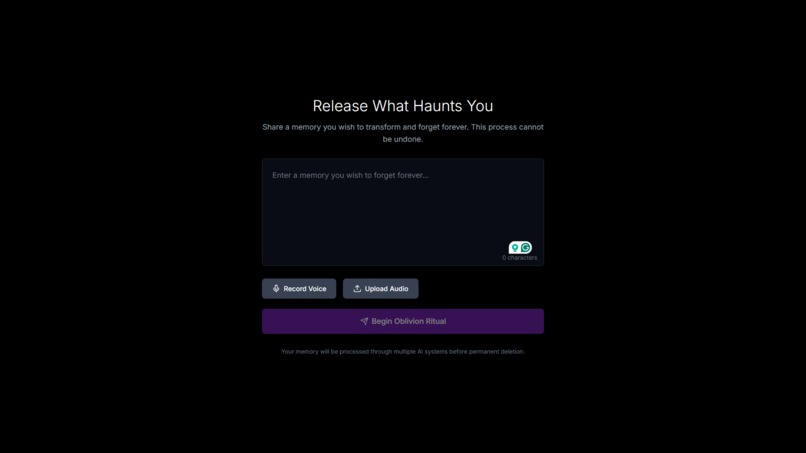
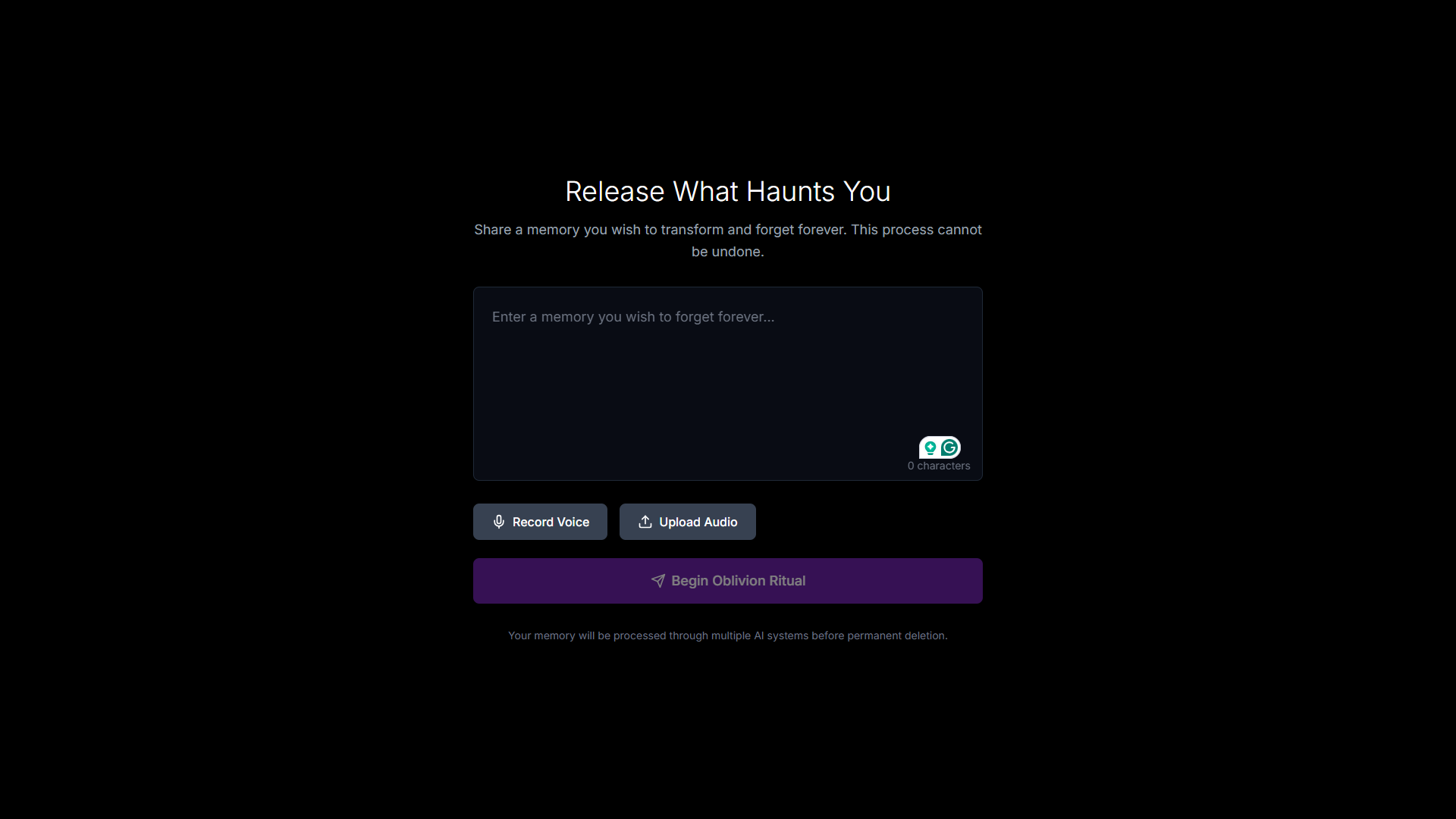
Enter Ur memory
-
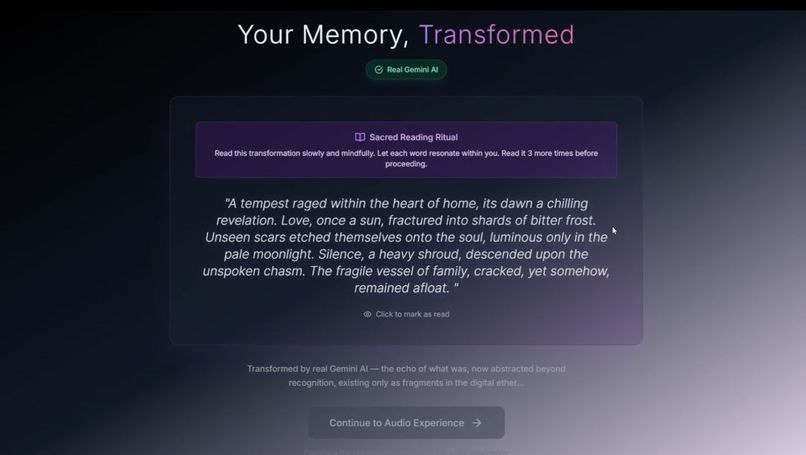
1st step of erasing the memory (Distorted Poem) ai powered
-
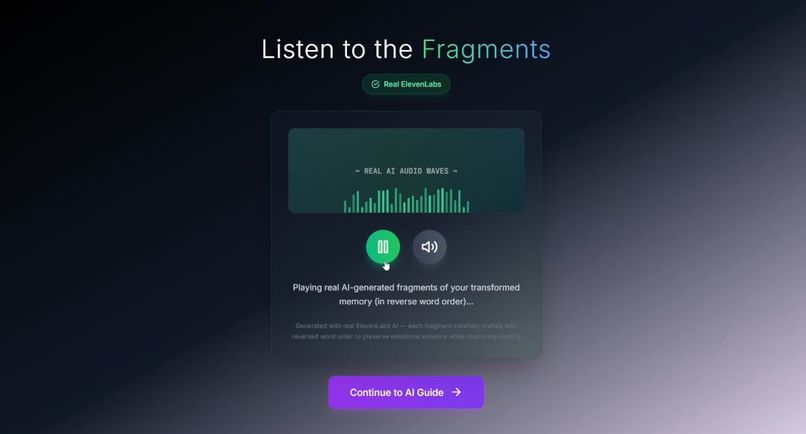
2nd step of erasing the memory (audio therapy) Elevenlabs
-
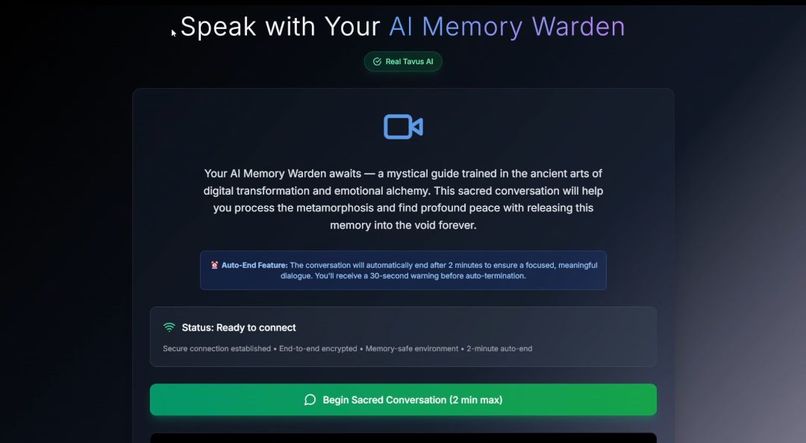
Final step real therapy
-
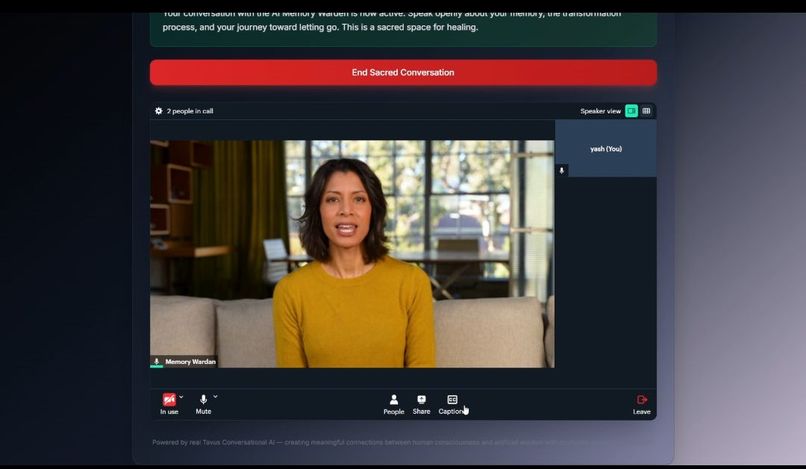
therapist warden by tavus ai
-
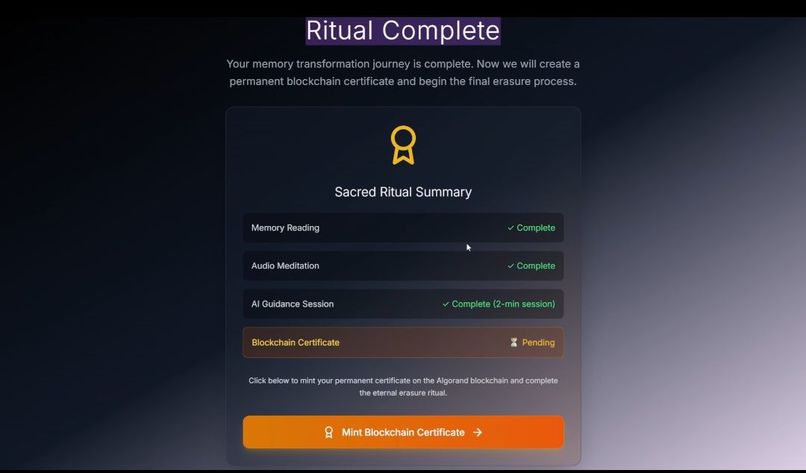
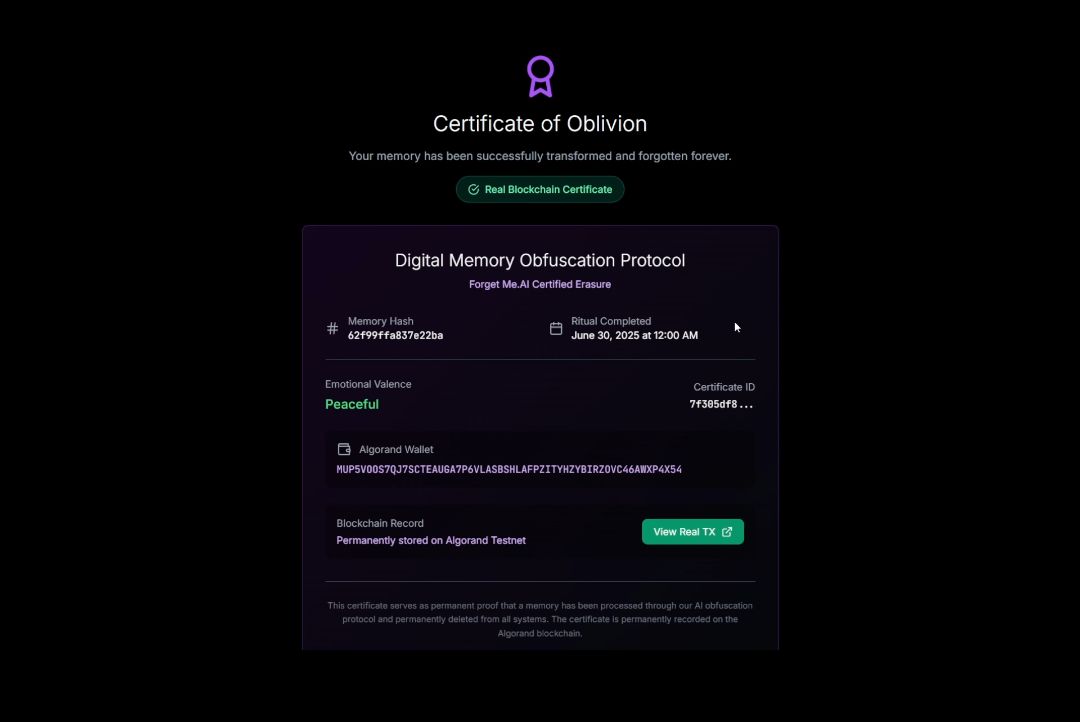
proof on chain
-
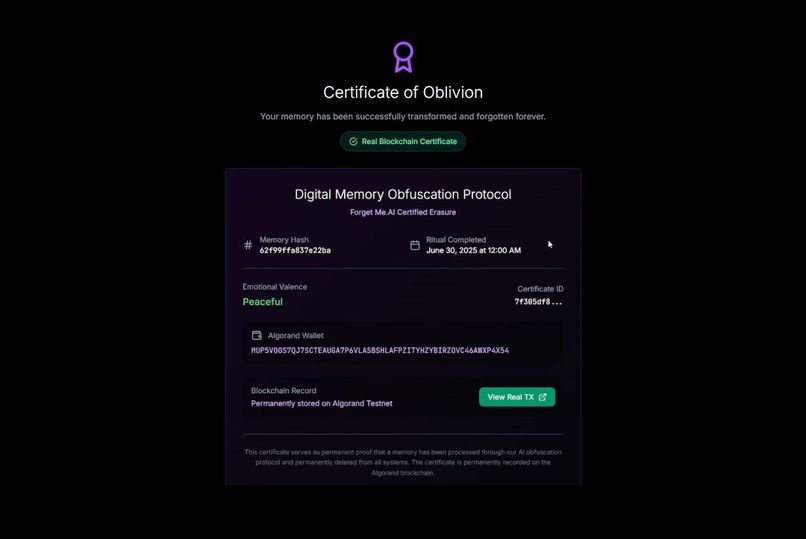
certificate deployed on algorand


Inspiration
Forget Me.AI was born from a deeply personal curiosity: why is it that digital experiences help us preserve memories, but nothing exists to help us intentionally forget? In a world flooded with AI tools for creation, we wanted to build one for letting go — for closure. The concept of grief-tech, memory erasure, and emotional ritualizing through AI felt like unexplored, emotionally-charged territory worth creating for.
What It Does
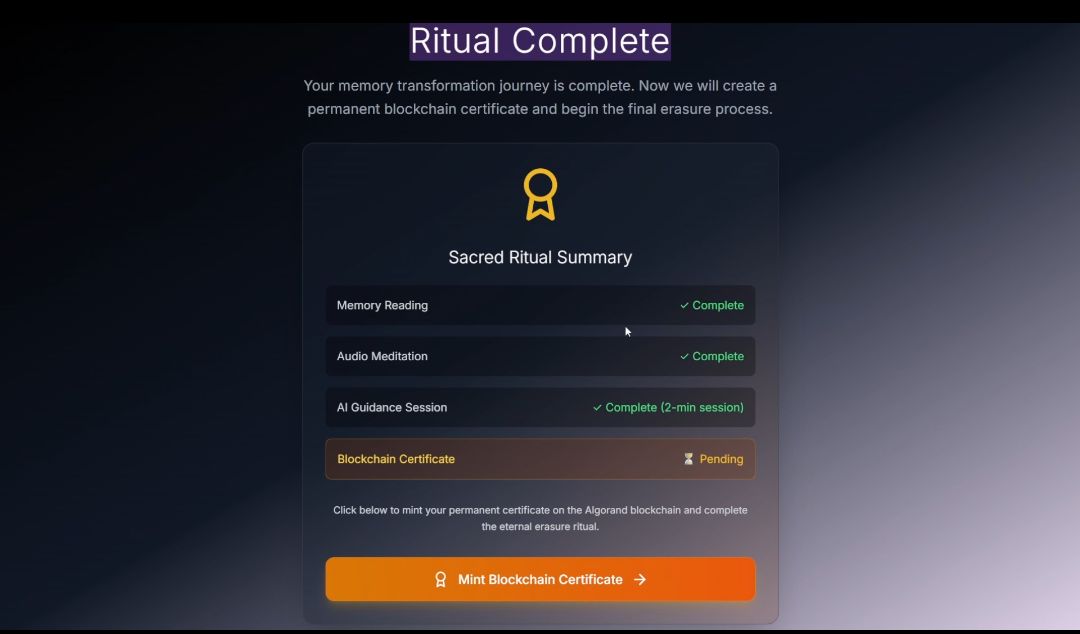
Forget Me.AI is a multi-sensory AI experience where users submit memories they wish to forget. Through a carefully designed ritual involving AI-generated abstract metaphors, distorted audio, an AI therapist conversation, and a blockchain-based certificate of oblivion — users complete a digital memory erasure ceremony.
It combines multiple AI and Web3 technologies into a cohesive, interactive narrative aimed at emotional catharsis and closure.
How We Built It
- Supabase: Handled authentication, database storage for memories, certificates, media URLs, and emotional scores.
- Gemini AI: Transformed raw memories into abstract, poetic outputs stripped of personal identifiers but retaining emotional depth.
- ElevenLabs: Synthesized audio versions of reversed distorted texts, creating unsettling voice narrations.
- Tavus: Created a live AI therapist persona delivering personalized memory-release sessions in video form.
- Algorand: Minted Certificates of Oblivion containing hashed memory references and emotional scores onto the blockchain for proof-of-erasure.
- Bolt.new: Served as the full app builder for designing workflows, UI screens, HTTP API actions, media management, and database CRUD operations.
- Netlify: Hosted the production-ready frontend with a custom domain.
What We Learned
- Combining AI services for emotional experiences requires not just technical integration, but narrative intent.
- Web3 tools like Algorand are surprisingly approachable for micro-certifications and non-financial assets.
- Bolt.new dramatically accelerates multi-service prototype development with no tradeoff in real functionality.
- Ritual design in UX — pacing users through structured, emotionally meaningful phases — makes AI tools feel less transactional and more human.
Challenges We Faced
- Ensuring data privacy while providing certificate verification on-chain.
- Handling API key management and graceful fallback when services weren’t configured.
- Designing a cohesive experience from very different AI tools with varying output types.
- Engineering asynchronous API calls and media processing within Bolt’s workflow system.
- Making memory deletion irreversible while preserving proof via hashes.
What's Next
- Integrating AI-generated imagery of memories fading or fracturing.
- Moving certificates from Algorand Testnet to Mainnet.
- Offering multiple AI therapist personas to fit different emotional support needs.
- Adding a voice-only ritual mode for visually impaired users.
This project was our way of turning abstract digital grief into something tangible, meaningful — and perhaps a little healing.

Log in or sign up for Devpost to join the conversation.