Inspiration
Based on a user research our team conducted on the Hawkers at Blk 630 Ang Mo Kio Ave 4, we found out that the main problems causing food wastage from both the hawker side as well as the consumer side. Problem 1: Hawker don't use a systematic way to restock, most of them relies on their experiences to gauge when doing inventory restock. This method is not reliable as they are more prone to human error and supply management can be wasteful. Items can easily run out, leading to lost in sale. What’s worse, hawker may try to prevent future shortages by ordering excessive amounts of product, which could go unused and eventually expire. Problem 2: The absence of clear information about portion sizes when ordering from different food vendors results in customer uncertainty and excessive ordering. This issue contributes to avoidable food wastage, impacting both individual consumers and the broader problem of food waste.
What it does
Solution: The proposed solution is a comprehensive smart hawker inventory and ordering system that addresses the identified problems and promotes sustainable food management practices.
How It Works:
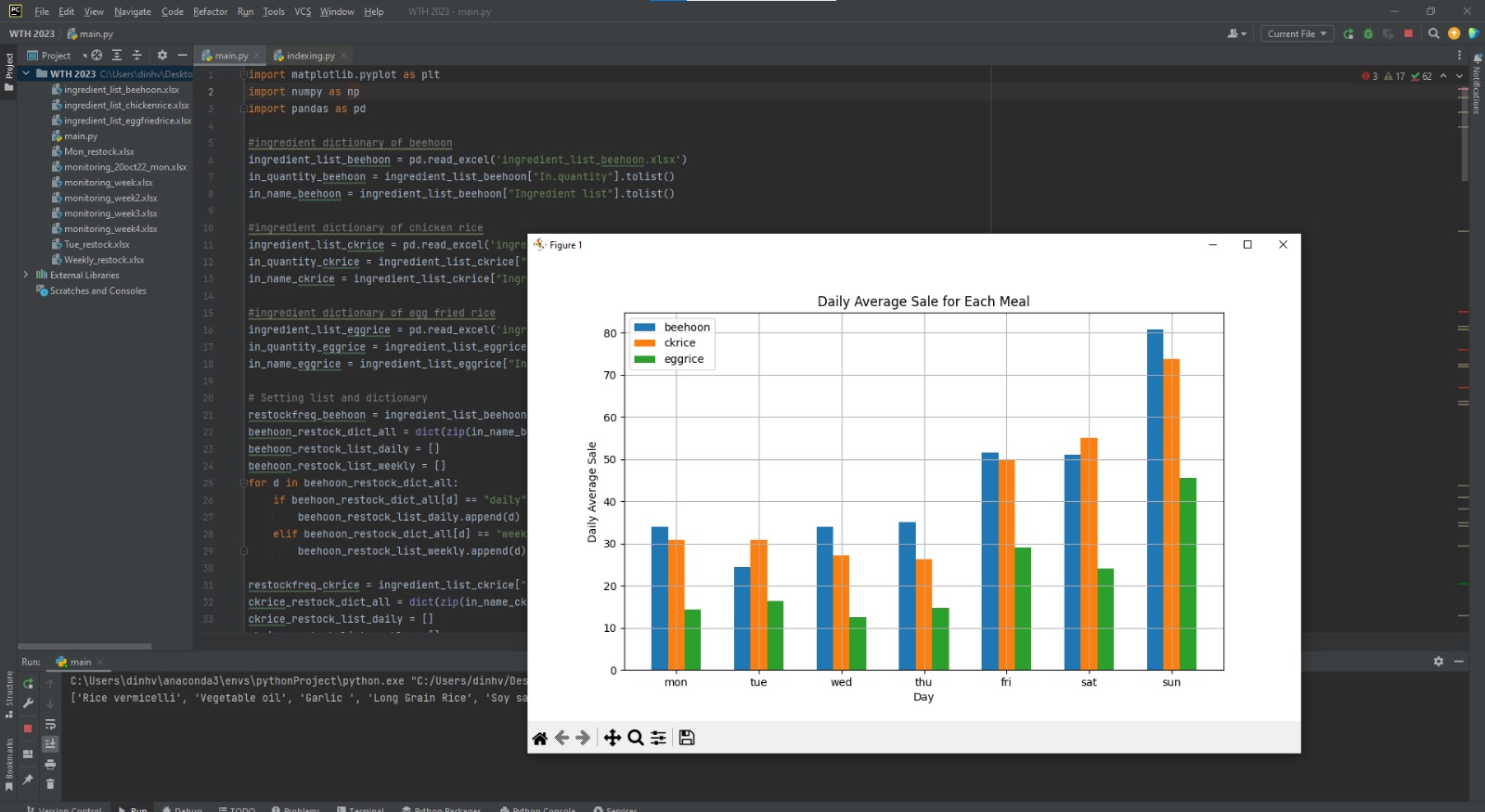
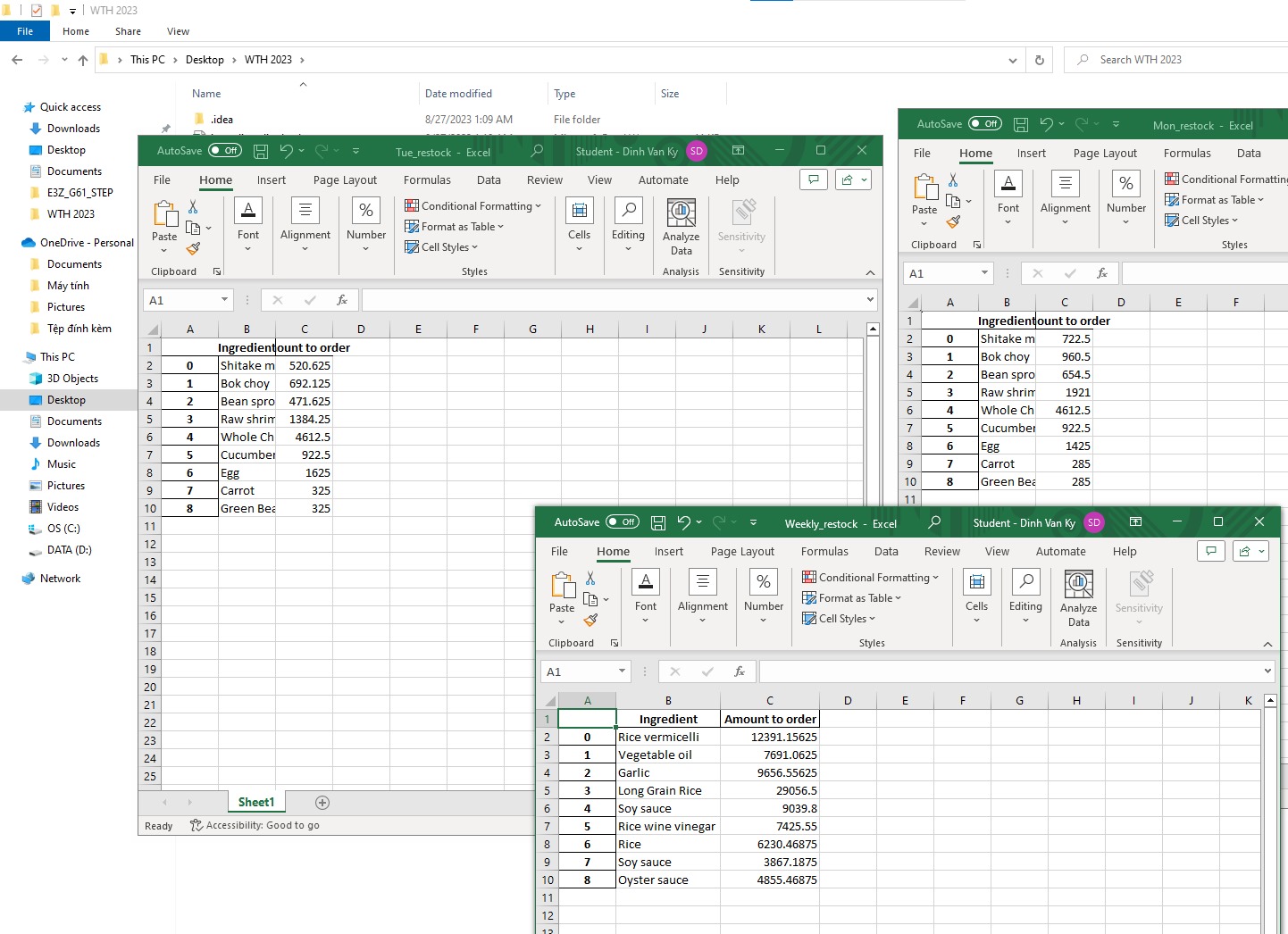
Inventory Management: The system tracks sales data and inventory levels. Using the PAR Level Formula and historical sales data, it predicts future demand and suggests optimal ingredient restocking quantities.
Ordering System: Customers can place orders through a digital interface that provides clear visuals of portion sizes. This discourages over-ordering by helping customers understand the actual quantity of food they will receive.
Sales Tracking: For hawkers who do not track sales, the system incorporates a simple sales tracking mechanism using ESP32 devices. Stall owners press a button to record each order, which helps gather sales data for accurate predictions.
Unique Features:
PAR Level Formula: Implementing the PAR Level (Periodic Automatic Replenishment) Formula helps optimize ingredient restocking. It calculates the optimal inventory level to maintain, reducing the likelihood of overstocking and minimizing waste.
User-Friendly Interface: The system provides a simple and intuitive user interface that allows hawker stall owners to easily manage their inventory, predict demand, and place accurate orders even for those who are not good with tech.
Challenges we ran into
More than half of hawkers do not track sales making it hard collect reliable data for prediction using PAR Level Formula. Using ESP32, we created a simple sales tracking system for the hawker to press when an order is made to track sales.
What's next for Foodio
Enhanced Data Analytics: Foodio could further refine its data analytics capabilities by incorporating machine learning algorithms. These algorithms could analyze customer ordering patterns, dish popularity, and ingredient preferences to provide more accurate portion size recommendations and optimize ingredient ordering for vendors.
Integration with Point of Sale Systems: To streamline the ordering process, Foodio could integrate with vendors' point of sale (POS) systems. This integration would enable automatic portion size visualization when customers place their orders, reducing the need for QR code scanning and enhancing user convenience.
Collaborations with Food Chains: Foodio could explore partnerships with larger food chains and franchises. Collaborating with well-known brands could significantly expand its user base and influence customers' ordering behaviors across a wider range of establishments.
Eco-Friendly Initiatives: Foodio could align with sustainability initiatives by partnering with environmentally conscious food vendors. By promoting responsible ordering practices and reducing food wastage, Foodio could contribute to a reduction in the carbon footprint of the food industry.
User Feedback and Continuous Improvement: Regularly seeking user feedback and making iterative improvements based on customer suggestions is essential. This could involve refining the AR portion guide's accuracy, optimizing the app's user interface, and introducing new features based on user needs.
Educational Campaigns: Foodio could launch educational campaigns to raise awareness about the environmental impact of food wastage. By collaborating with organizations focused on sustainability, Foodio could contribute to a larger movement advocating for responsible consumption.


Log in or sign up for Devpost to join the conversation.