-
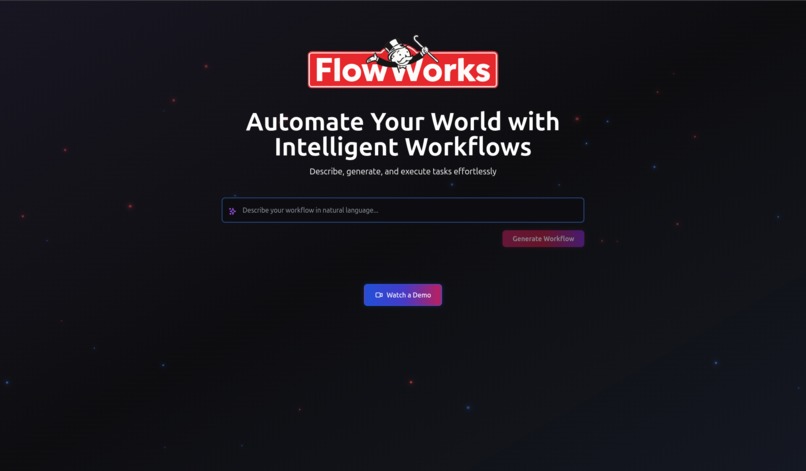
Landing Page
-
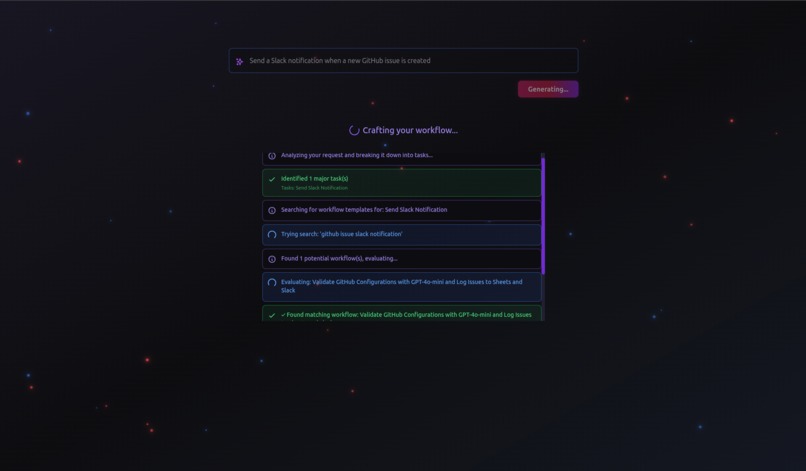
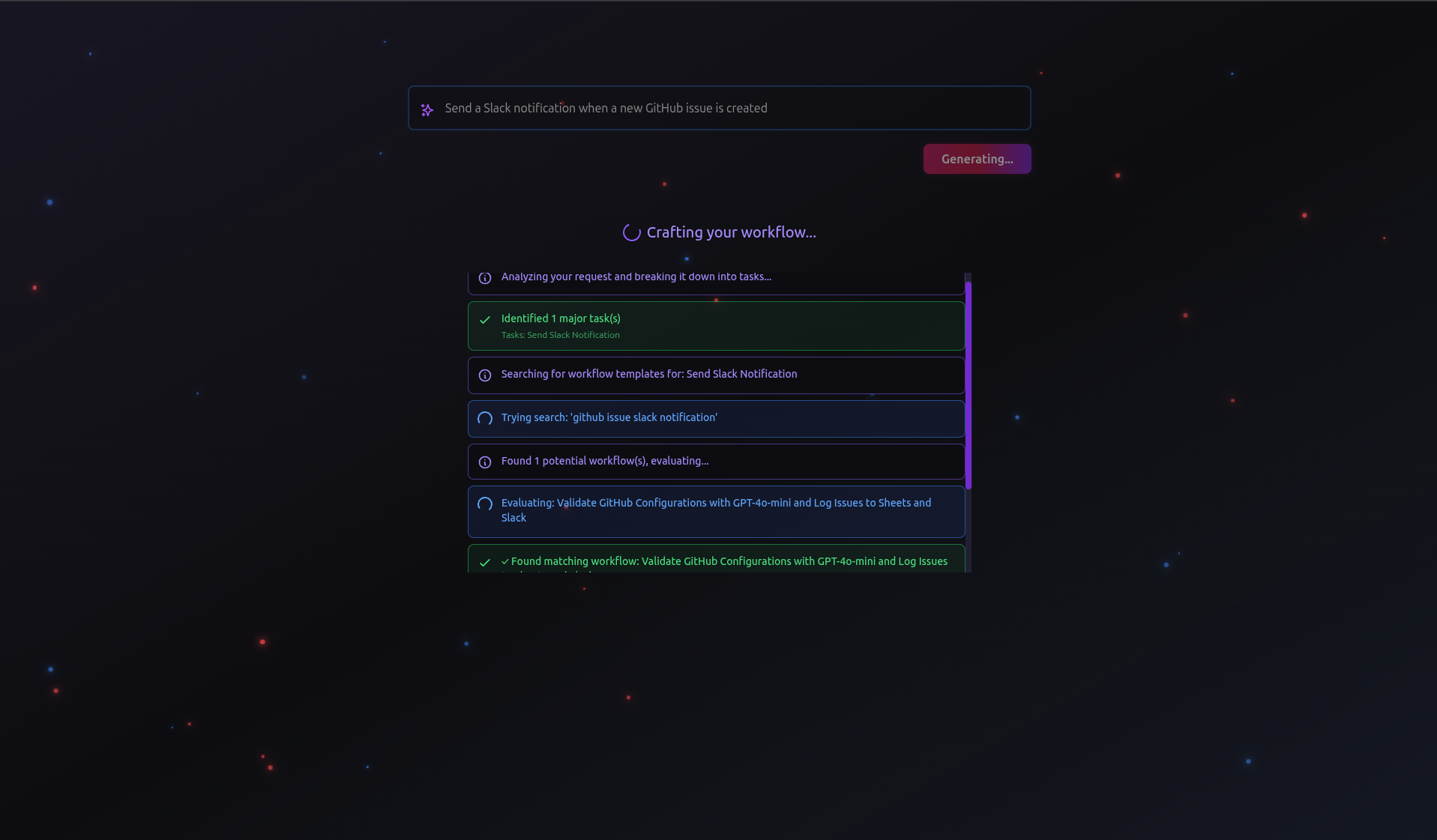
Generating Workflow
-
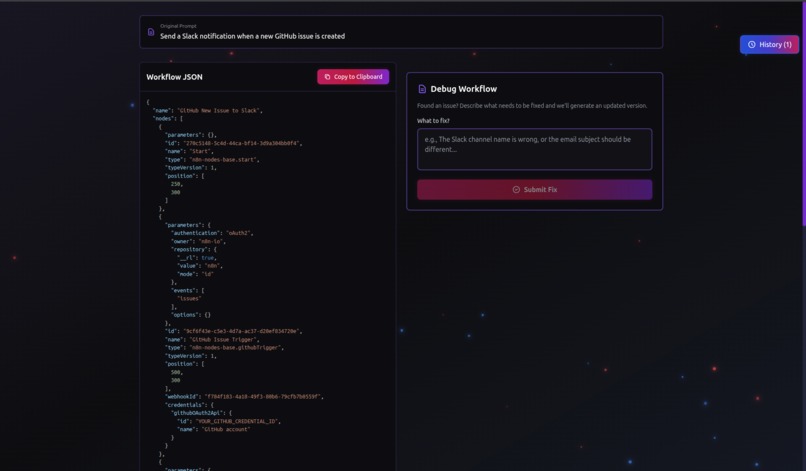
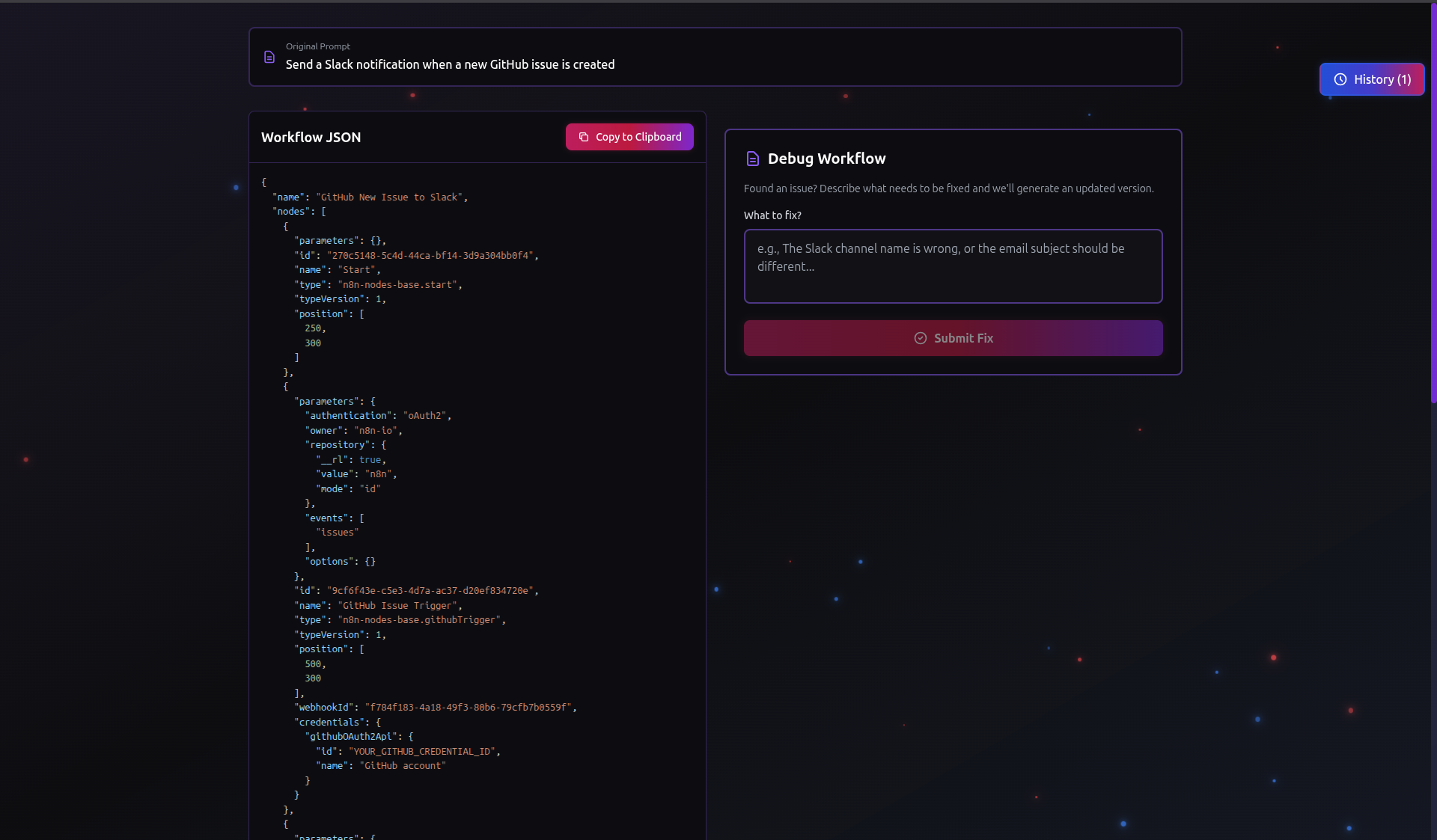
Final Workflow
Inspiration
At my campus job, I constantly see staff spending hours on manual, repetitive tasks that I knew could be automated in minutes. I realized the only thing stopping them was that automation tools are still way too complex for non-coders. I wanted to build the tool that I wish I could give them.
What it does
FlowWorks is an AI "utility" I built to make automation accessible to everyone. A user describes a task in plain English (e.g., A professor asks it to check their Outlook for emails about and sort emails according to the course, etc.), and my smart AI pipeline takes over. It deconstructs the request, finds real n8n templates, and intelligently merges and modifies them. It generates the final, complex n8n JSON, which the user can copy, paste, and run in seconds.
How we built it
The frontend is Next.js with Tailwind for styling. The backend is a Python (Flask) server that runs my "Intelligent Decomposer" RAG pipeline. This pipeline uses Gemini to deconstruct the prompt, requests and BeautifulSoup to scrape n8n.io for real templates, and another Gemini call to merge, modify, and even generate custom Code nodes.
Challenges we ran into
My biggest challenge was architecting the "Intelligent Decomposer" RAG pipeline. A simple prompt-to-JSON approach was too brittle and failed constantly. I had to design a multi-step process that could deconstruct a complex request, search for multiple templates, and then reliably merge them. Perfecting the final Gemini prompt to flawlessly assemble complex, nested JSON was a significant hurdle that took a lot of trial and error.
Accomplishments that we're proud of
I'm incredibly proud of my smart RAG pipeline. The "wow" moment wasn't just seeing it handle a simple two-step task. It was watching it successfully tackle a truly complex, multi-part prompt. It correctly deconstructed the user's goal, fetched multiple different real-world templates (like for Google Sheets and Discord), and—this is the best part—realized one of the steps required custom logic. It then dynamically generated a custom Python code node on the fly and merged everything into a single, valid, and complex workflow. The "debug loop" feature, which lets me correct the AI with follow-up prompts, feels like a real, productive conversation.
What we learned
I learned that a smart RAG (Retrieval-Augmented Generation) pipeline is far more powerful and reliable than pure generation. Grounding the AI with real, valid n8n templates was the key to success. I also learned that prompt engineering is the architecture; designing the flow of my "decomposer," "assembler," and "debugger" prompts was the most critical part of the project.
What's next for FlowWorks
My immediate next step is to move beyond "copy-paste." I want to integrate FlowWorks directly inside the n8n interface as a custom panel or node. After that, I'll tackle my original "holy grail" idea: adding video input, allowing a user to simply record their screen to have FlowWorks build the entire automation for them.
Built With
- css3
- gemini
- langchain
- nextjs
- python
- tailwind
- typescript


Log in or sign up for Devpost to join the conversation.