-
-
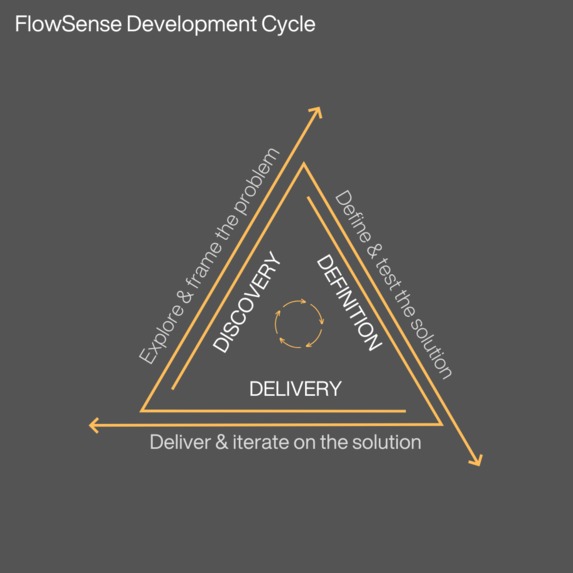
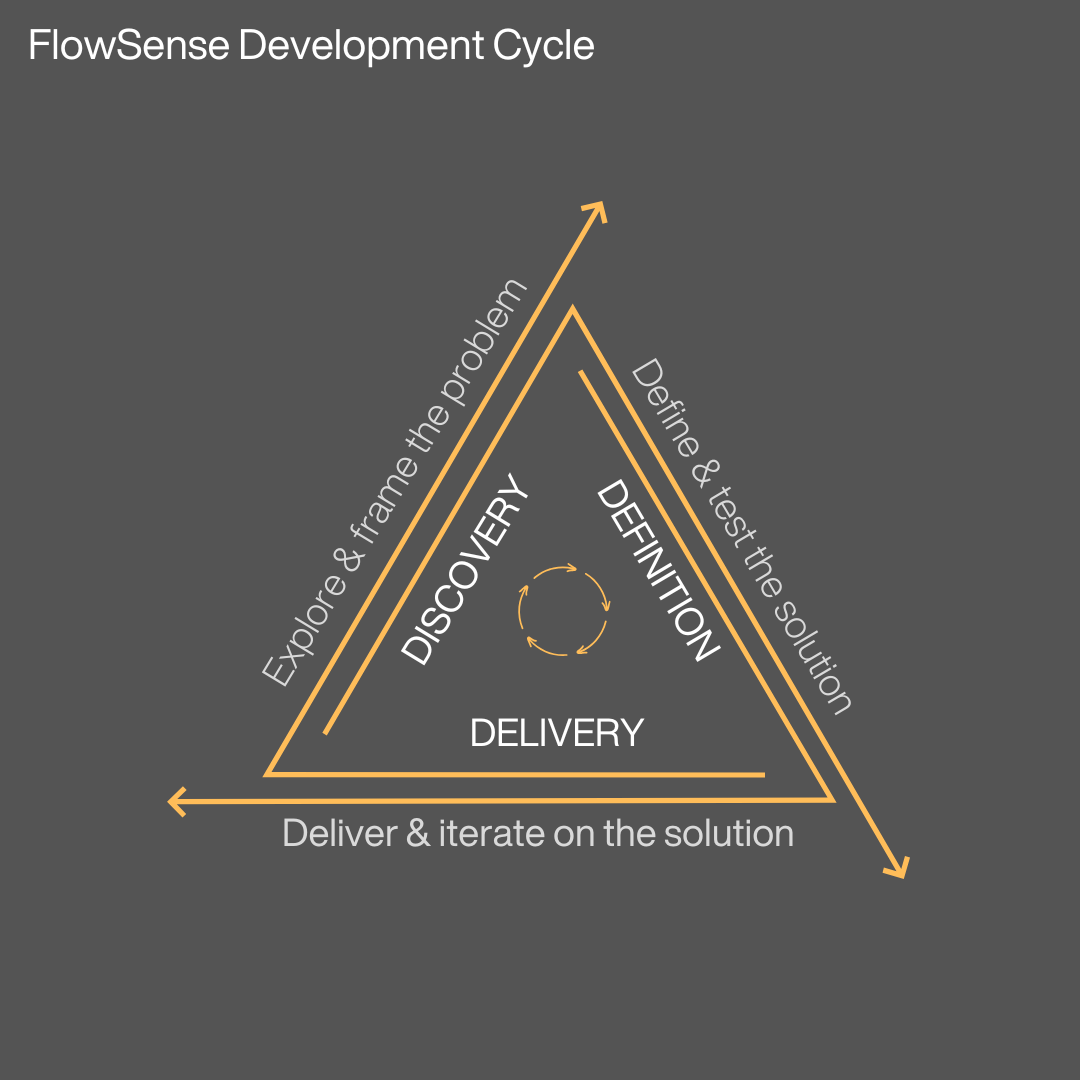
FlowSense Development Cycle
Inspiration
We know how tough it can be to go from the discovery phase to delivery in product development. After figuring out the problems you want to solve, defining the right solution that works for users—and designing it in a way that’s simple and clear—can feel even harder.
We were inspired by tools like Miro AI that bring discovery, definition, and delivery together in one collaborative space. But we also realized this approach doesn’t fit everyone—especially Atlassian users who prefer more structured workflows and organized tools. So, we created FlowSense, a visual collaboration tool for Atlassian users. It speeds up and simplifies the definition phase, blending a canvas with a grid view, async collaboration features, and a helpful Rovo agent.
What it does
FlowSense is a visual collaboration tool designed to enhance the workflows of product teams by simplifying the process of visualizing user journeys, flows, and maps. It integrates intelligent flowboards, AI agents, and tools for asynchronous collaboration to facilitate seamless cross-functional teamwork. By connecting closely with Jira, FlowSense enables users to add insights—including jobs to be done (JTBDs), user stories, wireframe specifications, and more—directly into their existing workflows. It acts as a supportive guide for teams transitioning to a more customer-driven approach, and helps eliminate the uncertainty often felt by UX designers and product leaders.
For beginners, FlowSense makes it easy to learn and get started. For experienced users, it saves time, boosts efficiency, and helps broaden their thinking. It’s designed to meet you where you are and help you work smarter.
Features Implemented During the Hackathon
- AI-Generated Flows and Maps: Automatically create complete user journey maps and flows using AI, which significantly reduces the time and effort required in the creation process.
- Detailed Step Insights: For each step in the flow, FlowSense generates comprehensive insights including wireframe specifications, user stories, opportunities, and descriptions of pain points. This feature helps teams delve deeper into each aspect of the user experience and uncover valuable information that might otherwise be missed.
- Rovo UX Product Manager Agent: An AI agent that provides feedback on designs and suggested solutions to help teams align features with user expectations.
- Asynchronous Collaboration Tools: Integration with Loom supports asynchronous communication and ensures that all team members can contribute effectively, despite their schedule and difference in time zones.
- Jira Integration: This allows users to add insights, user stories, and specifications directly into Jira projects for a smooth transition from definition to delivery.
How we built it
Our Discovery started by reading the Atlassian Team Report. We dove into various problem spaces, initially setting our focus on “inefficient meetings.” The idea was to create a solution for the “Apps for Teamwork Foundations” category. We also made a decision to use only Atlassian products for this project, because, as we thought, it would give us the chance to dive deeper into the Atlassian ecosystem, understand it better, and uncover gaps and opportunities as marketplace partners.
We couldn’t come up with a rational solution to challenge people who we interviewed mentioned and found that existing solutions are doing the job pretty well, so we decided to change our focus to something different.
Therefore, we decided to pivot and focus on creating a tool that brings an interactive experience for visual collaboration into the Atlassian ecosystem. The change in direction put us under time pressure, but it felt right. We switched to submit our project for the “Apps for World-Class Software Development” category.
We designed FlowSense with one clear goal: make it feel like a natural extension of the Atlassian ecosystem. We wanted it to generate flows and maps effortlessly, provide actionable insights, and help teams stay aligned. We combined a visual canvas with a grid view, giving users the flexibility to toggle between a big-picture and a detailed workflow view. Collaboration was a major focus, so we implemented Loom SDK for asynchronous teamwork.
We've been testing, refining, and adapting features based on what we learn from users. Right now, we’re actively working on improving FlowSense and collecting feedback from our beta testers.
Participating in the hackathon with the first version of FlowSense is a huge opportunity for us to gather feedback from the Atlassian team and the wider community.

Challenges we ran into
A primary goal was to keep users' data within the Atlassian ecosystem to ensure security and maintain integrity. However, since Rovo doesn't provide a public API for flow and map generation, we had to use the OpenAI API to generate these elements.
We aimed to embed the Rovo agent directly into our Confluence app's global page to provide a seamless and intuitive user experience. Unfortunately, Rovo doesn't allow the direct invocation of its agent within third-party applications. Instead, users must browse and access agents through Rovo's interface, which limits the user experience by requiring additional steps to start using our Rovo agent.
Forge functions app restrictions on the timeout to max of 25 seconds. To address this challenge we needed to perform the task in an asynchronous way and inform the forge app using JobID that task is done.
Accomplishments that we're proud of
Mission-Critical Impact: FlowSense empowers teams to adopt customer-centered development with less friction. It streamlines workflows, enhances collaboration, and uses AI to provide insights that accelerate the development process. Teams can iterate more effectively, ensuring that products align closely with user needs and expectations.
Ecosystem-Critical Contribution: By integrating deeply with Atlassian products and delivering a solution that people seek outside of Atlassian product suite, FlowSense keeps users within the Atlassian ecosystem. It wants to reduce the need to use external tools that may compromise data security or disrupt workflow continuity. This not only enhances user experience but also reinforces data safety and preserves the integrity of the development process.
What we learned
Without an existing customer base, recruiting professionals for interviews, discovery sessions and beta testing is a significant challenge, especially when uniquely targeting users of Atlassian products. During submission period, we’ve learned how to navigate this better by actively engaging with the community, leveraging networks, and building relationships with Atlassian users.
We learned why many Atlassian users prefer using Miro over Confluence boards for visual collaboration. By exploring the reasons behind this preference and understanding how they use Miro, we gained valuable insights into the gaps within the Atlassian ecosystem and how they could be filled. This knowledge is critical to further refine and deliver FlowSense.
Codegeist was our first-ever hackathon, and the experience taught us how to work more effectively under time pressure.
What's next for FlowSense - Intelligent Fowboards
We plan to expand FlowSense's capabilities based on more user feedback by now our high-level roadmap looks like this:
- Adding more AI sidekicks on the flowboard tailored to specific roles, such as Agile Coaches and UX Researchers.
- Enhancing the AI pipeline for more personalized and consistent insights.
- Introducing prototyping tools and components that allow users to create and test prototypes without requiring UI design skills.
- Further improving collaboration tools to support real-time teamwork.
- Refining the integration with other tools within the Atlassian ecosystem.
- Add new categories of flows and maps that the product team might need.
Bugfixes:
- Address minor UI glitches identified during testing.
- Improve speed of AI generated flows in high-load scenarios.
Impact for Atlassian users
We hope that FlowSense will offer significant benefits to Atlassian users by filling a critical gap in the product development process. By integrating closely with Jira, FlowSense enhances the definition phase, allowing teams to move from discovery to delivery faster and with greater confidence. Atlassian customers, who value structured and flexible tools, will find that FlowSense's intelligent flowboards and Rovo agent improve collaboration and streamline workflows within their existing ecosystem. This leads to more efficient product development cycles, better alignment with customer needs, and ultimately, the delivery of world-class products.
Built With
- amazon-web-services
- atlaskit
- cql
- customui
- forge
- forge-storage
- forge-theming
- jira-api
- lambda
- node.js
- openai
- react
- rovo


Log in or sign up for Devpost to join the conversation.