-
Monitoring Station
-
Application Interface
Inspiration
This project was inspired by our volunteer work with NEA, during which we monitored water pollutants at Bukit Batok Nature Reserve. Owing to rapid urbanisation and redevelopment, knowledge about water quality and changing weather patterns is a vital asset. We realised that countless man hours are spent collecting and analysing the water samples and monitoring the weather. Owing to this problem, we were inspired to automate this process of collecting and analysing water samples and monitoring the climate. Moreover, there was a lack of simple and cheap tools available to autonomously monitor the climate.
What it does
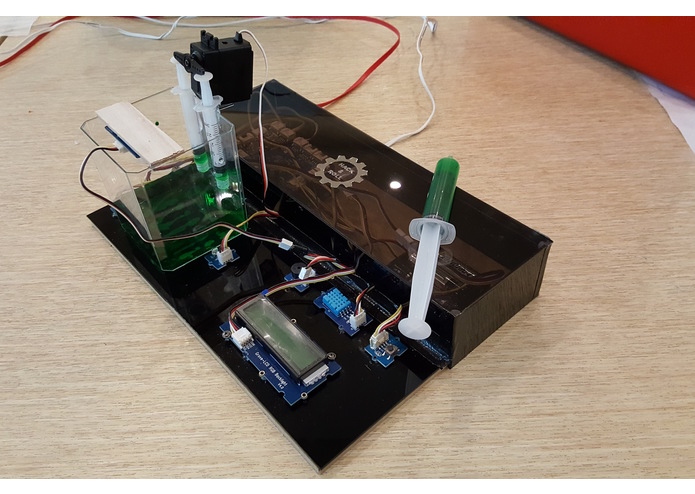
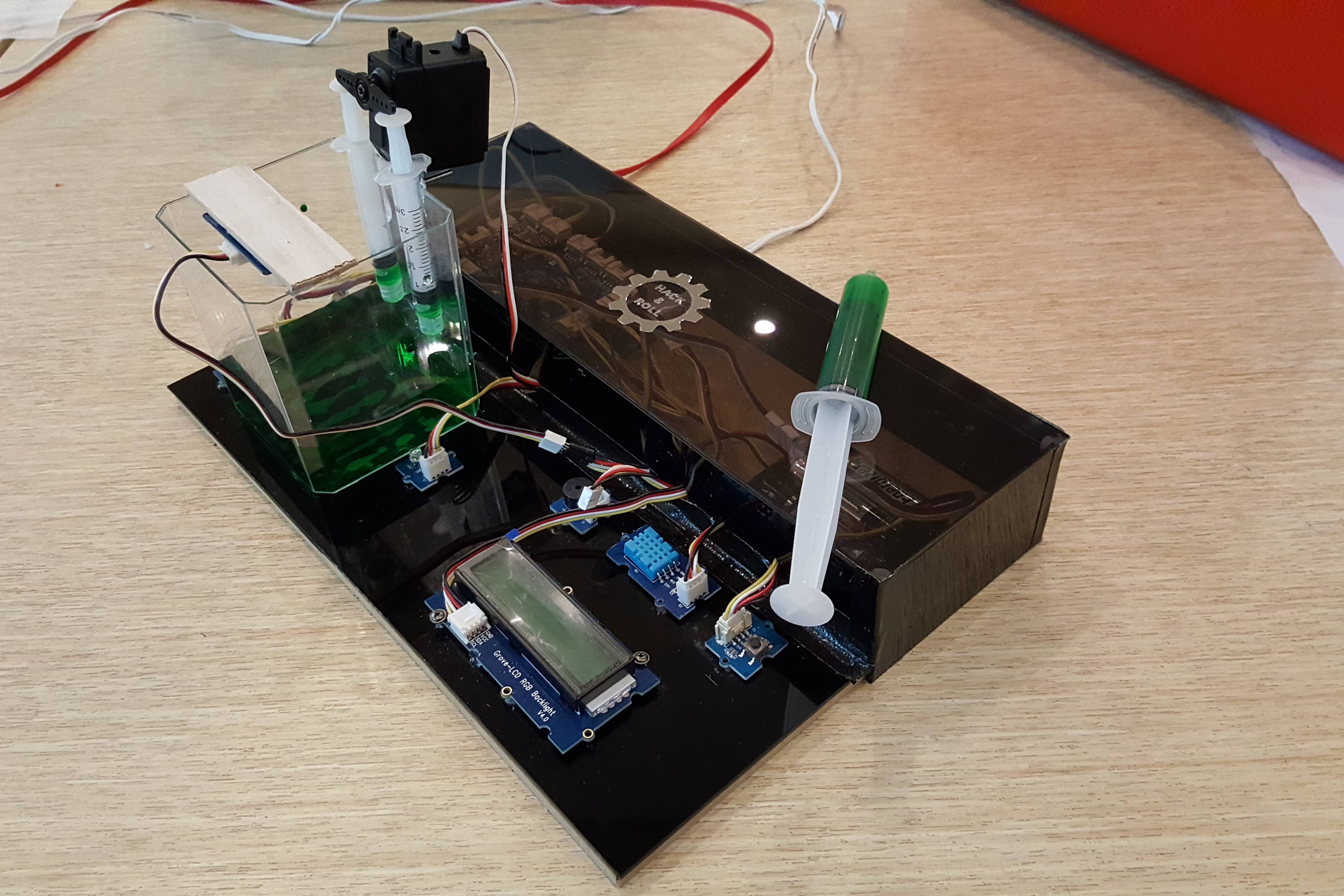
The EnviroMonitor is an unmanned, autonomous weather monitoring and water quality analysing tool. Traces of potentially harmful chemicals in water like Lead, can be picked out using chemical qualitative analysis. The EnviroMonitor runs through 3 different wavelengths of light using a simple colorimeter built using an array of LEDs. The sensor output is recorded and is matched to a database of known chemical characteristics for a known reagent. Using this data, the chemical is identified and displayed in a rgb display. Not just that but it also monitors the amount of rain in a particular area, the acidity levels, temperature and humidity using an integrated TempHum sensor.
How we built it
Firstly, a robust acrylic and wooden body was built to house the sensors and the Raspberry Pi. Then the reagent pouring mechanism was built using syringes and a servo which was powered by an external power source as Raspberry Pi is too sensitive to handle the large amount of current drawn. The innovative colorimeter was conceptualised and implemented and together with several sensors for weather monitoring and prediction.
Challenges
We faced several challenges while developing the EnviroMonitor. Firstly, we were hindered in our building process when we realised that there were no proper tools to cut acrylic thus forcing us to use a more primitive method of scoring the acrylic and then snapping it which consumed a lot of time and took more effort than needed. Secondly, we found that ambient light interference was hampering the accuracy of our instrument thus requiring a lot of calibration to achieve the accuracy needed for the job.
Accomplishments
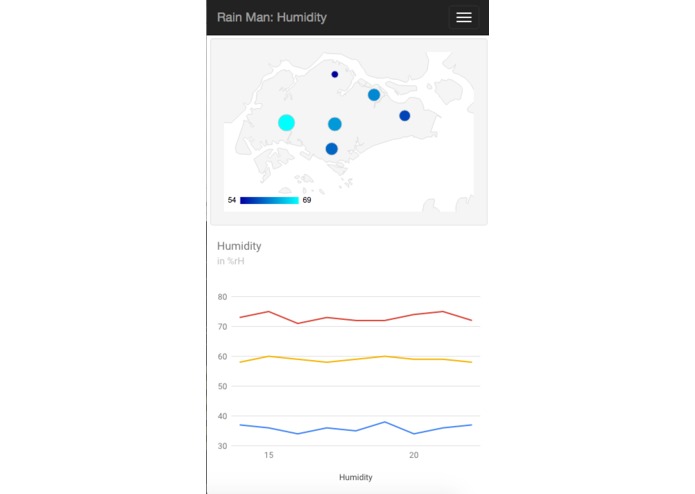
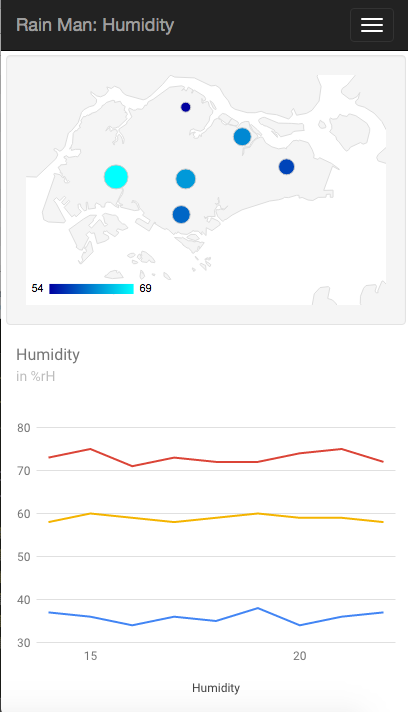
We were able to build an autonomous climate and water monitoring system. Despite the peripheral parts in the instrument costing less than $20, we were able to deliver a professionally working model with a polished finish which not only is aesthetically pleasing but it also boasts high accuracy.We implemented a simple yet functional server based on Flask framework. We also developed an user intuitive android and web application which displays data in real time from the instrument. It is made rugged to survive the harsh conditions upon deployment. We were able to design an innovative colorimeter equipped in the instrument. We were able to use an innovative network of Internet-of-things to weather prediction.
What we learned from EnviroMonitor
We became better accustomed to server-client communication when using the Flask server. We also learnt how powerful and useful the Internet-of-things in the real world. We were able to better understand how an unique and intuitive user interface can be built in order to enhance user experience.
What's next for EnviroMonitor
Like any other product, EnviroMonitor has several possible extensions and improvements. The simple Flask server framework can be enhanced and replaced with a more robust server like django.


Log in or sign up for Devpost to join the conversation.