-
-
Log In
-
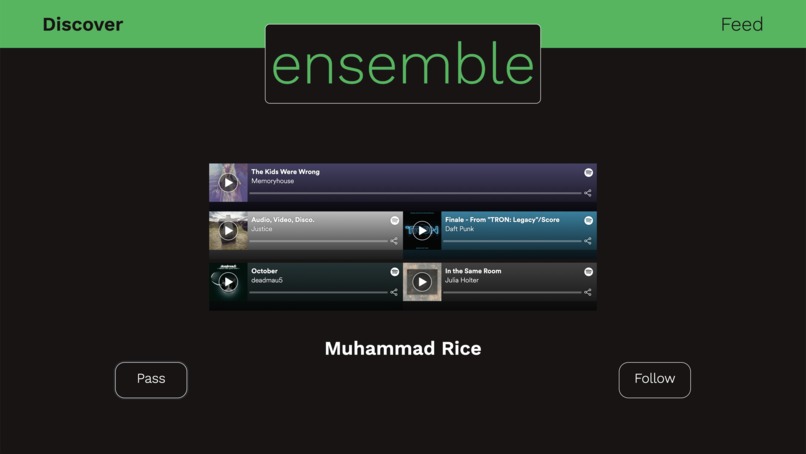
Discover
-
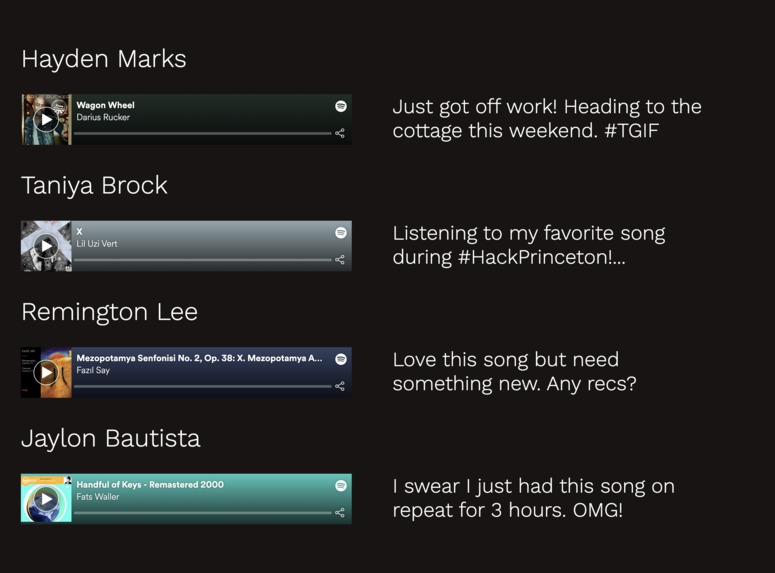
Feed
Inspiration
Music is something inherently personal to each and every one of us - our favorite tracks accompany us through our highs and lows, through tough workouts and relaxing evenings. Our aim is to encourage and capture that feeling of discovering that new song you just can't stop listening to. Music is an authentic expression of ourselves, and the perfect way to meet new people without the clichés of the typical social media platforms we're all sick of. We're both very passionate about reviving the soul of social media, so we were very excited to hear about this track and work on this project!
What it does
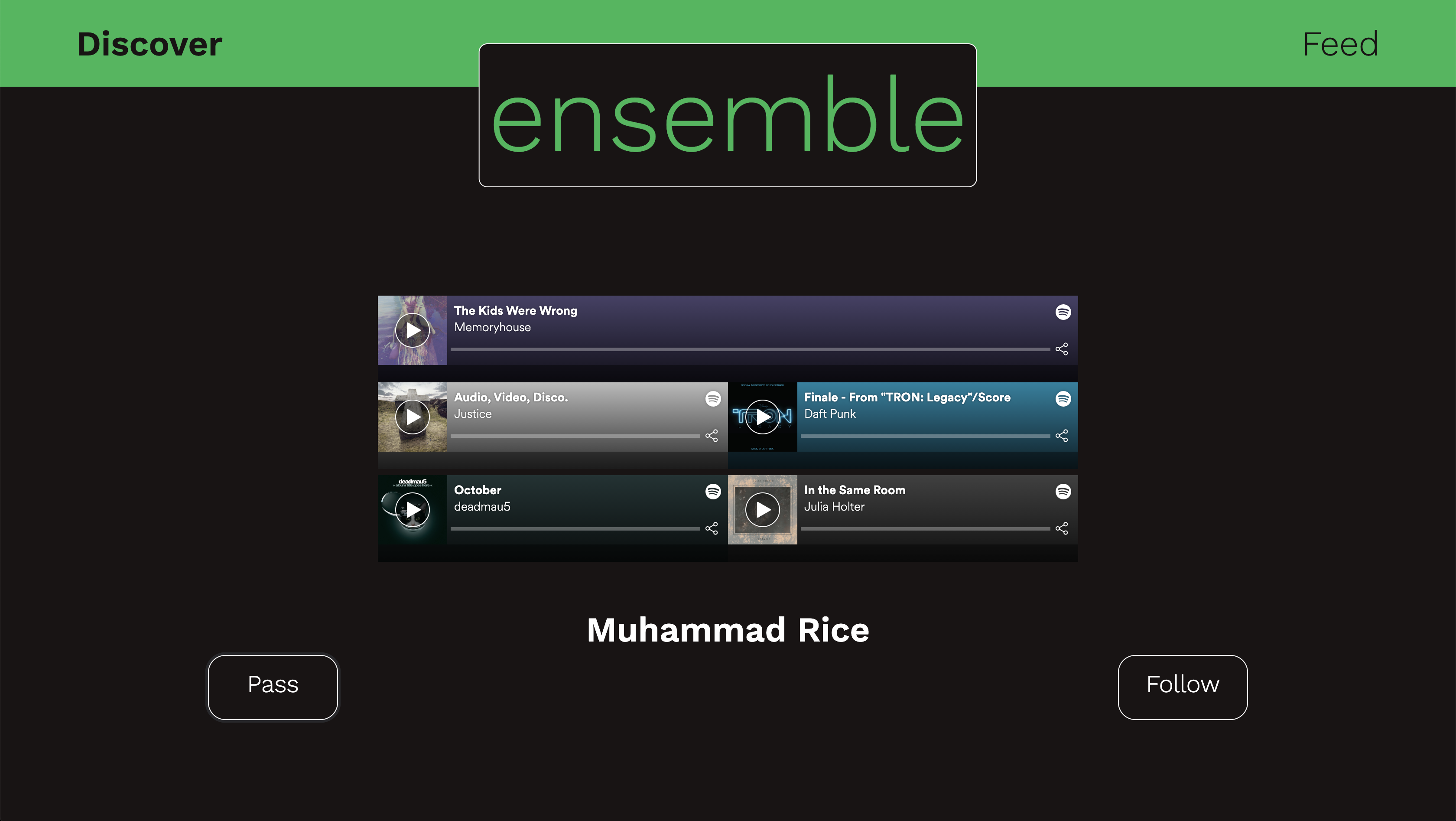
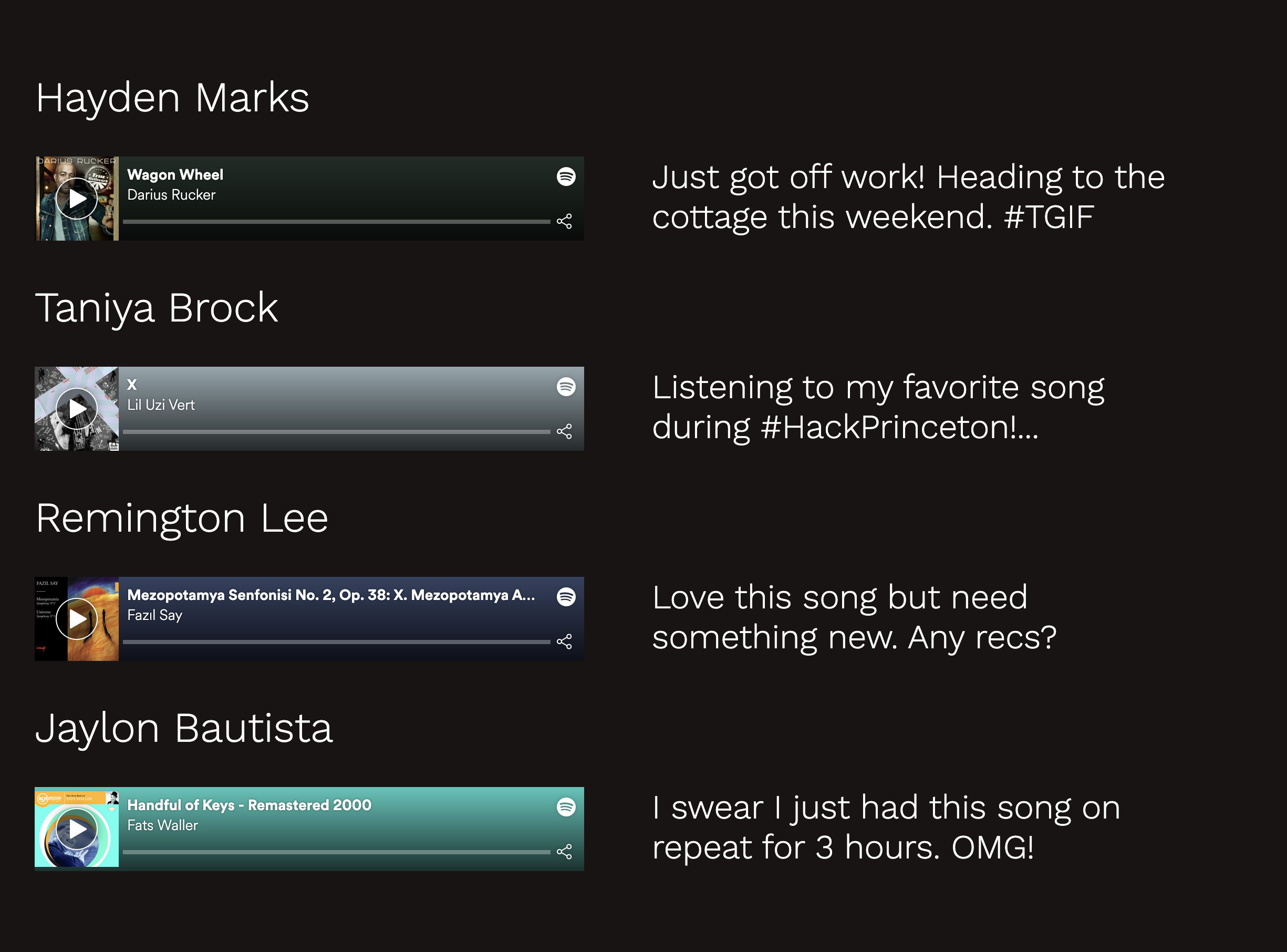
Spotify keeps tabs on the tracks you can't get enough of. Why not make that data work for you? With one simple login, ensemble matches you with others who share your musical ear. Using our state-of-the-art machine learning algorithms, we show you other users who we think you'd like based on both their and your music taste. Love their tracks? Follow them and stay tuned. ensemble is a new way to truly connect on a meaningful level in an age of countless unoriginal social media platforms.
How we built it
We wanted a robust application that could handle the complexities of a social network, while also providing us with an extensive toolkit to build out all the features we envisioned. Our frontend is built using React, a powerful and well-supported web framework that gives us the flexibility to build with ease. We utilized supporting frontend technologies like Bootstrap, HTML, and CSS to help create an attractive UI, the key aspect of any social media. For the backend, we used Django and Django Rest Framework to build a secure API that our frontend can easily interact with. For our recommendation algorithm, we used scikit-learn and numpy to power our machine learning needs. Finally, we used PostgreSQL for our DBMS and Heroku for deployment.
Challenges we ran into
As with most social media platforms, users are key. Given the very short nature of hackathons, it obviously isn't feasible to attract a large number of users for development purposes. However, we needed a way to have users available for testing. Since ensemble is based on Spotify accounts and the Spotify API, this proved to be non-trivial. We took advantage of the Spotify API's recommendations endpoint to generate pseudo-data that resembles what a real person would have as their top tracks. With a fake name generator, we created as many fake profiles as we needed to flesh out our recommendation algorithm.
Accomplishments that we're proud of
Our application is fully ready to use—it has all of the necessary authentication, authorization, and persistent storage. While we'd love to add even more features, we focused on implementing the core ones in their current state (if you use Spotify, feel free to log in and try it out!). You can find the live version here. Despite all of the hassle of the deployment process, it was very fulfilling to see what we created, live and ready to be used by anyone in the world.
We're also proud of what we've accomplished in general! It's been a challenging yet immensely fulfilling day-and-a-half of ideation, design, and coding. Looking back at what we were able to create during this short time span, we're proud to have something to show for all the effort we've put into it.
What we learned
We both learned a lot from working on this project. It's been a fast-paced weekend of continuously pushing new changes and features, and in doing so, we sharpened our skills in both React and Django. Additionally, utilizing the Spotify API was something neither of us had done before, and we learned a lot about OAuth 2.0 and web authentication in general.
What's next for ensemble
Working on this project was a lot of fun, and we'd both love to keep it going in the future. There are a ton of features that we thought out but didn't have the time to implement in this time span. For example, we'd love to implement a direct messaging system, so you can directly contact and discuss your favorite songs/artists with the people you follow. The GitHub repository readme also contains complete and detailed instructions on how to set up your development environment to run the code, if anyone is interested in trying it out. Thanks for reading!


Log in or sign up for Devpost to join the conversation.