-
We are ember
-
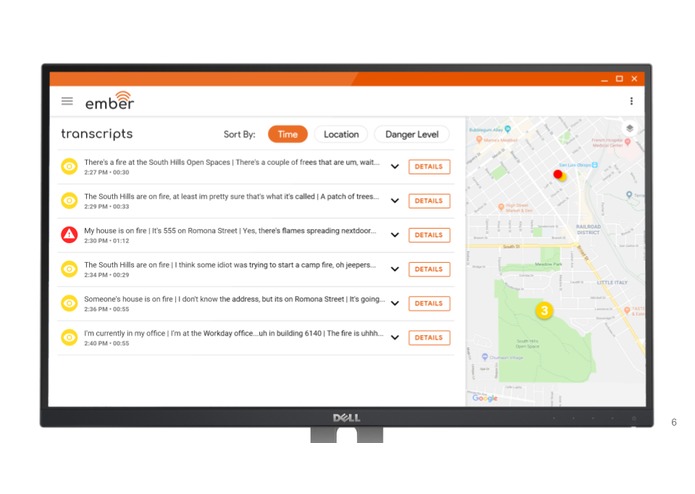
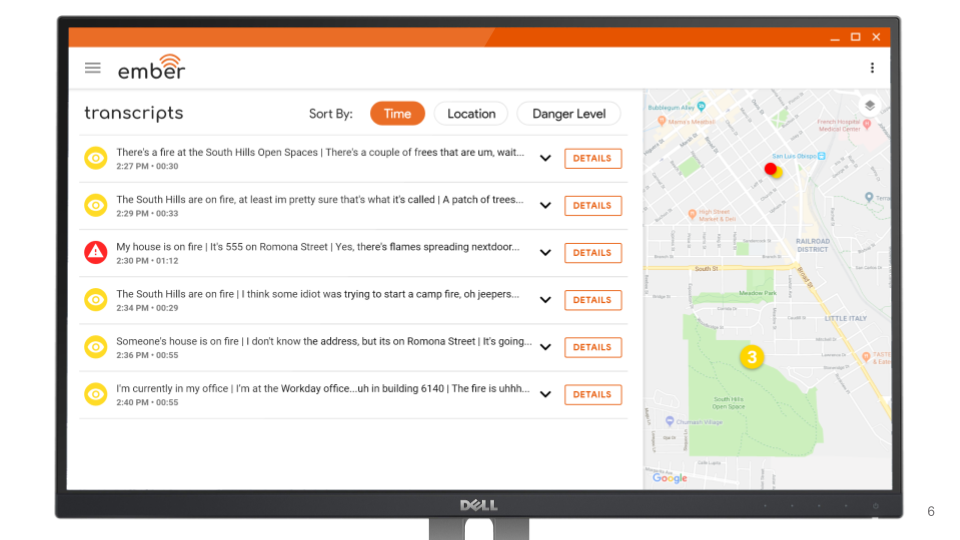
A look at our dashboard system
-
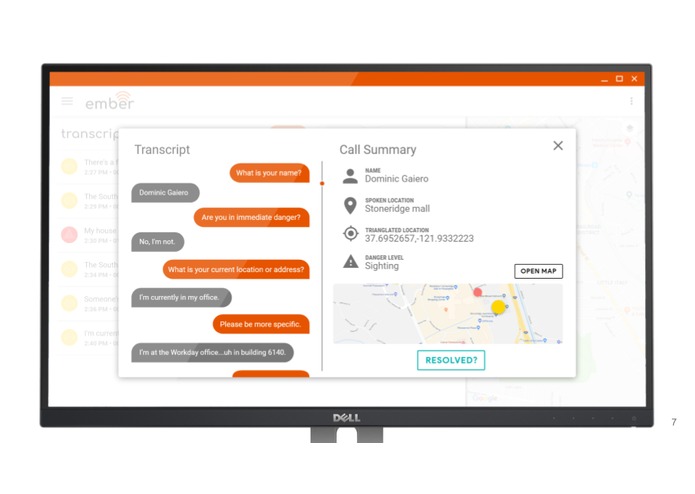
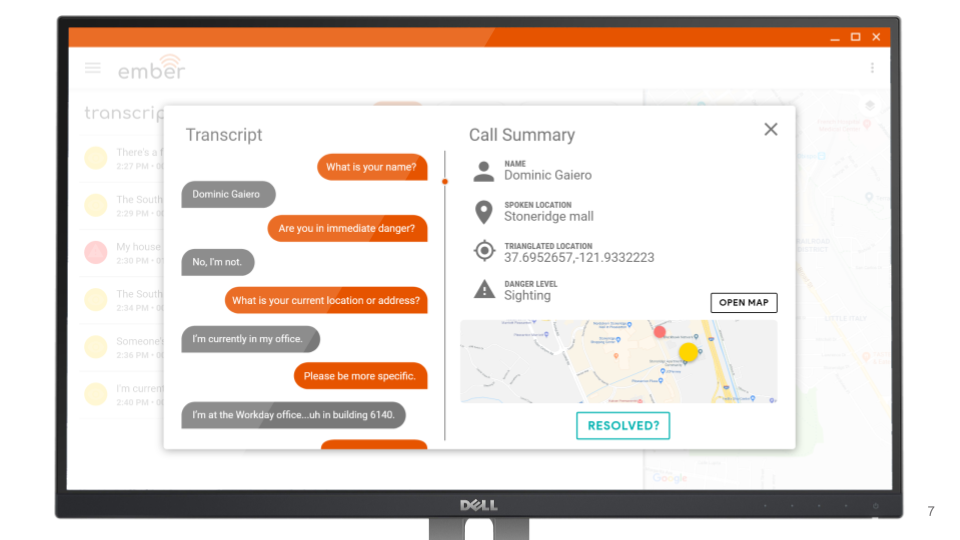
Details for a specific call
-
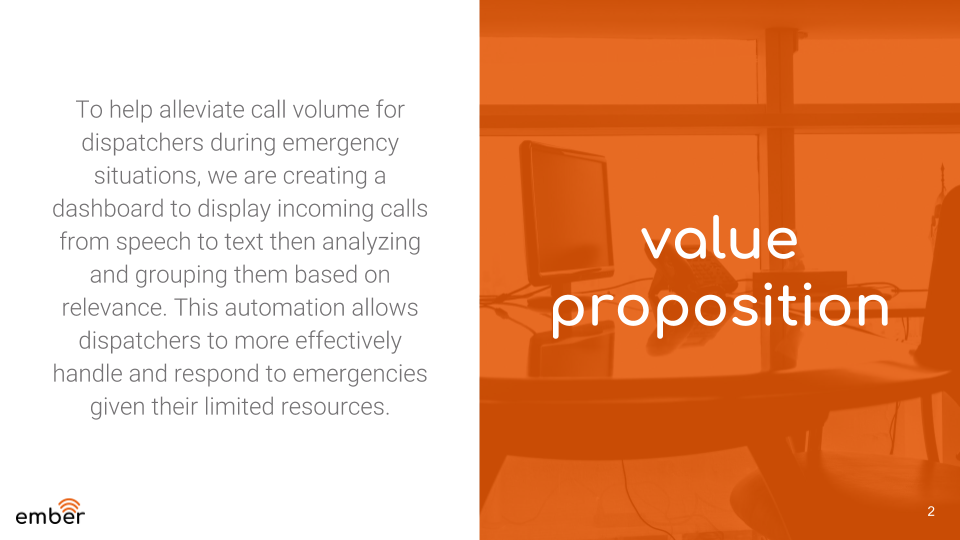
Our value proposition
-

The team


ember
efficicent management for balancing emergency responses
Inspiration
To help alleviate call volume for dispatchers during emergency situations, we are creating a dashboard to display incoming calls from speech to text then analyzing and grouping them based on relevance. This automation allows dispatchers to more effectively handle and respond to emergencies given their limited resources.
What it does
In emergency situations, dispatchers have to process large amounts of data. Instead of manually responding to each caller, the dispatch system goes into "emergency mode" when call volume exceeds a certain threshold. Callers will then record responses to some automated prompts which are then processed and displayed on the dashboard.
It's a lot easier to read through calls as opposed to answering individual callers, which means dispatchers can sort through incoming data much more efficiently and deal with the most pressing issues and pass important information along to the right people.
How we built it
Our team used a few of Google's Cloud AI APIs to process speech input which would be a phone call in the context of the ember system. This allowed us to convert speech to text and perform entity analysis using the natural language capabilities of the cloud platform. From here, this data is processed into a call object that's ultimately displayed on the dashboard.
Challenges we ran into
We found it difficult to identify an effective solution to our issue. For the first few hours we bounced several ideas off each other and couldn't come to a consensus. Eventually, we realized we wanted to focus on enhancing communication during an emergency and finally settled on improving the way dispatchers respond to incoming calls in an emergency situation such as a fire.

Log in or sign up for Devpost to join the conversation.