-
9 Types of Intelligence, skills, and potential jobs
-
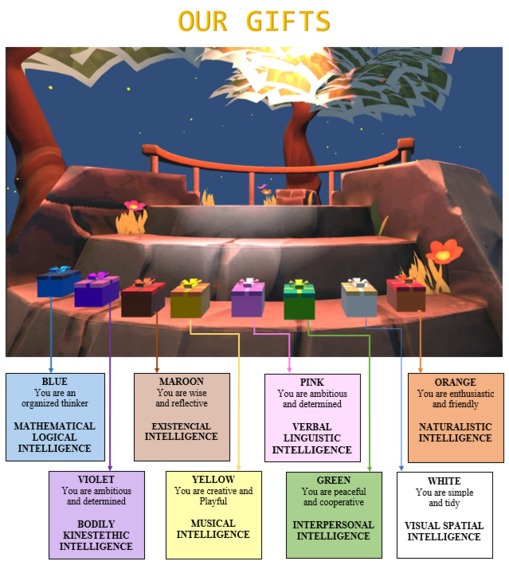
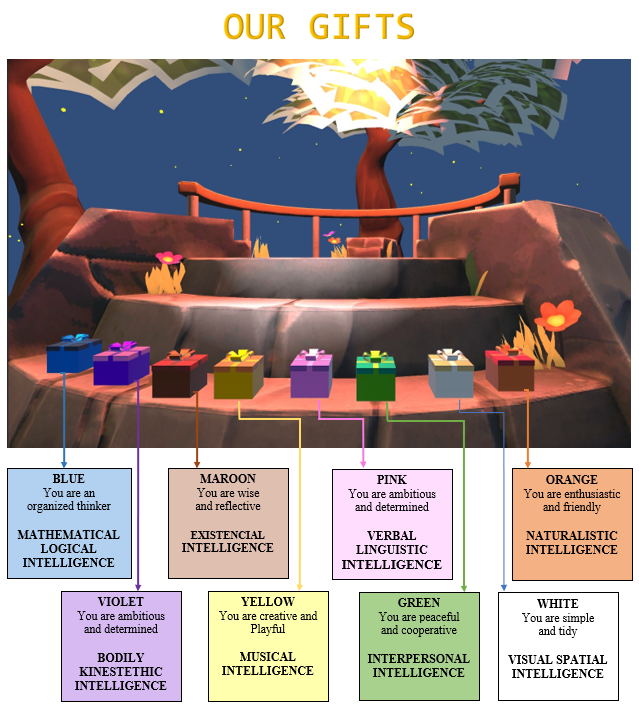
Stimulating human instict by picking a coloured gift. Each colour means a specific type of intelligence [4]
-
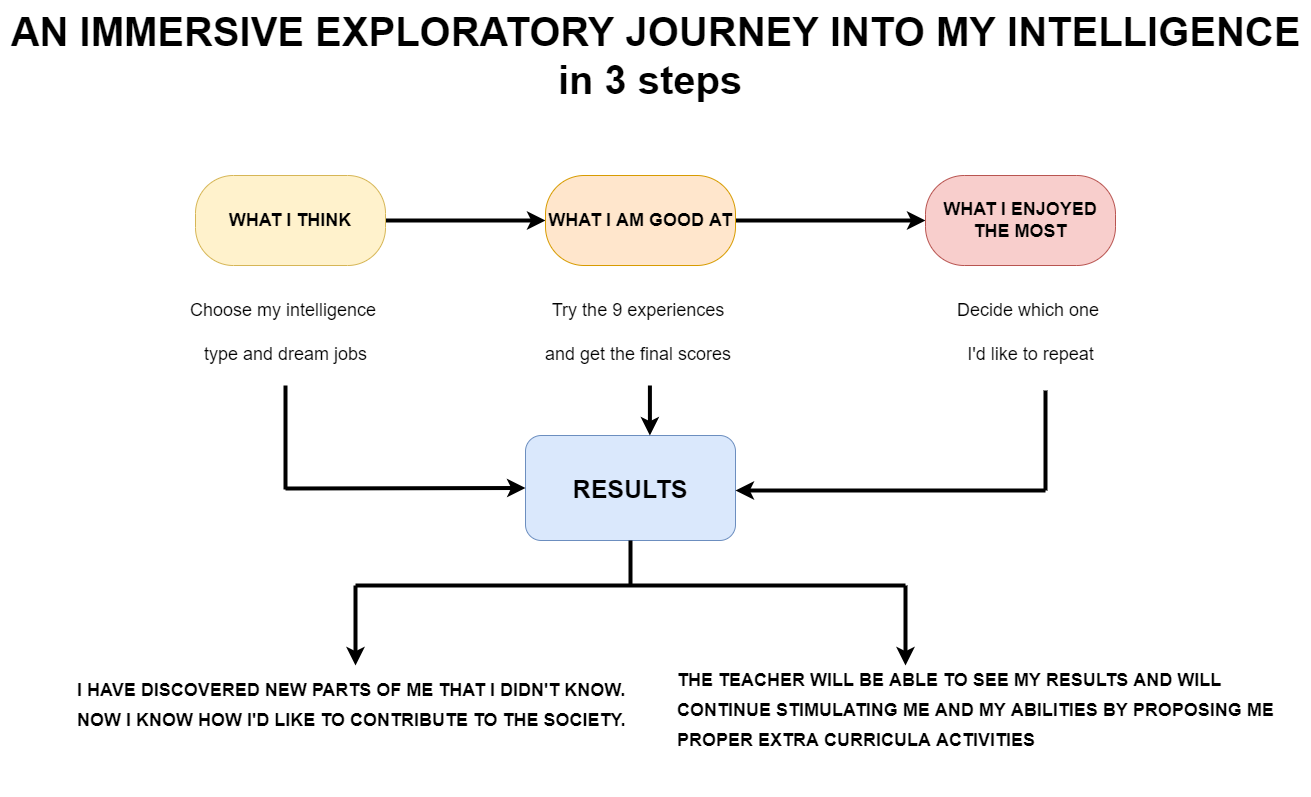
The UX: an intelligence exploratory journey in three steps
-
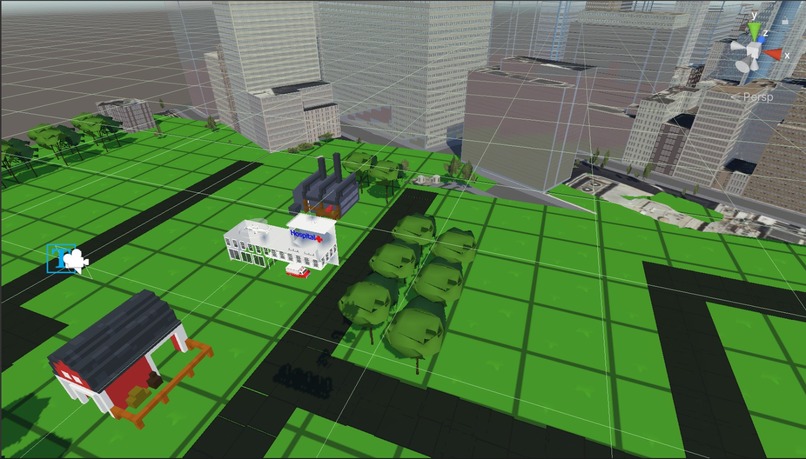
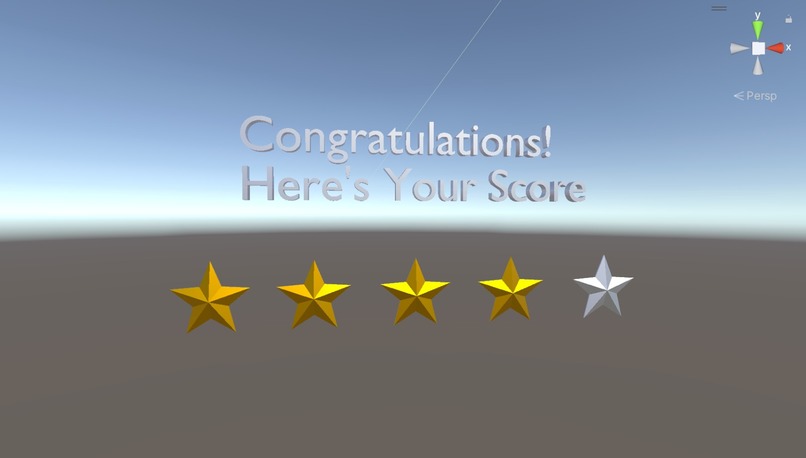
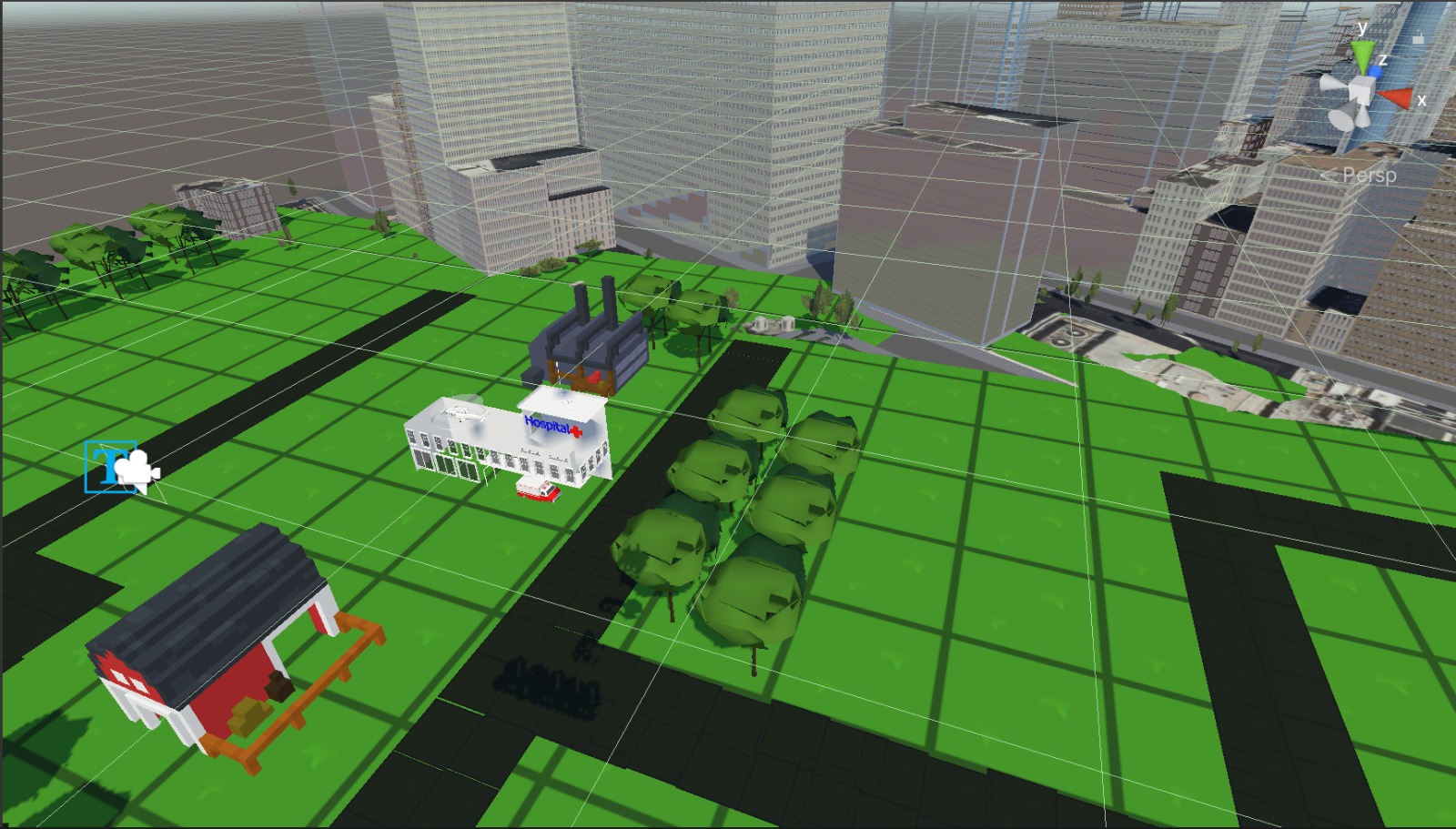
Building the City: Visual-Spatial Intelligence Challenge
-
-
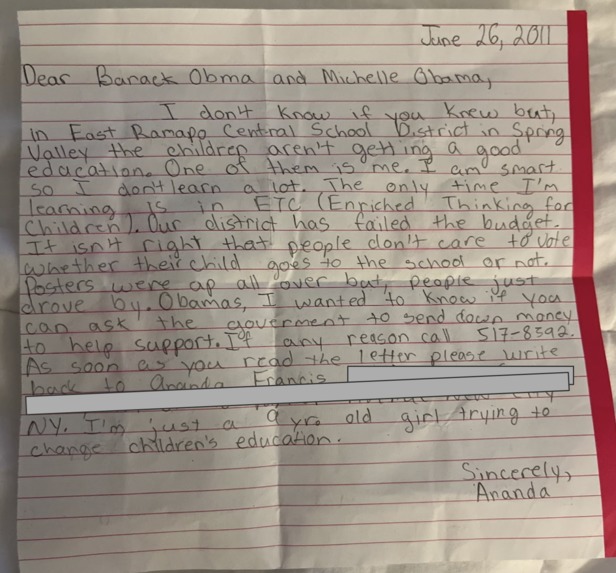
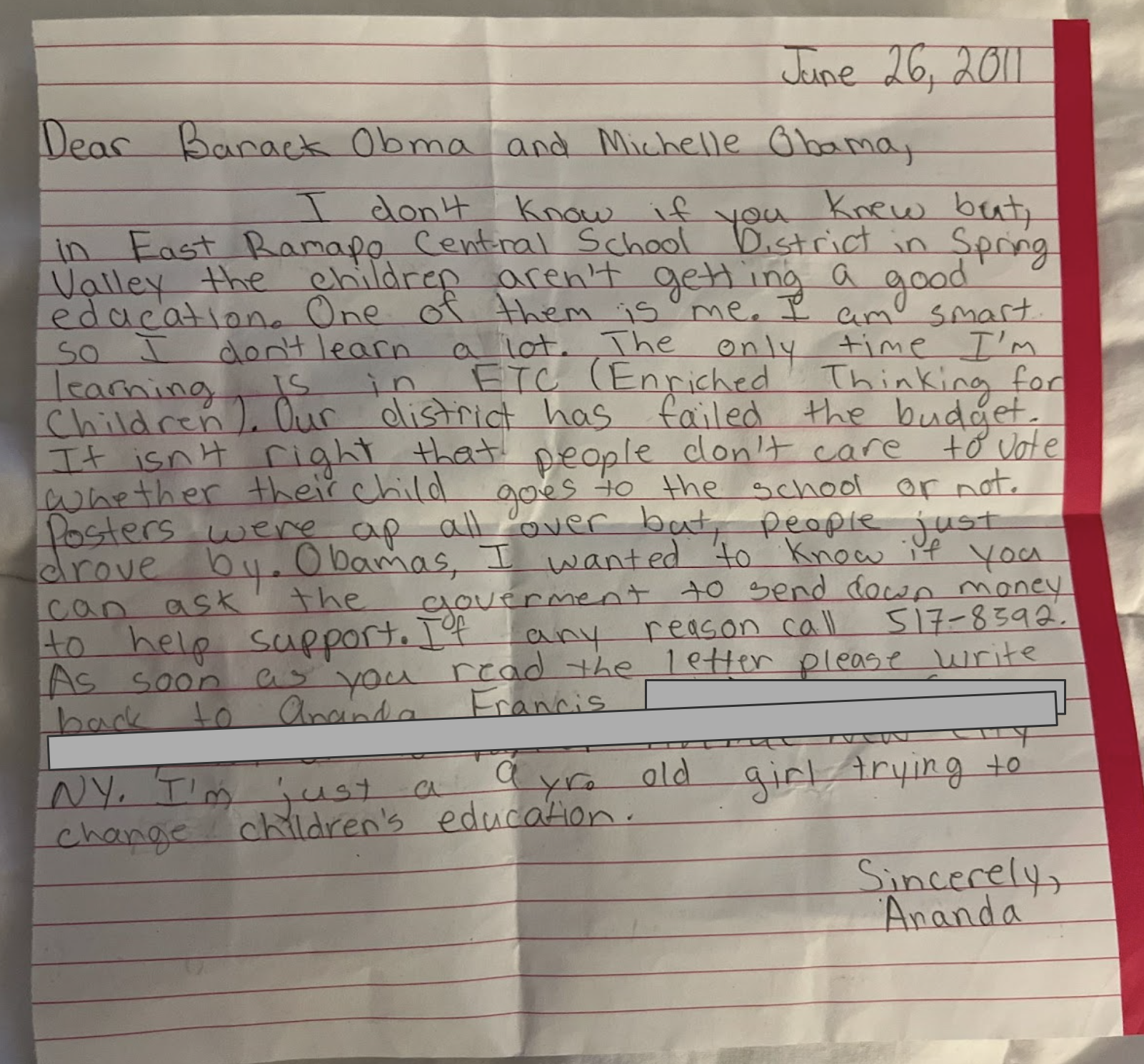
Anissa's Letter to the Obamas at 9 Years Old

The Problem
In the American education system, not all students have an equal opportunity for success. Some students, often those of marginalized communities such as low-income, urban, Black, Brown, Latino, LGBTQ+, women, refugee and immigrant students, do not receive adequate support at school. Anissa Vaughn, one of our team members, was only 9 years old where she wrote a letter to the Obamas talking about the lack of support, funding and resources she was currently receiving in her education. Imagine being so young and forced to know about the harsh realities of education inequity and how the system is failing you? This can lead to many students feeling underserved, neglected and struggling to understand their talents and abilities. Frustration, a sense of inadequacy and hopelessness are common feelings for them, who unfortunately often end up living a life far from their true potential and abilities. But what if we build a society of individuals who know their natural gifts and how to leverage them to contribute to the community? What if we empower these students to dare to dream beyond the limitations they've confined to their whole lives?
Inspiration
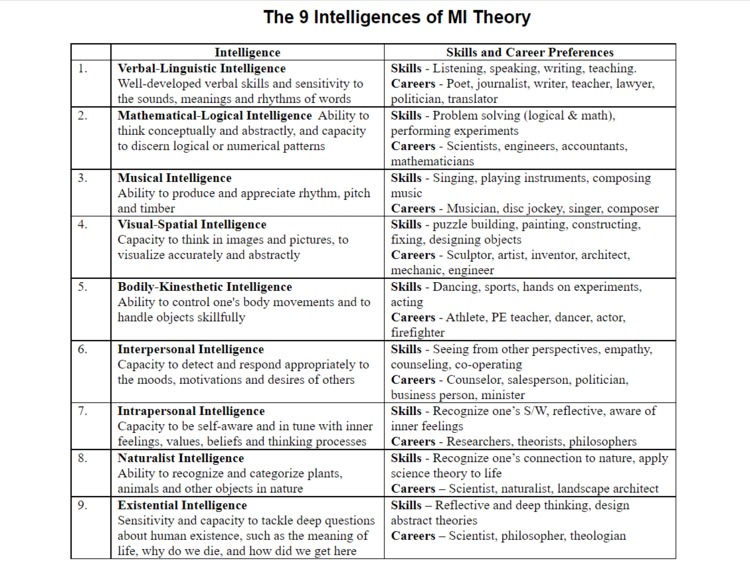
Are you familiar with Howard Gardner's theory of multiple intelligences? In his theory he defines up to 9 types of intelligences: Visual-Spatial, Linguistic-Verbal, Logical-Mathematical, Bodily-Kinesthetic, Musical-Rhythmic, Interpersonal, Intrapersonal, Naturalistic and Existential intelligence [1]. Each of us has a unique and unrepeatable mix of these 9 gifts, and this mix can significantly influence our potential careers and our contribution to society [2]. Due to schools mostly investing in measuring and assessing logical-mathematical and verbal-linguistic intelligences, many students struggle to recognize where they fall on the different spectrums of all the intelligences[3], feeling that if they don't excel in these 2 intelligences, they are not intelligent or gifted at all. Right now, the most widely used methods to "evaluate" and "measure" where a person falls on this spectrum requires very long, arduous traditional questionnaires which infer that the user has a high intrapersonal intelligence, which may not be true. For this reason, we have created an immersive test for each type of intelligence, that engages students through an assessment in which they solve problems affecting their local communities. This not only empowers students to learn what their natural gifts and intelligences are but exposes them to ways they can use these gifts to have a positive impact on their communities.
The solution
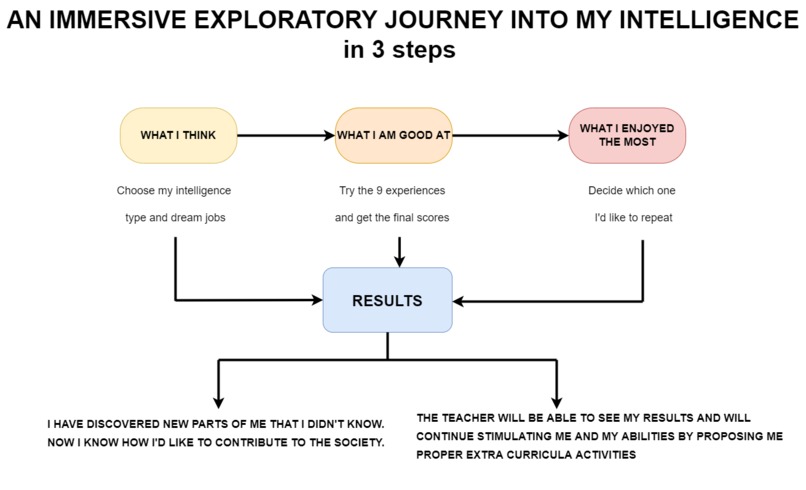
We prose a Mixed Reality-based exploration journey into your intelligence! This wonderful experience will enable you to contribute in first person to 9 different problems of our society, and discover which one you enjoyed most and best suited you. The MR games essentially helps you to identify:
- What you think: which intelligence type and role in the society do you think you have?
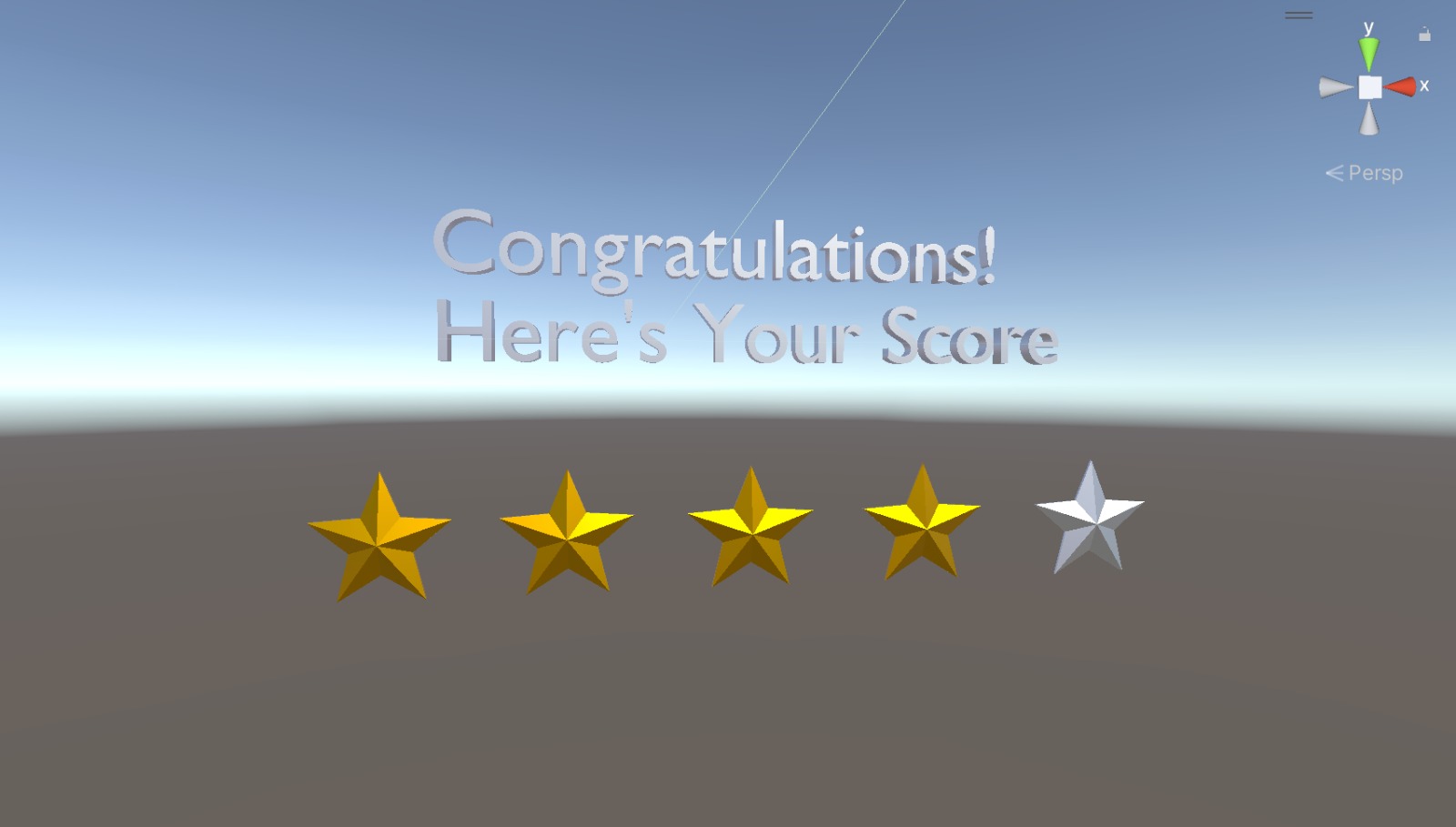
- What you are good at: which is the best score among the 9 immersive experiences?
- What you enjoyed the most: in which 1st person experiences, you were more pleased to make your contribution?
Just play..and feel free to to find out how important you are to your community!
Target users
High-school students from marginalized communities in USA (15-17 y.o.)
How we built it
We developed the MR application within Unity3D (2021.3.1 version), currently built for LYNX All-in-One Mixed Reality headset link. The 3D models and canvas have been created in Blender and imported from Sketchup and Sketchfub.
Challenges we ran into
- Designing an exploratory experience (and not guided/forced experience) for the user, to properly stimulate his/her thinking in the most natural way possible.
- Outlining a challenge for each intelligence that accurately assesses a user's ability in that intelligence while engaging them in community problem-solving
Accomplishments that we're proud of
After a long and interesting brainstorming phase, we have mixed our different ethnic and cultural backgrounds to be a passionate team of Future Constructors! We pivoted our project from boxing students to a specific type of intelligence and allowing them to explore all the intelligences without worrying about a score. What's most important isn't "how well did this student use visual-spatial intelligence to design a neighborhood" but rather:
- Did the student enjoy feeling in control of designing their own community?
- How can we introduce careers such as urban planning that needs people of the community to design their community rather than continuing the system of gentrification and displacement?
- How can we get students interested in exploring their visual-spatial intelligence and opportunities to nurture and grow that talent?
What we learned
- The best ideas come from comparison with others: you just need to open up to sincere listening.
- Advanced technologies (as XR) should always be inclusive and accessible to everyone. They should be exploited to improve our society, especially in support of the less fortunate.
What's next for yoVR Intelligence
- Develop and test the challenges for all the types of intelligence
- Conduct a User Study about our solution's usability and user satisfaction
- Measure the impact our technology has had for our target users and addressing the problem
Credits
We'd like to thank:
- Everyone from the Lynx, UltraLeap and Git-help teams!
-Gold Star by AnshiNoWara is licensed under Creative Commons Attribution https://sketchfab.com/3d-models/gold-star-5296c3fcf6c24e99a07de7cc77cb1209
-Gift box 3 by Multipainkiller Studio is licensed under Creative Commons Attribution https://sketchfab.com/3d-models/gift-box-3-1be0f09f70cd422d87cff81073b3c2cb
-"Stylized Spawn point + Free blend file" (https://skfb.ly/o8yBG) by Agustín Hönnun is licensed under Creative Commons Attribution (http://creativecommons.org/licenses/by/4.0/).
- 3D Building assets from Daniel Buckley, Create a City Building Game in Unity – Strategy Tutorial https://gamedevacademy.org/unity-city-building-game-tutorial/
-Geopipe, Inc. (www.geopipe.ai/) (info@geopi.pe)
References
[1]. Gardner, H. (2010). Multiple intelligences. New York.-1993.
[2]. Intelligence and Society. (2011). In R. Sternberg & S. Kaufman (Eds.), The Cambridge Handbook of Intelligence (Cambridge Handbooks in Psychology, pp. 621-708). Cambridge: Cambridge University Press.
[3]. Barrington, Ernie: "Teaching to student diversity in higher education: how Multiple Intelligence Theory can help", Teaching in Higher Education (2014). https://doi.org/10.1080/1356251042000252363
[4]. Won, Seahwa; Westland, Stephen: "Colour meaning and context", Color Research & Application (2017), volume 42. https://doi.org/10.1002/col.22095

Log in or sign up for Devpost to join the conversation.