-
-
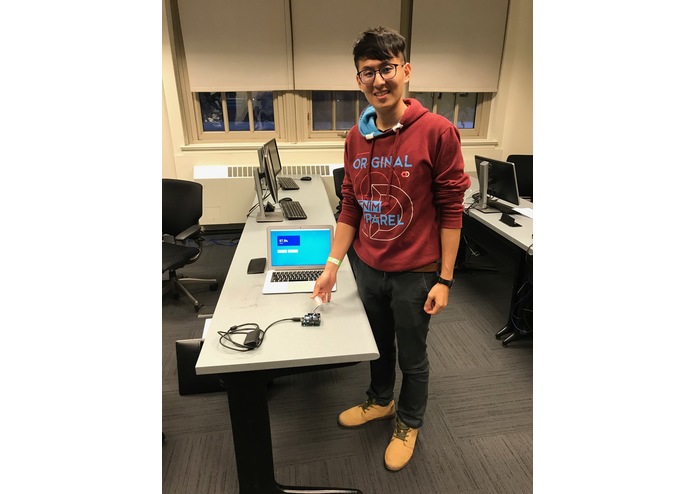
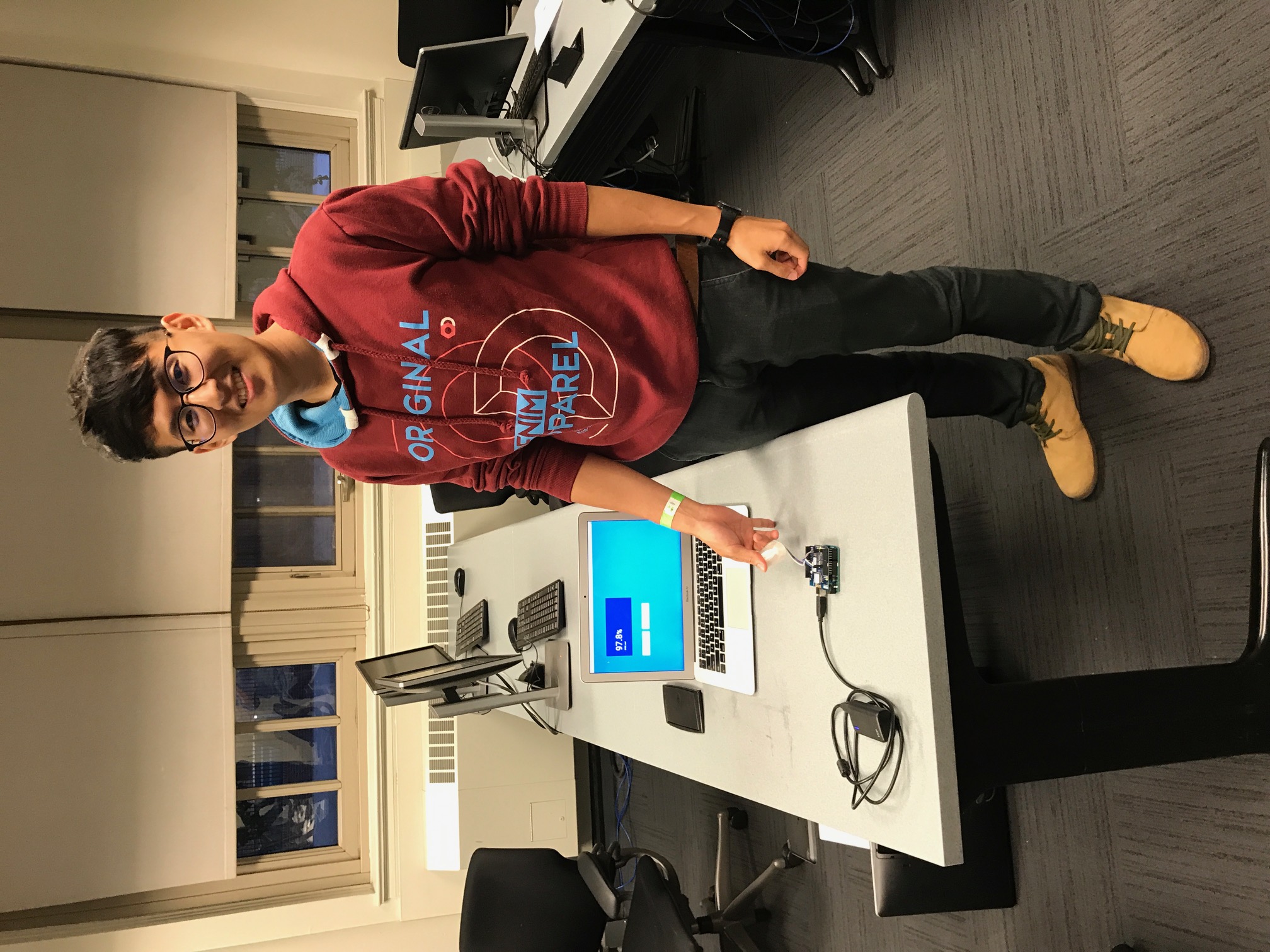
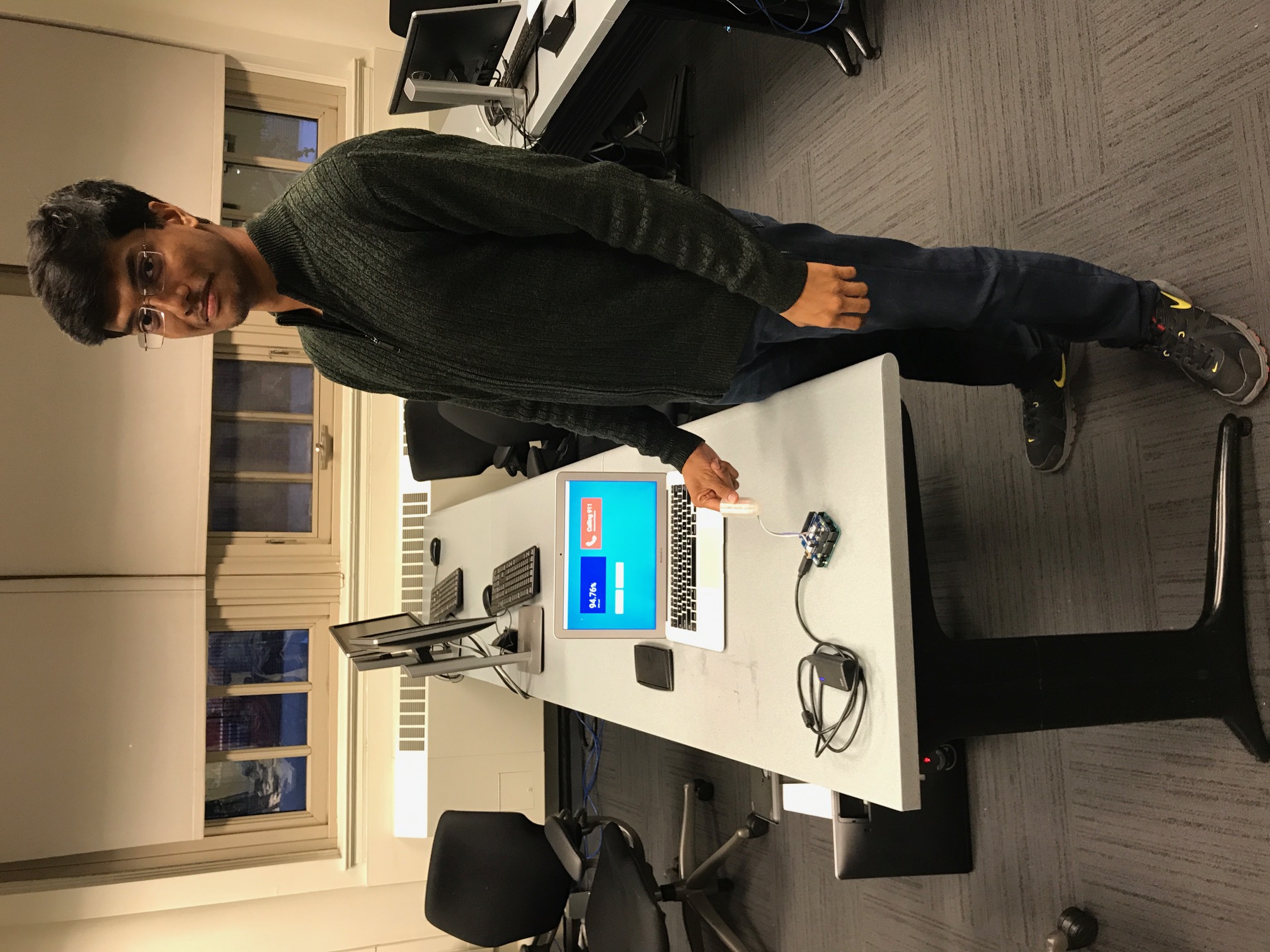
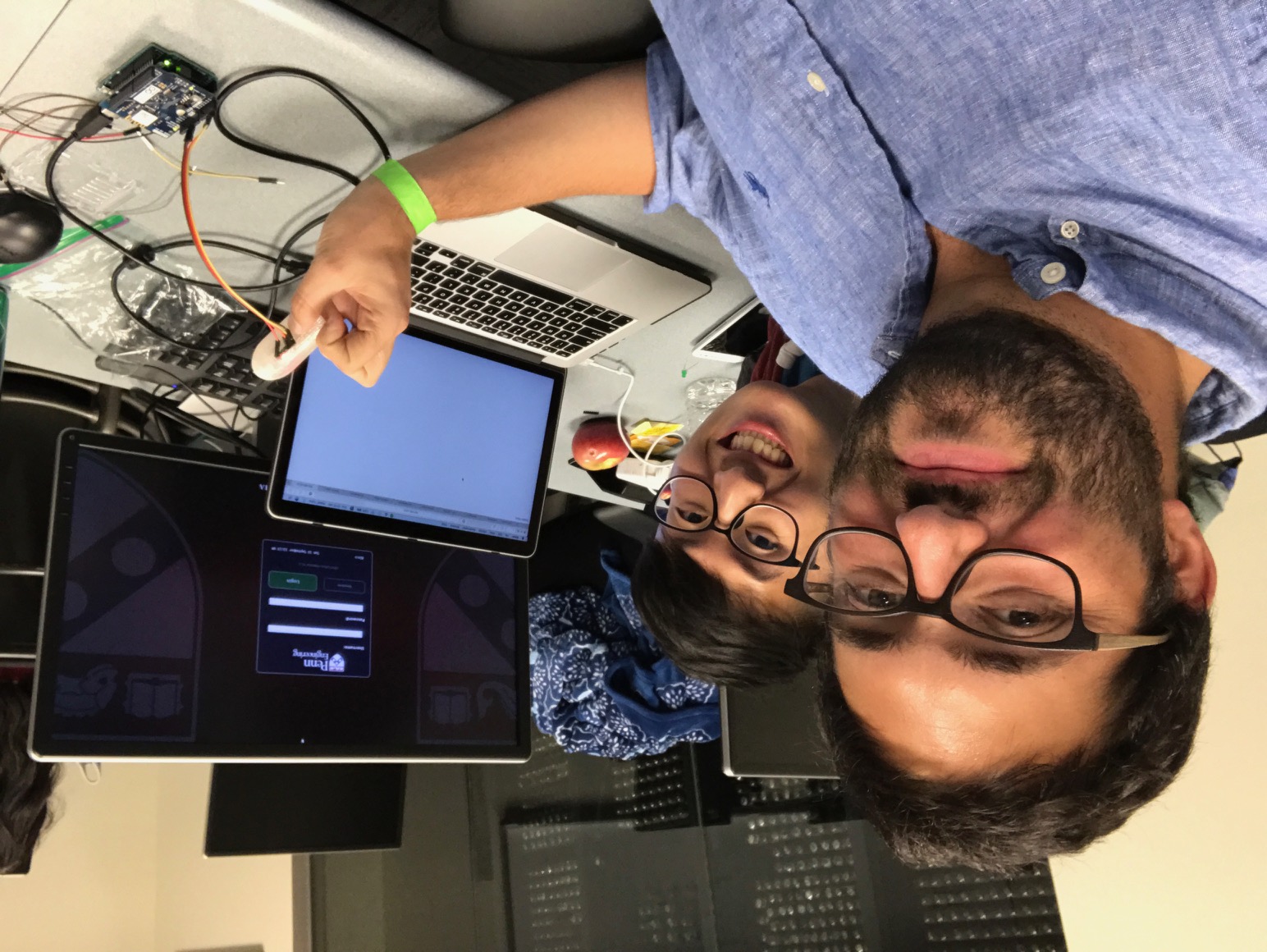
Yu Ho testing the device.
-
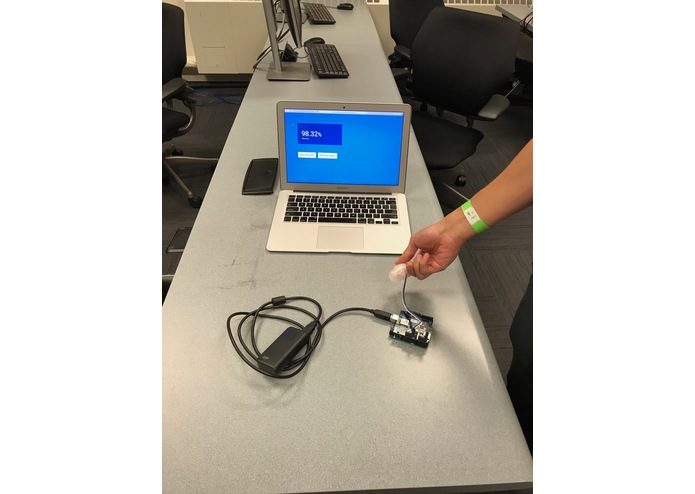
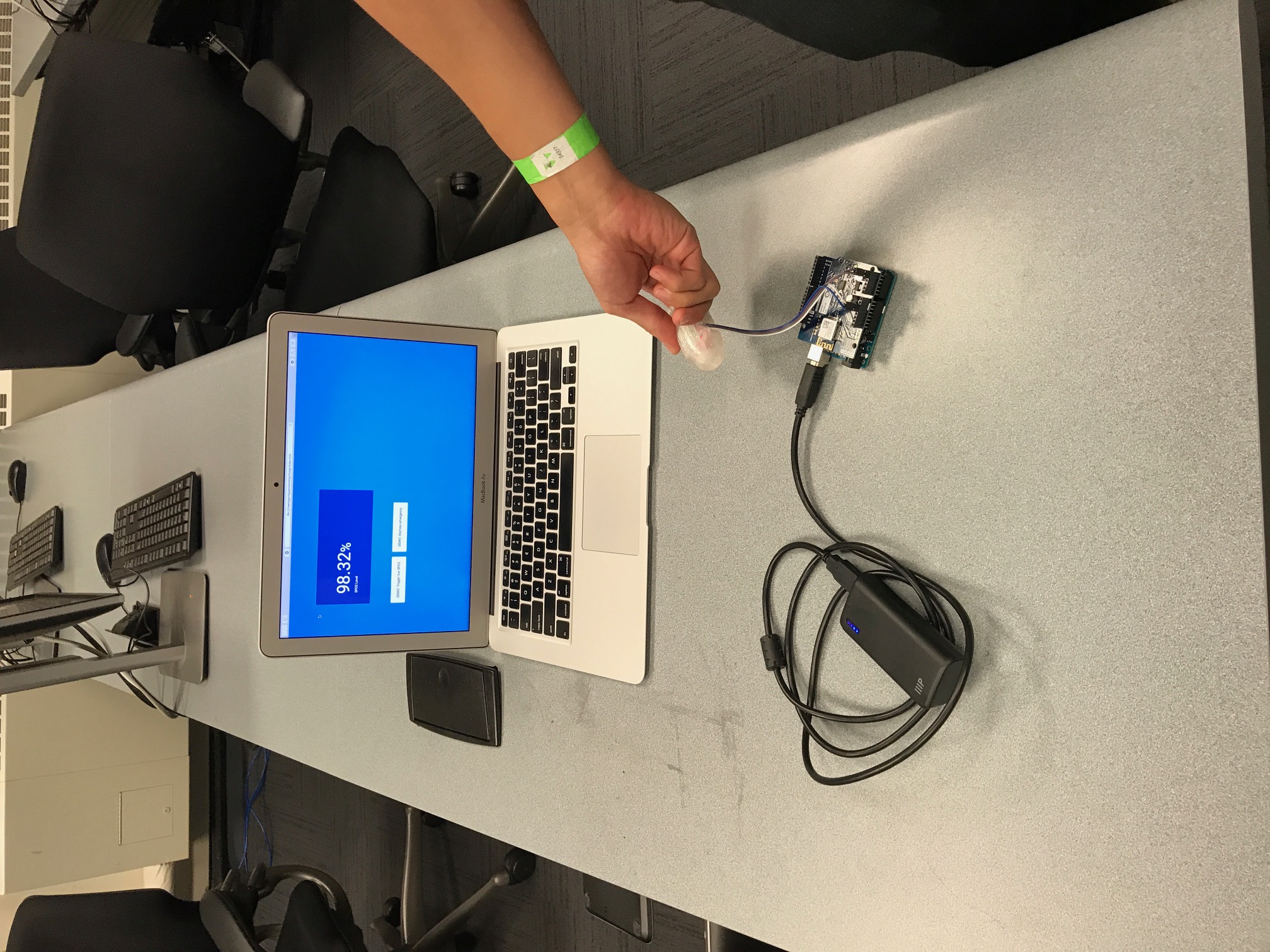
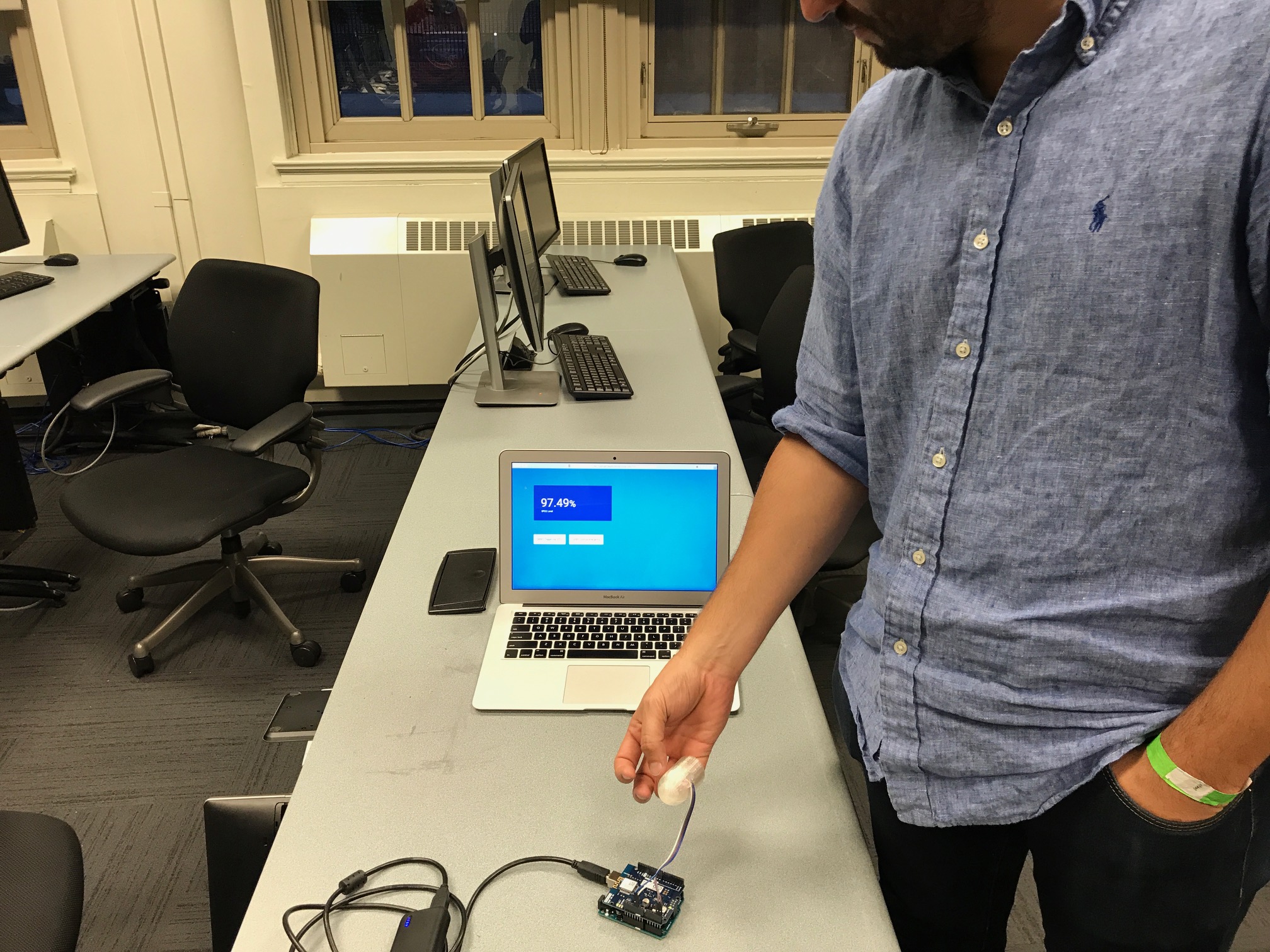
Level of oxygen: 98.32%
-
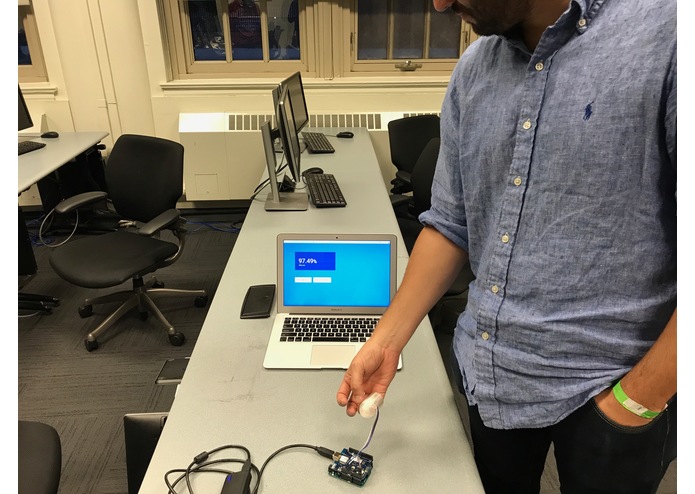
Ignacio testing the device.
-

Garvit testing the device.
-
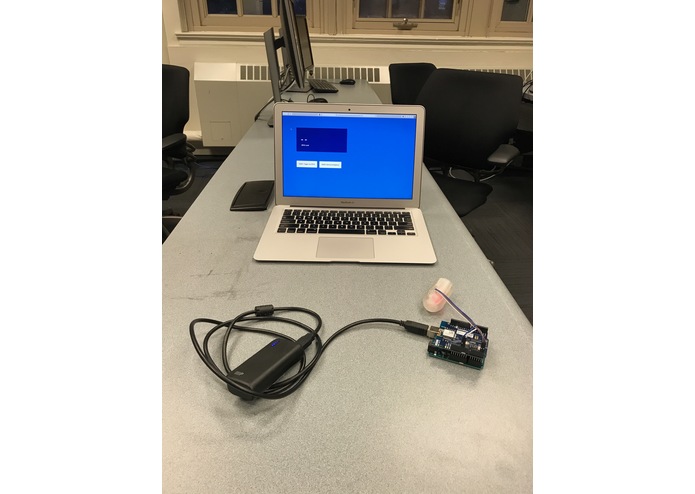
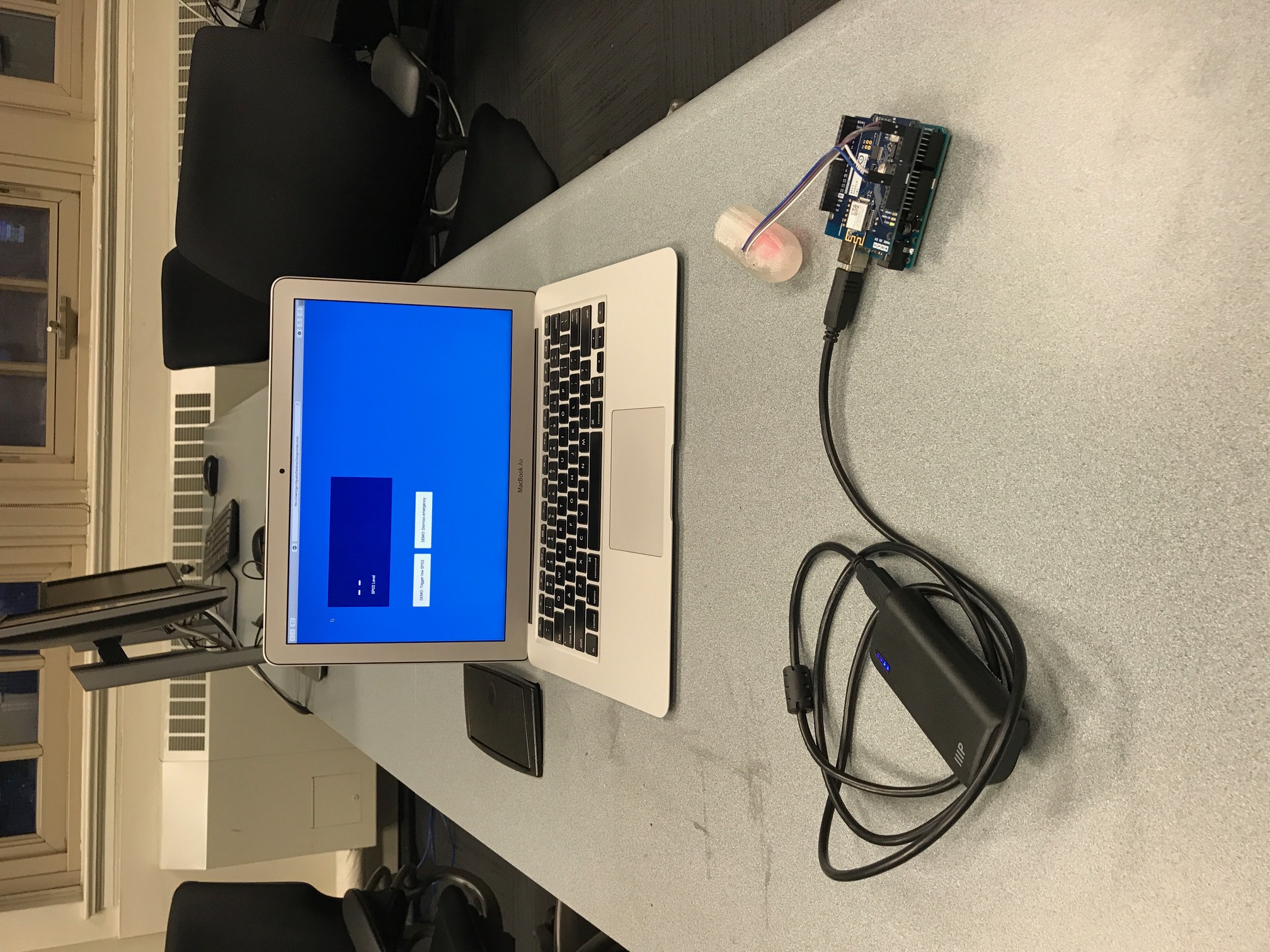
Standalone device. No measurement shown.
-
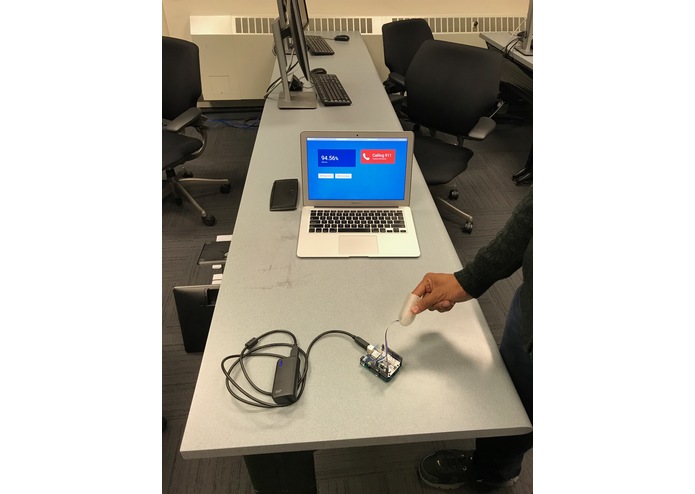
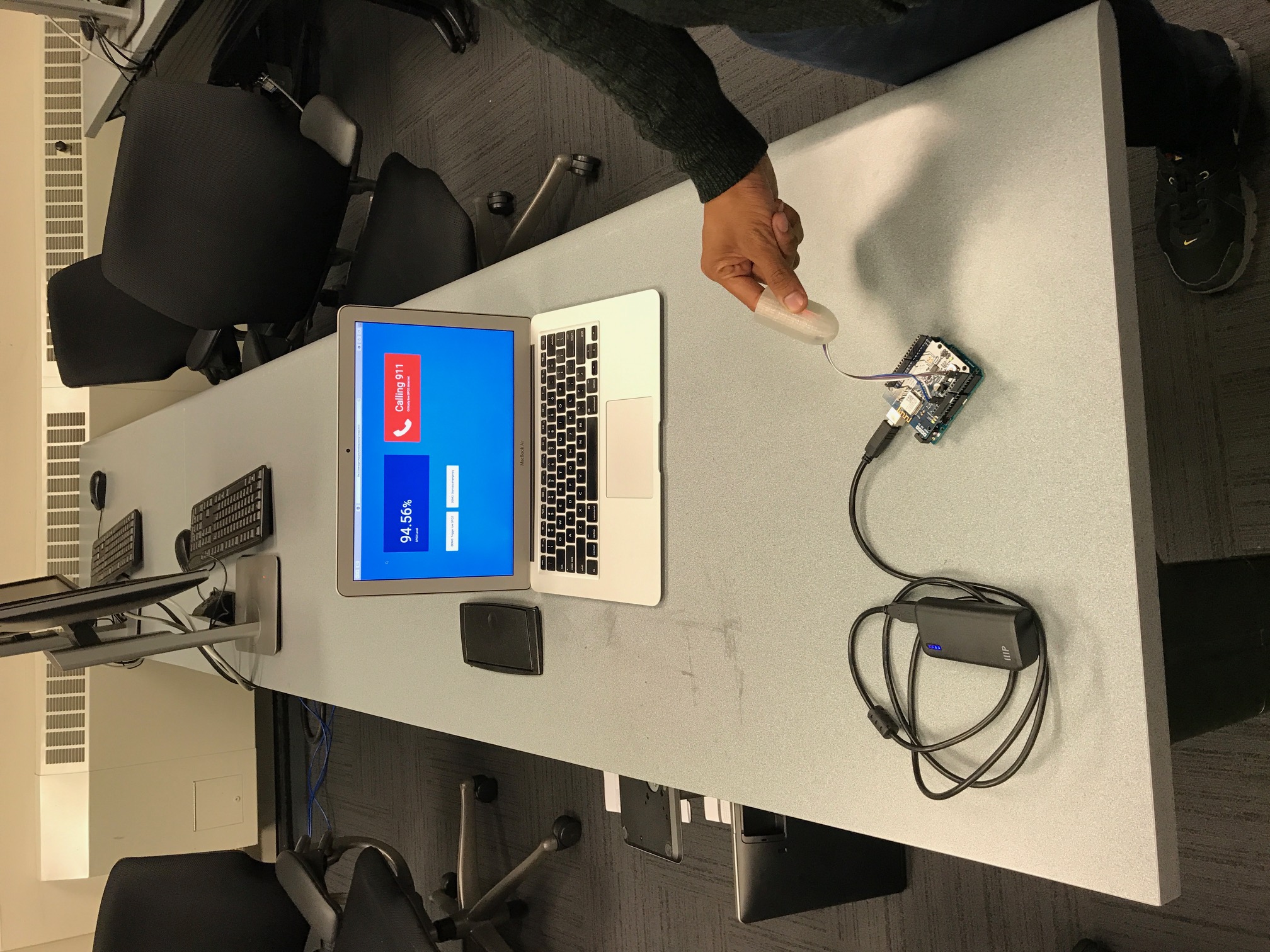
Level of oxygen under 95% prompts a call.
-
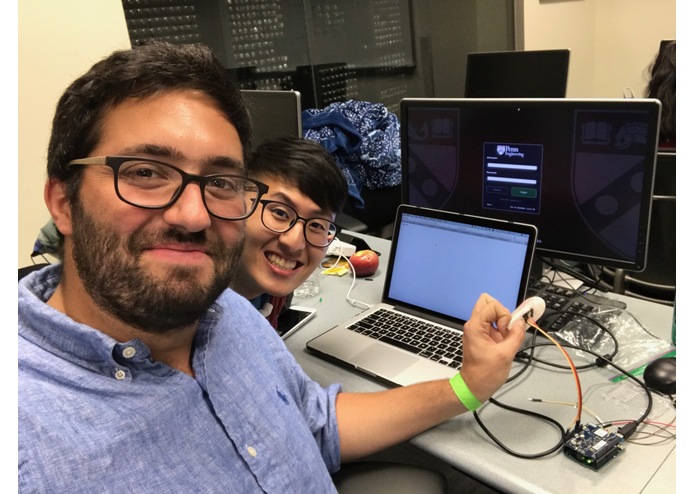
First result on the screen
Inspiration
To reduce the number of deaths by heart attacks.
What it does
The Continual Blood-Oxygen Analyzer is a wearable device that allows you to monitor the level of oxygen in your blood stream. It also tells you when critical levels are reached and prompts the option for an emergency call when an emergency appears.
How we built it
We set up the device by connecting an optical sensor to an Arduino. The optical sensor was housed inside a 3D printed structure were the user can introduce their finger for the oxygen level measurement. The Arduino was connected to an Arduino Wifi Shield, which emitted the signal received from the sensor to a mobile device. The device is powered by a battery, connected to the Arduino. A web interface was designed in JavaScript, in which the values of the oxygen level measurements were displayed and where, if values go under critical levels, the option for an emergency call is shown.
Challenges we ran into
The available memory in an Arduino is 32KB, which led to multiple rounds of iterations to optimize the code.
Accomplishments that we're proud of
We're proud of having built a tool that encompasses elements from hardware to software to build an integrated solution. The device was made with an Arduino Uno, an Arduino Wifi Shield, a batter and a 3D-printed structure designed by our team that houses an infrared photosensor.
What we learned
We learned that the more elements that are included in the design and build of a device, the bigger the amount of things we will need to fix.
What's next for Continual Blood-Oxygen Analyzer
The next step will be to design the next version, which will be smaller and easy to wear and carry.
Built With
- analog-signal-processor
- arduino
- javascript
- makerbot
- photodetector


Log in or sign up for Devpost to join the conversation.