-
-
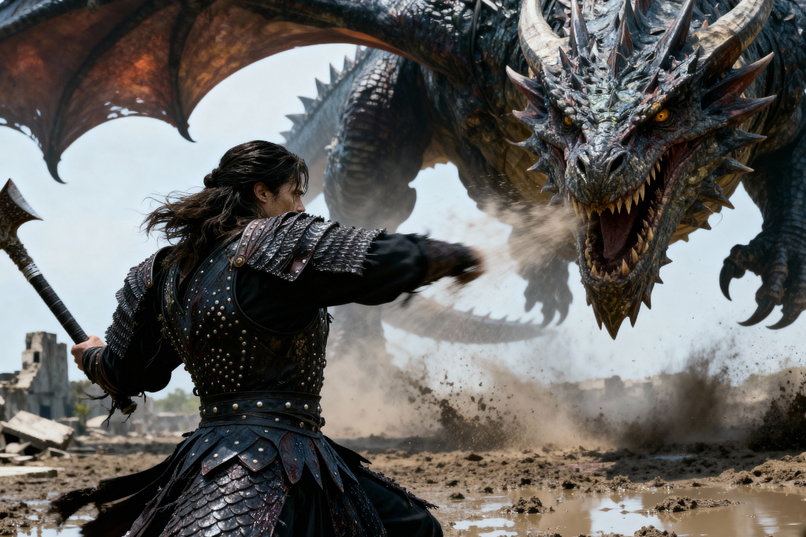
A black-armored warrior charges the roaring dragon, standing fearless as mud and wind explode beneath its titanic fury.
-
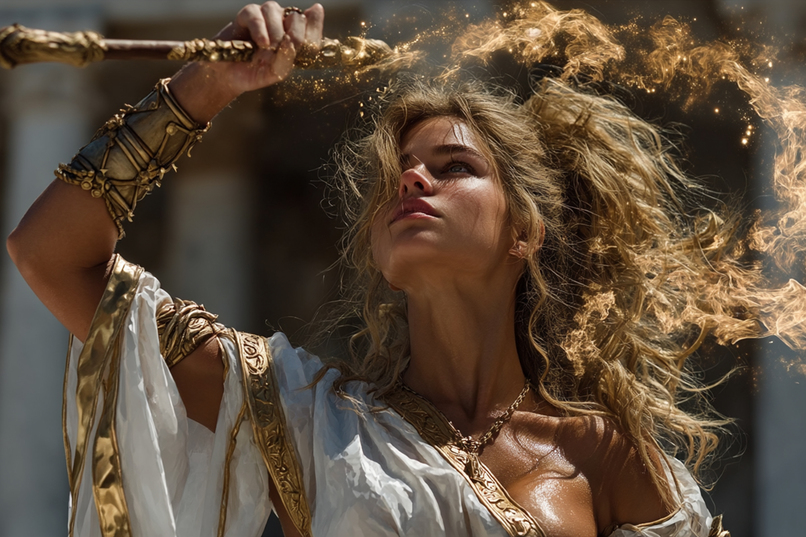
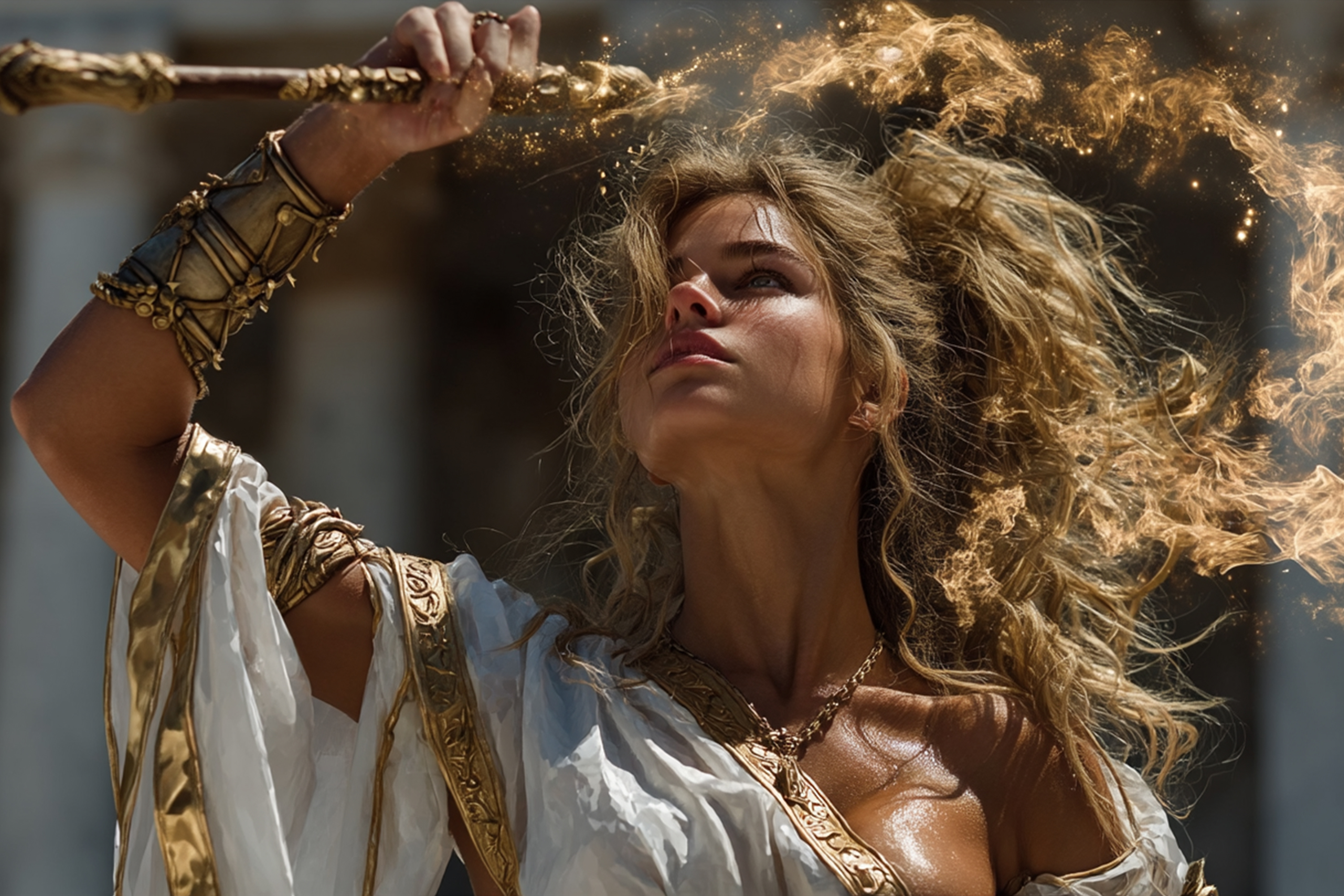
A radiant priestess lifts her golden staff, calling shimmering magic that glitters like stardust beneath the sun’s divine glow.
-
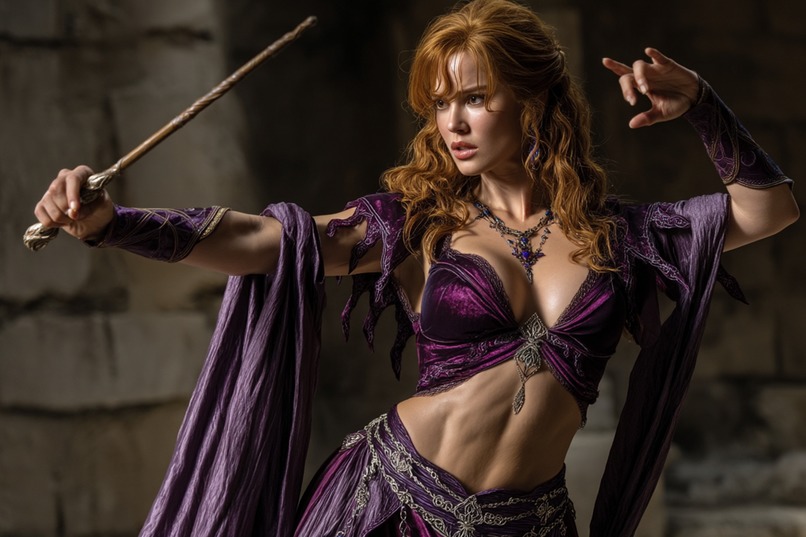
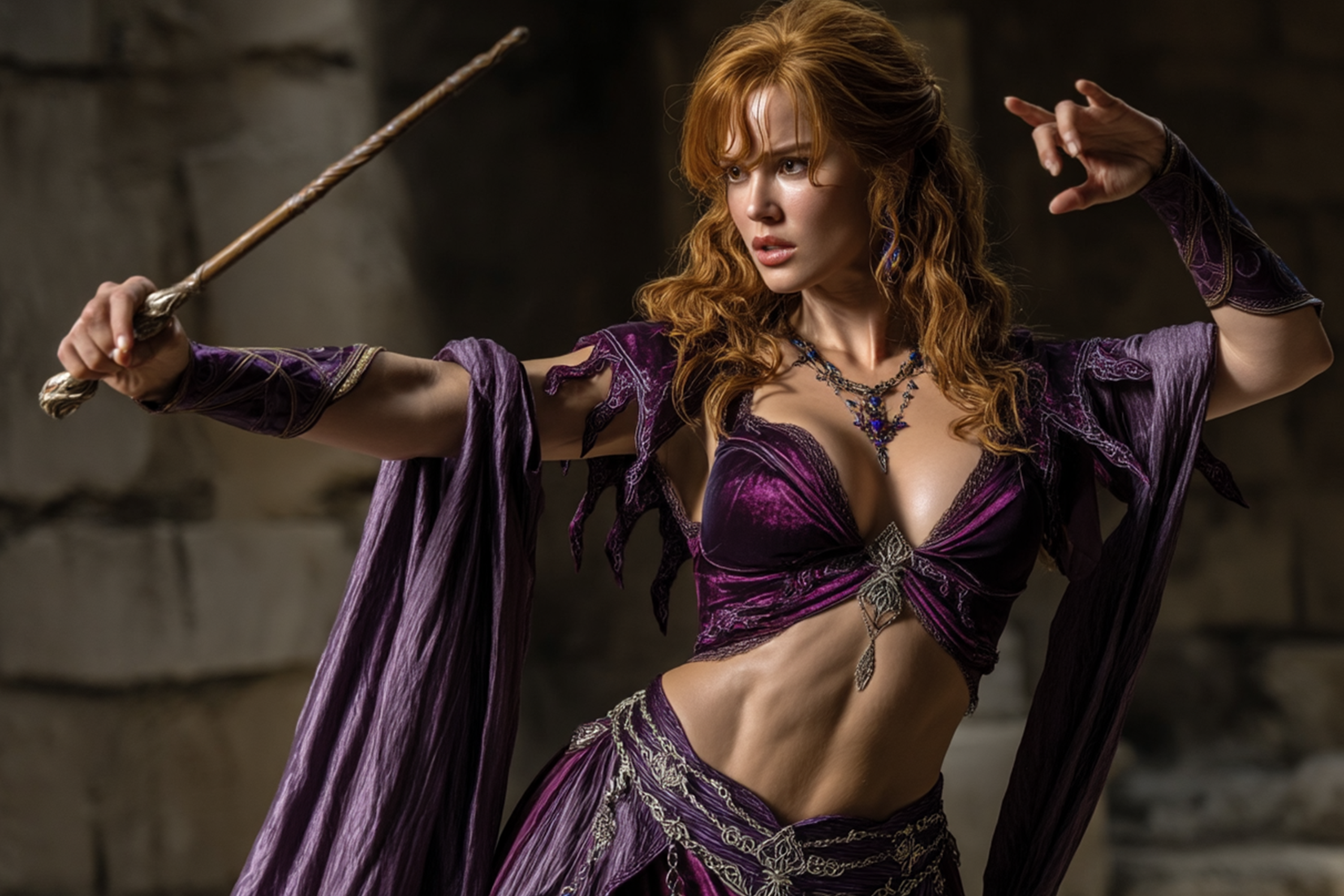
A violet mage gathers ancient energy, her runes swirling like awakened spirits as the shadows behind her begin to stir.
Inspiration
Chronicles of Wind was originally developed from An experiment using AI-generated realistic actors to perform the opening theme of a Japanese shonen anime. I transformed the emotional core into a fantasy allegory:
A world threatened by a Demon Lord born from humanity’s collective darkness
The black dragon representing overwhelming, destructive force
Four heroes symbolizing justice, compassion, resilience, and unity
This concept evolved naturally into a high-energy AI fantasy music film, synchronized to a Japanese anime-style song, “Kaze no Kiseki” I wanted to test whether AI tools could recreate the emotional clarity and rhythm of a classic anime OP.
What I Learned
Through this project, I gained insights into:
- Character Consistency in AI Generation
Maintaining stable faces, costumes, and silhouettes across dozens of shots required iterative prompt engineering and controlled references.
- Rhythm-Driven Storytelling
I studied how anime openings synchronize motion with music beats, and learned how to cut AI-generated footage so that each action aligns with rhythmic accents. After watching thousands of Japanese anime opening theme music videos, I tried using characters' body language or the directionality of camera shots to guide the viewer's attention, thereby enhancing the video's smoothness, appeal, and watchability.
- Multimodal Workflow Integration
I learned how to combine:
Image generation (characters -midjourney, poses -midjourney, keyframes-dreamina )
Video generation (veo3, midjourney, firefly, kling, runway, dreamina )
Post-production tools (Premiere ) into a unified, cohesive visual language.
music(SUNO, Audition)
- Symbolic Narrative Design
By assigning each hero a thematic meaning, the story gained emotional depth without relying on dialogue.
How I Built the Project
The workflow followed a structured multi-stage process:
- World & Character Design
I defined six core entities:
White-Clad Priestess (holy dimensional breaker)
Violet Mage (fire master)
Black-Haired Warrior (dragon slayer)
Golden-Haired Hero (leader & justice)
Demon Lord (extra-dimensional embodiment of darkness)
Black Dragon (POWER threat)
- Visual Generation
Midjourney for character sheets, lighting tests, expressions
Video-generation models for directional motion (push-ins, zooms, attacks, spell arcs)
- Music Synchronization
The cut was synchronized with “Kaze no Kiseki” using a beat-mapping process:
tframe=BPM/60
This helped align sword swings, spell bursts, and dragon dives to musical impacts.
- Post-Production
Color grading for consistency
FX layers (fire, light, holy glow)
Final pacing correction to match BPM variation
Challenges I Faced
- Maintaining Character Continuity
AI models frequently altered face structure, hairstyles, or costume details. Solving this required:
reference-controlled prompting
consistent seed usage
iterative generation and manual selection
- Fast-Tempo Action Readability
Anime OP pacing is extremely quick. The challenge was:
How do you show readable action at 150–180 BPM without losing clarity? I solved this through micro-beat editing, limiting each rapid cut to essential silhouettes.
- Depicting a Multi-Dimensional Villain
The Demon Lord exists in another plane, meaning normal attacks shouldn’t affect him. The challenge was visual:
How do you show “damage in another dimension” using AI-generated footage? I used layered compositing + holy light distortion effects to imply dimensional rupture.
- Dragon Combat Complexity
Dragon movement is chaotic. To maintain coherence, I used:
stabilized keyframes
directional camera arcs
a fixed visual language for the dragon’s silhouette
5.Emphasizing the main plot and emphasizing the visual pacing are two different directions. I didn't want the audience to be confused about the main plot, but I also wanted to use visuals and a fast pace to create a captivating effect. Sometimes, creating very cool visuals and dynamics resulted in a completely disjointed flow within the film, prompting much reflection. Therefore, I constantly sought a balance.
Conclusion
Chronicles of Wind was not only a technical experiment—it became a way to prove that AI can move beyond isolated images into a coherent, emotional, rhythm-driven cinematic experience. The project pushed my abilities in storytelling, multimodal integration, and visual rhythm design, and helped me understand the potential of AI as a collaborative creative partner.


Log in or sign up for Devpost to join the conversation.