Inspiration
Robots are often used to reduce the amount of physical work done by humans. Taking this approach on completing this hardware hack, we thought a robot which carries luggage and other personal belongings for us would be extremely helpful. We thought this idea could also be expanded to come up with accessibility solutions, for instance a system to help visually impaired people, or be paired up with grocery stores or be implemented in places like airports where people need to carry around more weight.
What it does
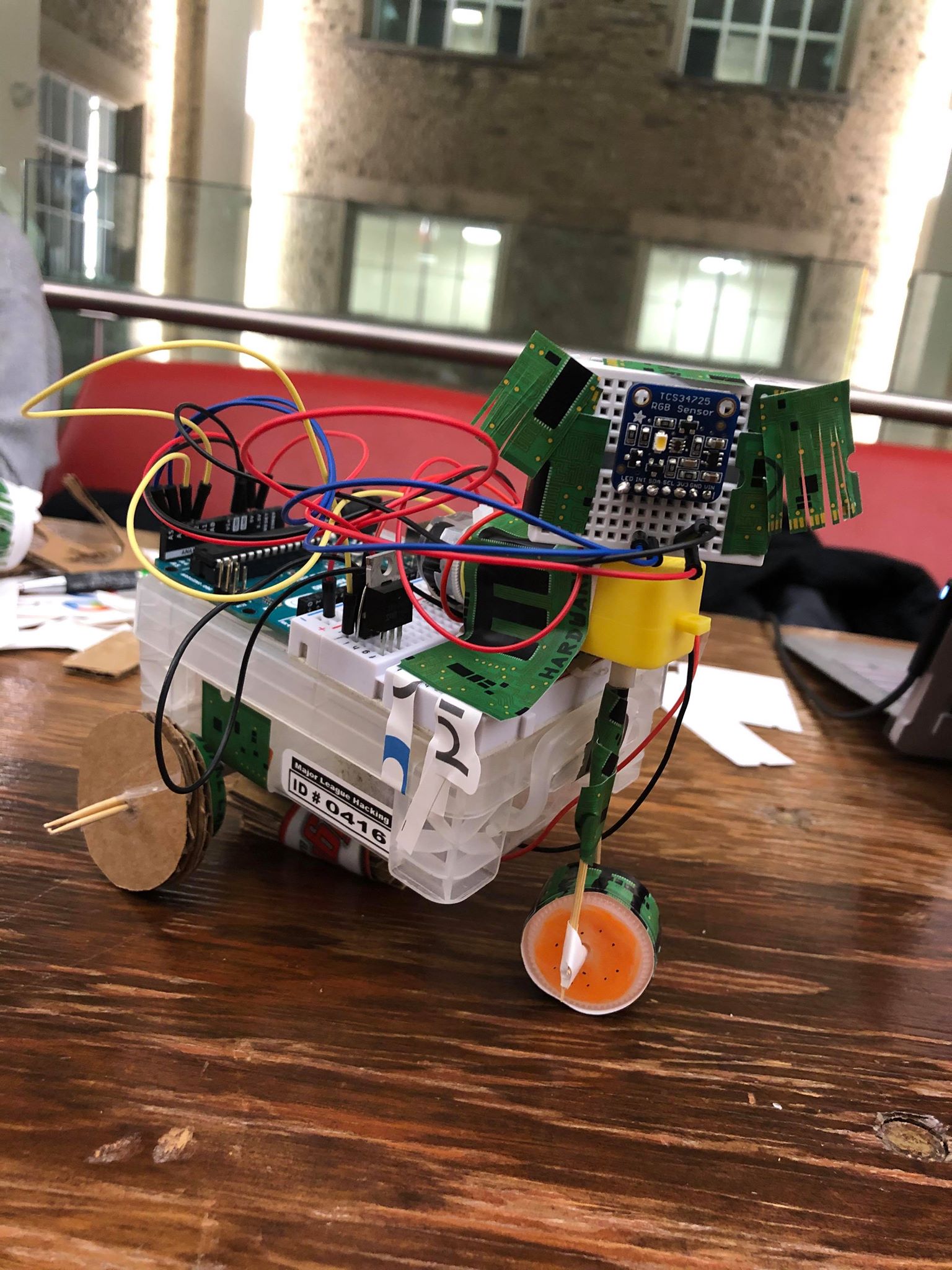
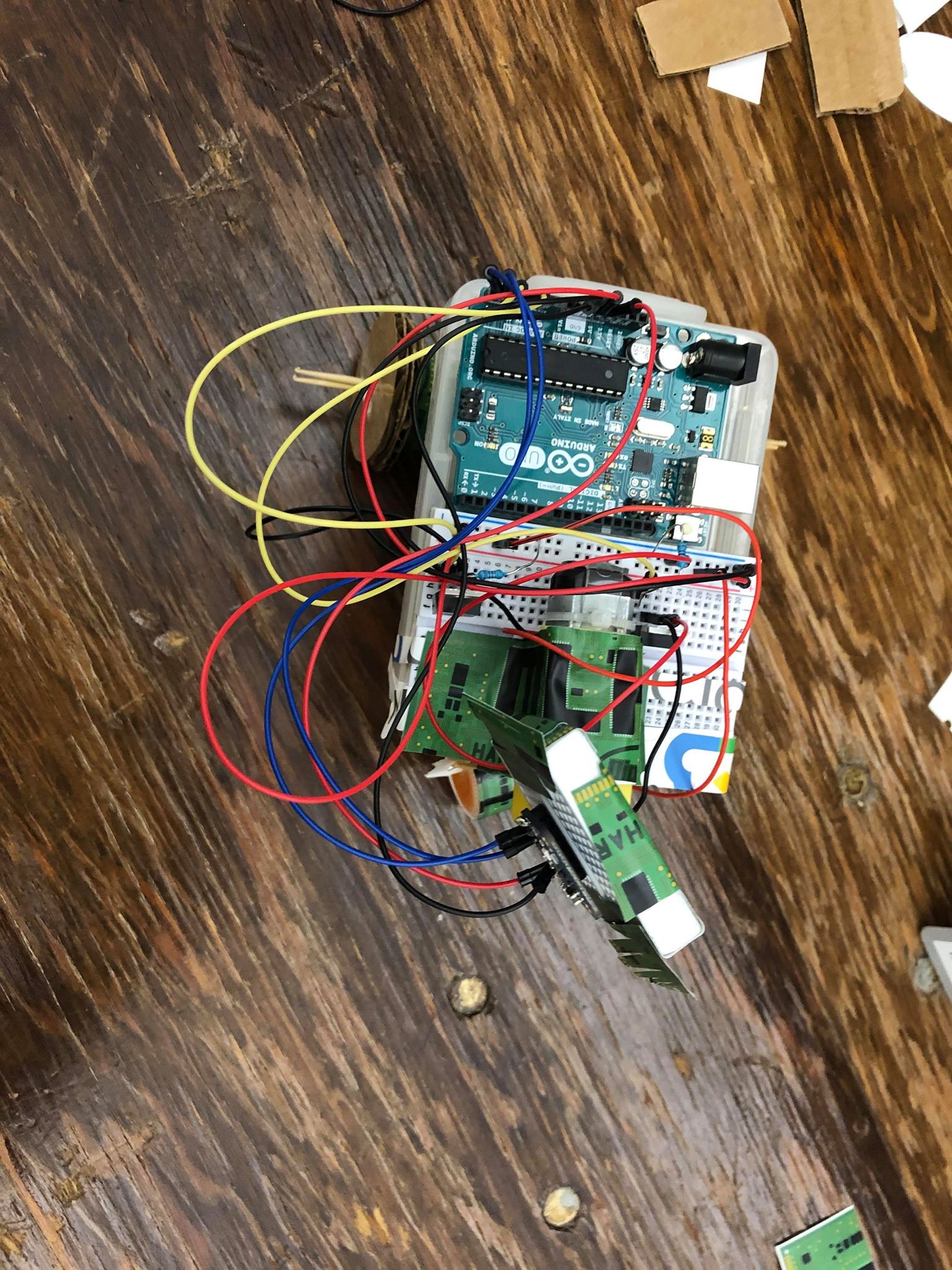
Chasebot is an Arduino project which uses colour sensor detection, some motors, transistors, and a couple of wires. It is a robot which follows a person around, providing services such as carrying luggage, an alert system for emergencies, etc… and it can be applied to places like grocery markets, airports, and much more.
Challenges we ran into
The biggest challenge for us was the initial setting up of Arduino with the colour sensors. Initially, we wanted to use 3 colour sensors, but this required some very advanced software programming skills. As beginners in hardware programming, we decided to take a more innovative approach, making the project possible with just one colour sensor instead. This took us several hours and with the help of the mentors, we were able to set the project up. In addition, aside from the hardware provided, we had to improvise and use a variety of daily objects found onsite, to use in our robot.
What we learned
We are all beginners with using Arduino, so this is an amazing learning experience for us. Over the night, we learned a great ton about circuit, logic, processor and problem solving. Also, we were able to consider different options for robotic innovation solutions for daily problems, which was actually more challenging than the technical problems we encountered.
What's next for ChaseBot
We have a few ideas which could improve user experience with ChaseBot which could not be implemented in 24 hours. Firstly, ChaseBot could use machine vision and a camera module to provide extra services such as providing directions outside or inside stores, rather than the robot following the person around. This would require the use of a Raspberry Pi and Google Cloud APIs. Another option would be to set ChaseBot up with other IoT devices to enable communication technology on the bot. Finally, some features could be implemented for this bot to be used to enhance lives of people with accessibility needs.

Log in or sign up for Devpost to join the conversation.