-
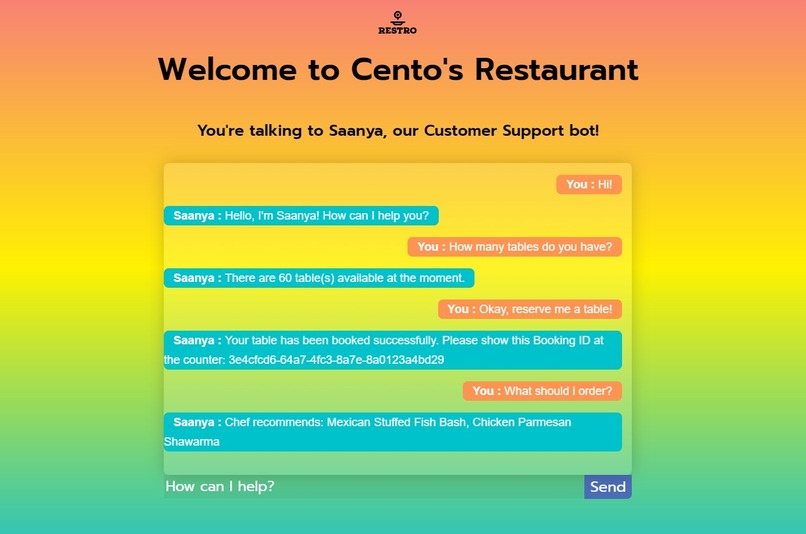
Sample functionality!
-
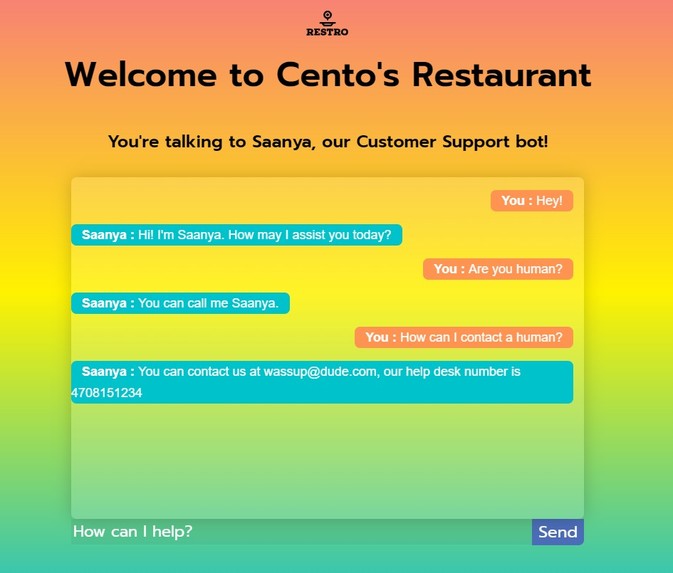
Human functionality


Inspiration
We are students who like to try different kinds of foods, but we don't have the transport while on campus. We often walk long distances to explore restaurants and are disappointed when they do not have the specific cuisines or settings we want. Websites do not paint a full picture, and are often lacking.
What it does
It greets users, give information about the restaurant, provides COVID info, responds to general messages, shows discounts, takes positive and negative feedback, shows tables and reserves tables, and bids goodbye.
How we built it
We used a Flask App with a MongoDB backend to get the offers and information from the database. We used the fasttext NLP model to train our models and provide accurate responses. for the front end, we used Javascript and HTML/CSS to make the website look aesthetic.
Challenges we ran into
Integrating MongoDB and Flask, training an exact model, and pushing the large dataset files to Github and Google cloud. It could not happen, as the files were too large.
Accomplishments that we're proud of
We were able to fix all the issues except the deployment to the cloud. We were able to get the bot to suggest what to order, which was not a part of the original plan.
What we learned
It is easier to train a model with response and question patterns than build a whole new model with spacy. We should be using a virtual machine to write all code while experimenting, so that deployment gets easier.
What's next for Cento-Restaurant Bot
We would like to deploy it to the Cloud and add features to take in address/phone number to send in confirmation of order/table or deliver food to the address.


Log in or sign up for Devpost to join the conversation.