-
-
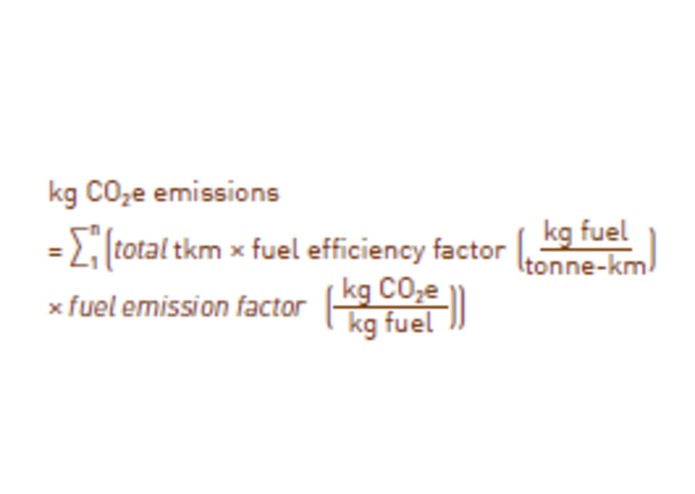
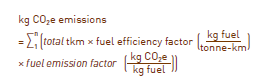
carbon emissions formula from GLEC (Global Logistics Emissions Council) framework
-
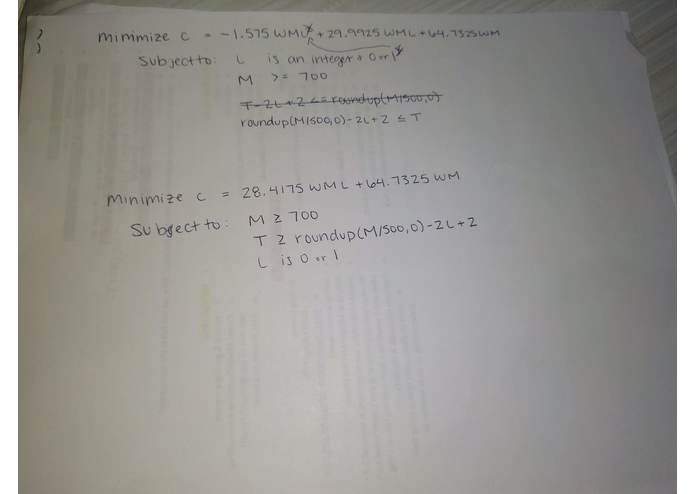
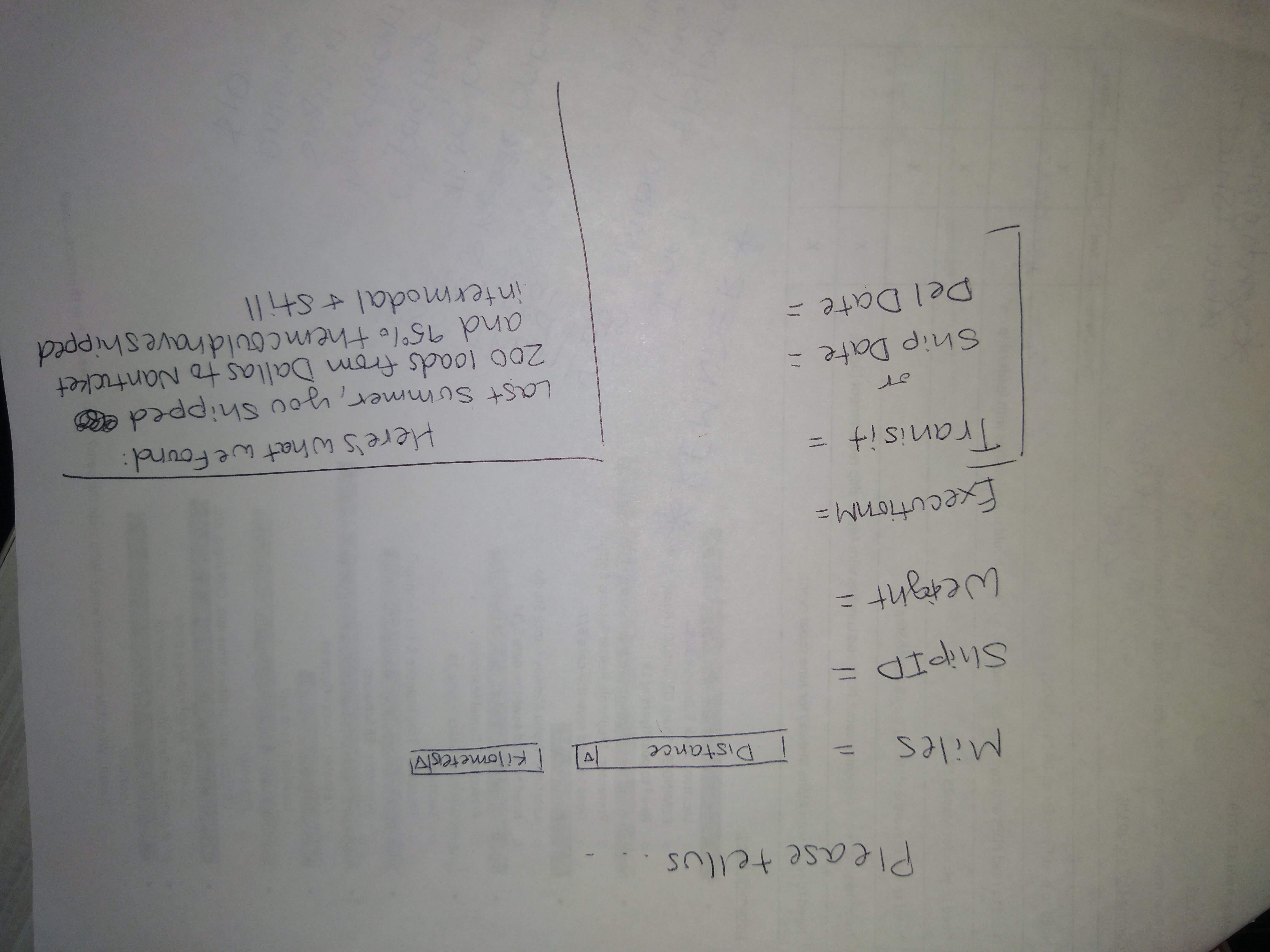
handwritten math
-
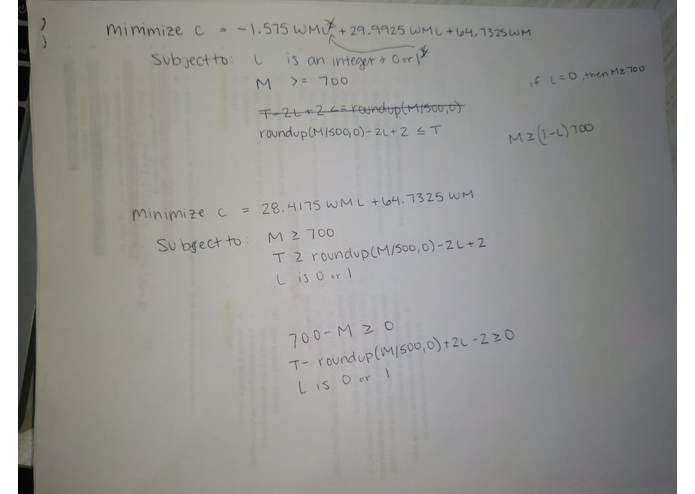
handwritten math
-
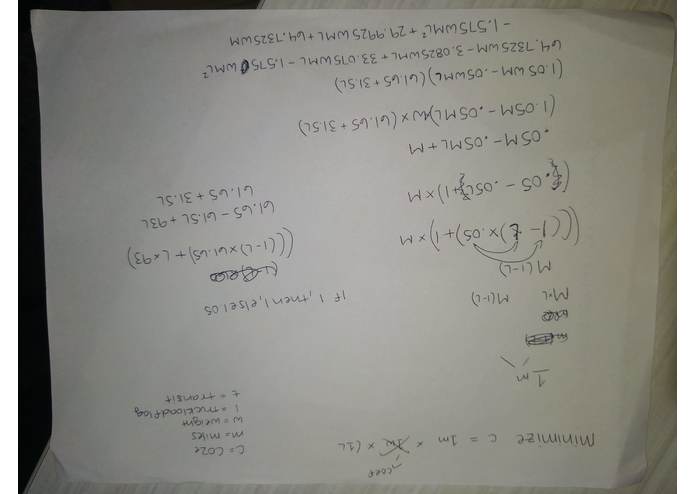
handwritten math
-
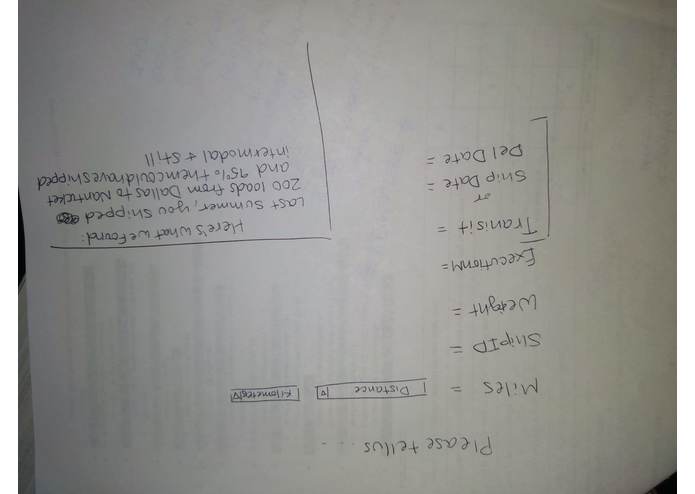
handwritten math
-
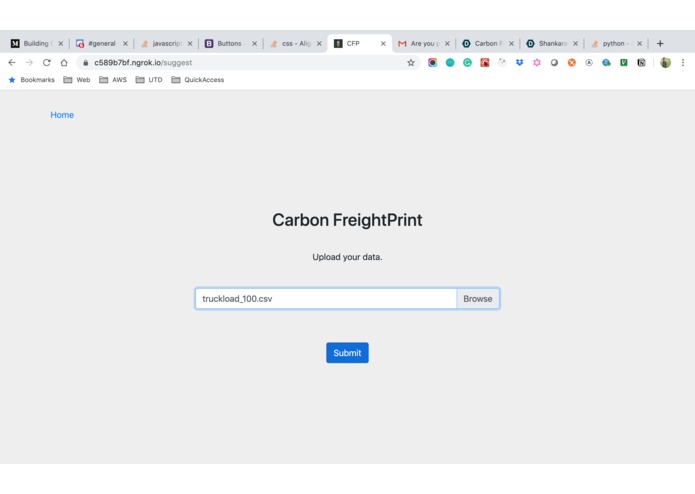
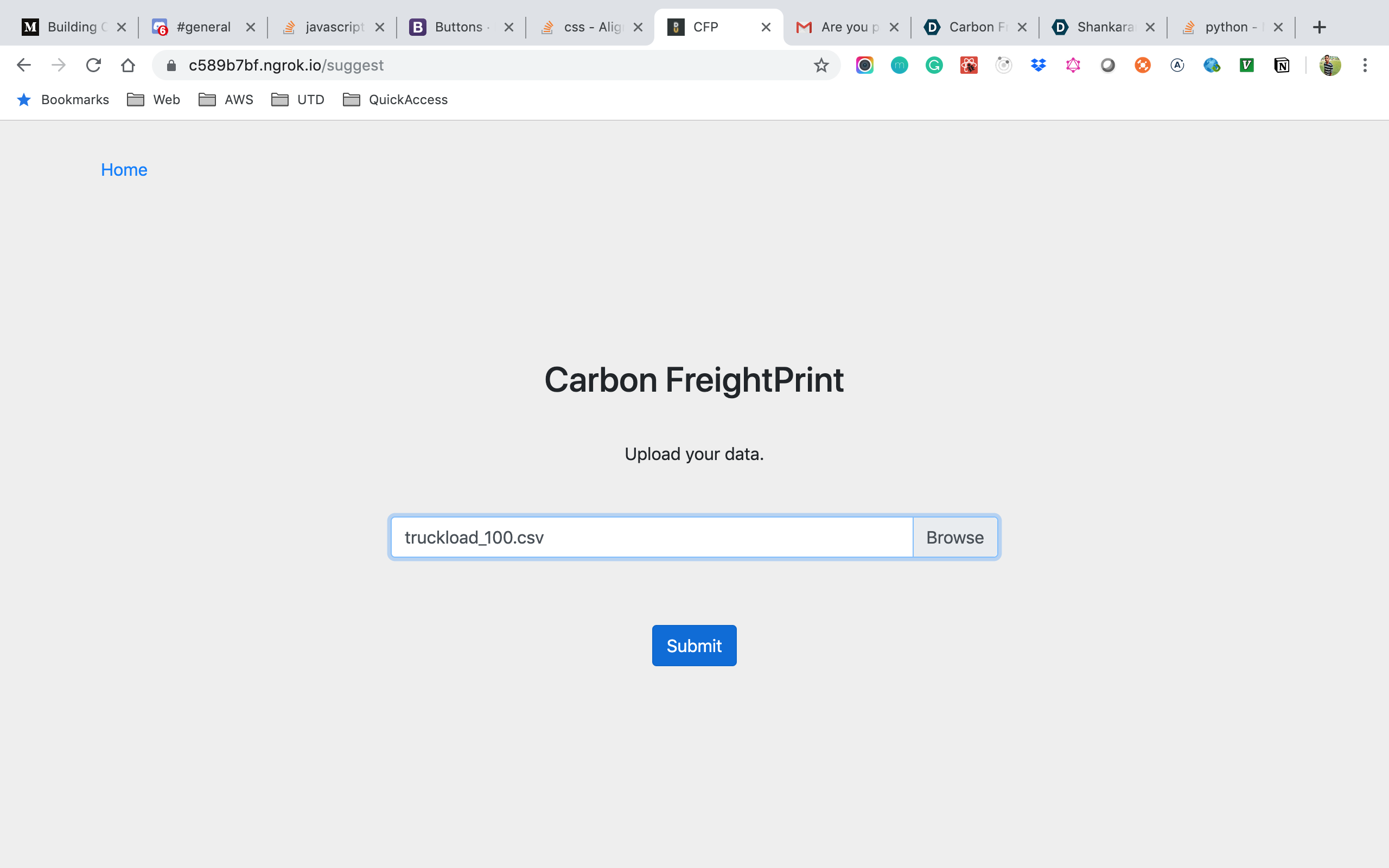
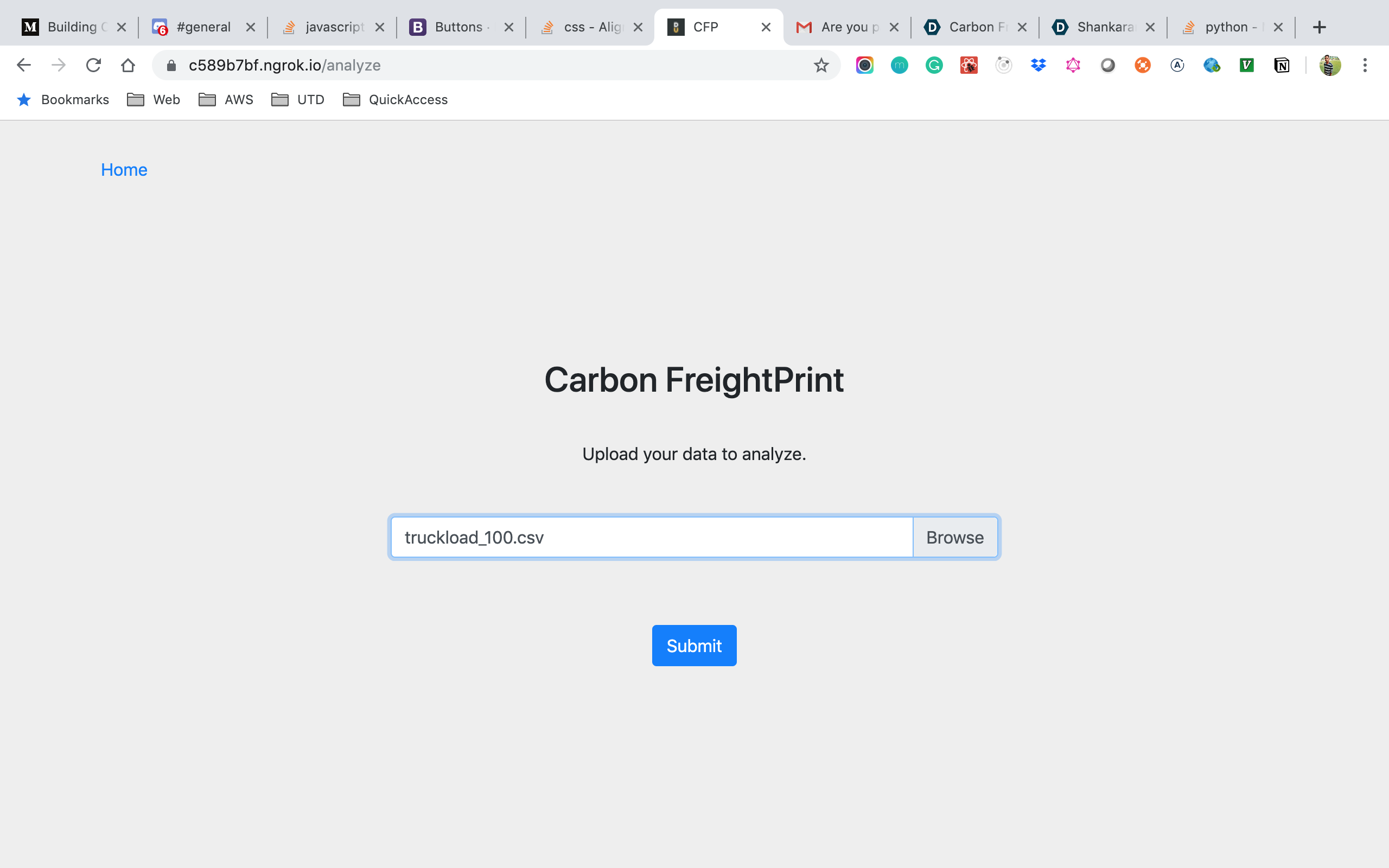
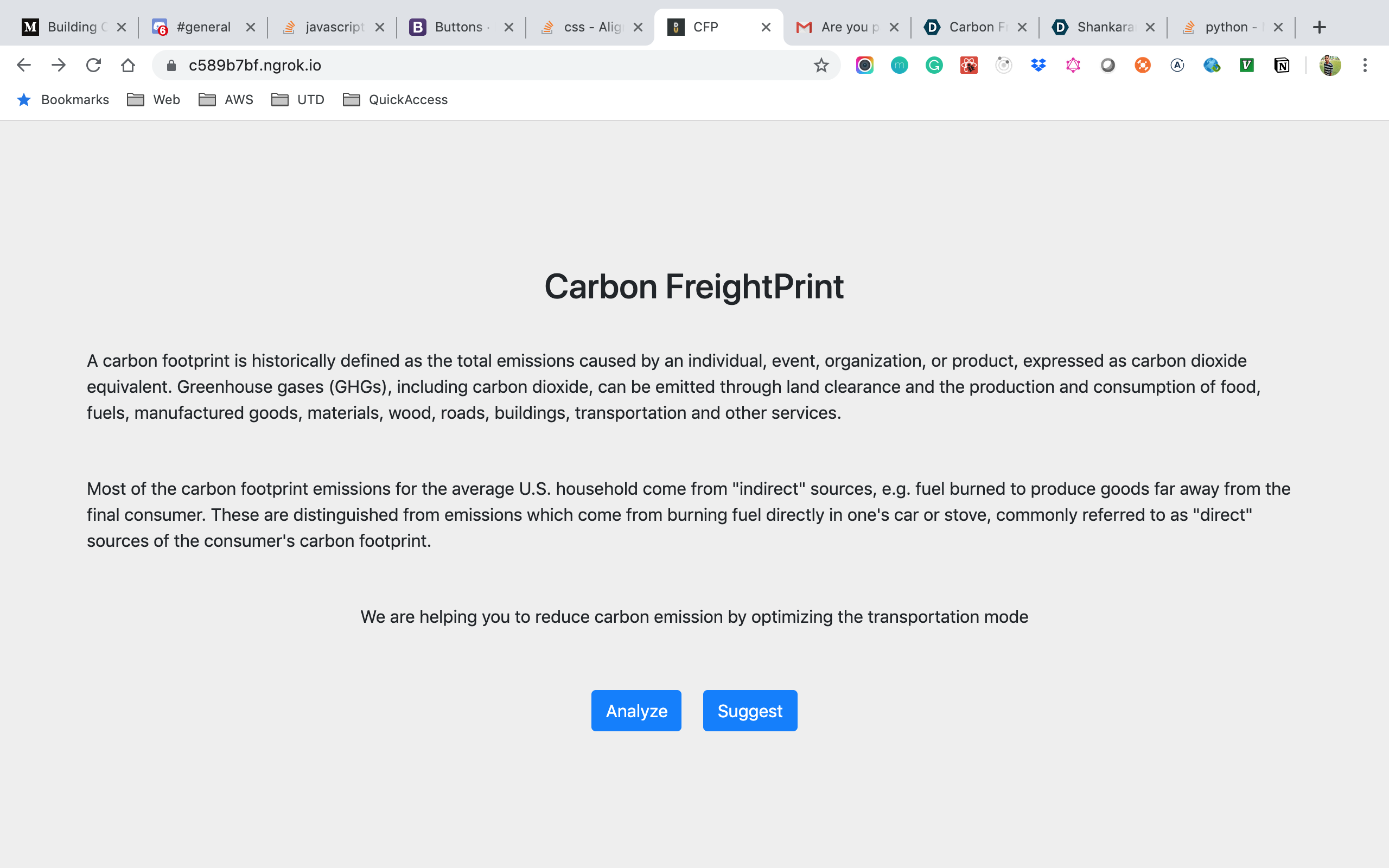
website
-
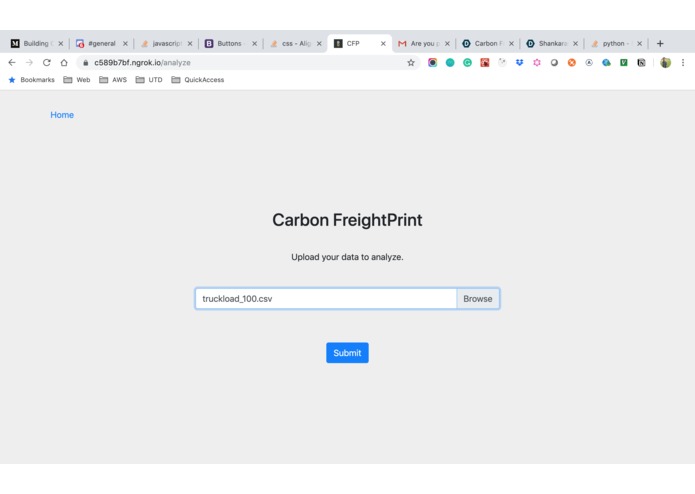
website
-
website
-
websitewebsite
-
website
Our Inspiration
As a team, we discussed many projects ideas before we came to a decision: a phone app combining EventBrite, Yelp, etc. to show you events in your area and whether food would be offered, a block chain system to better track loading and unloading times at shippers/receivers to be able to ensure drivers can get paid appropriate detention fees, or a Python-programmed robot with the ingenious ability to swear (that last one got thrown out pretty quick...) We ultimately decided to tackle supply chain carbon emissions, guiding larger businesses to make more pro-environment choices with regards to their supply chains, furthering all of our global efforts to leave the world a prettier place.
What it does
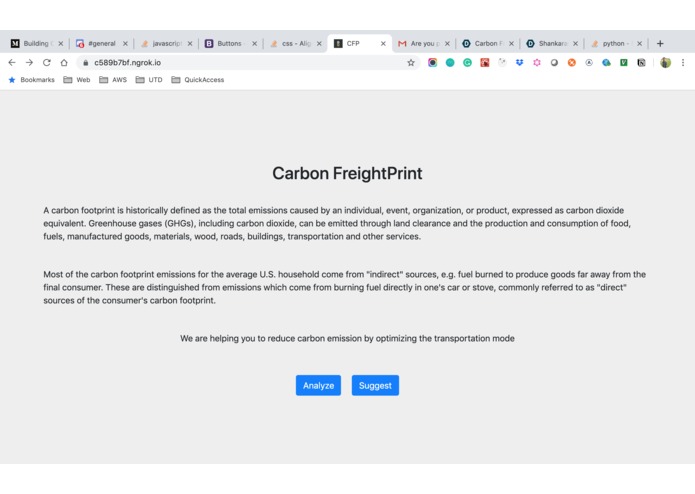
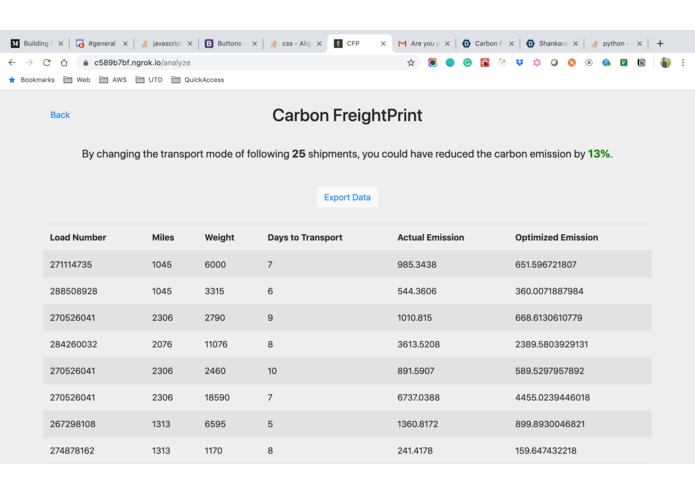
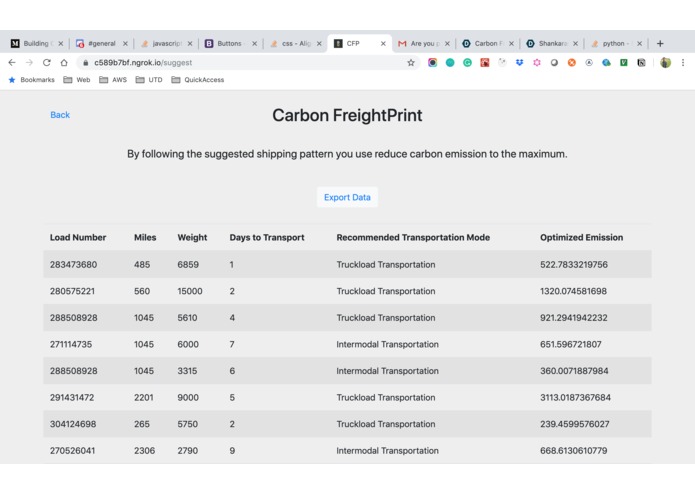
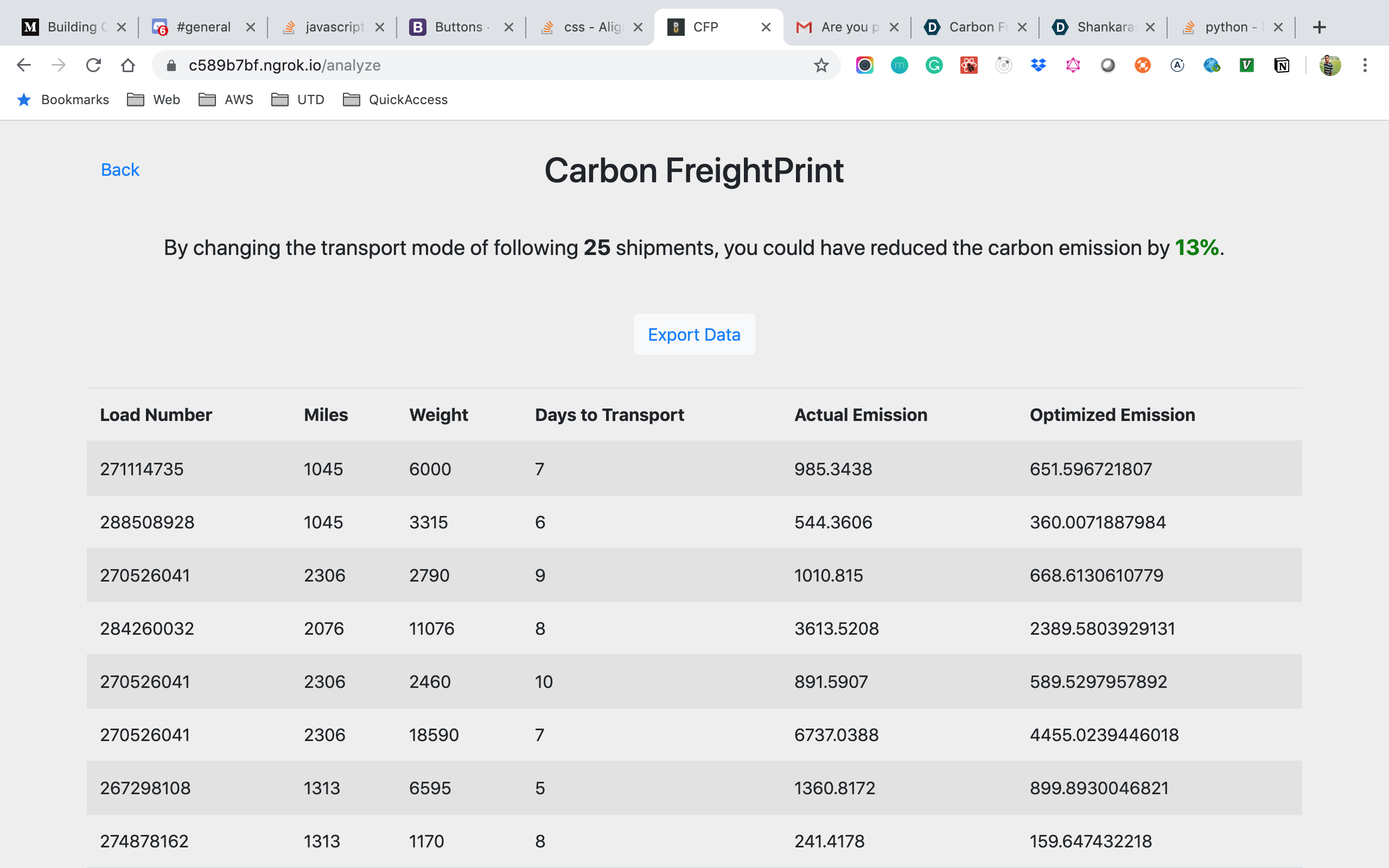
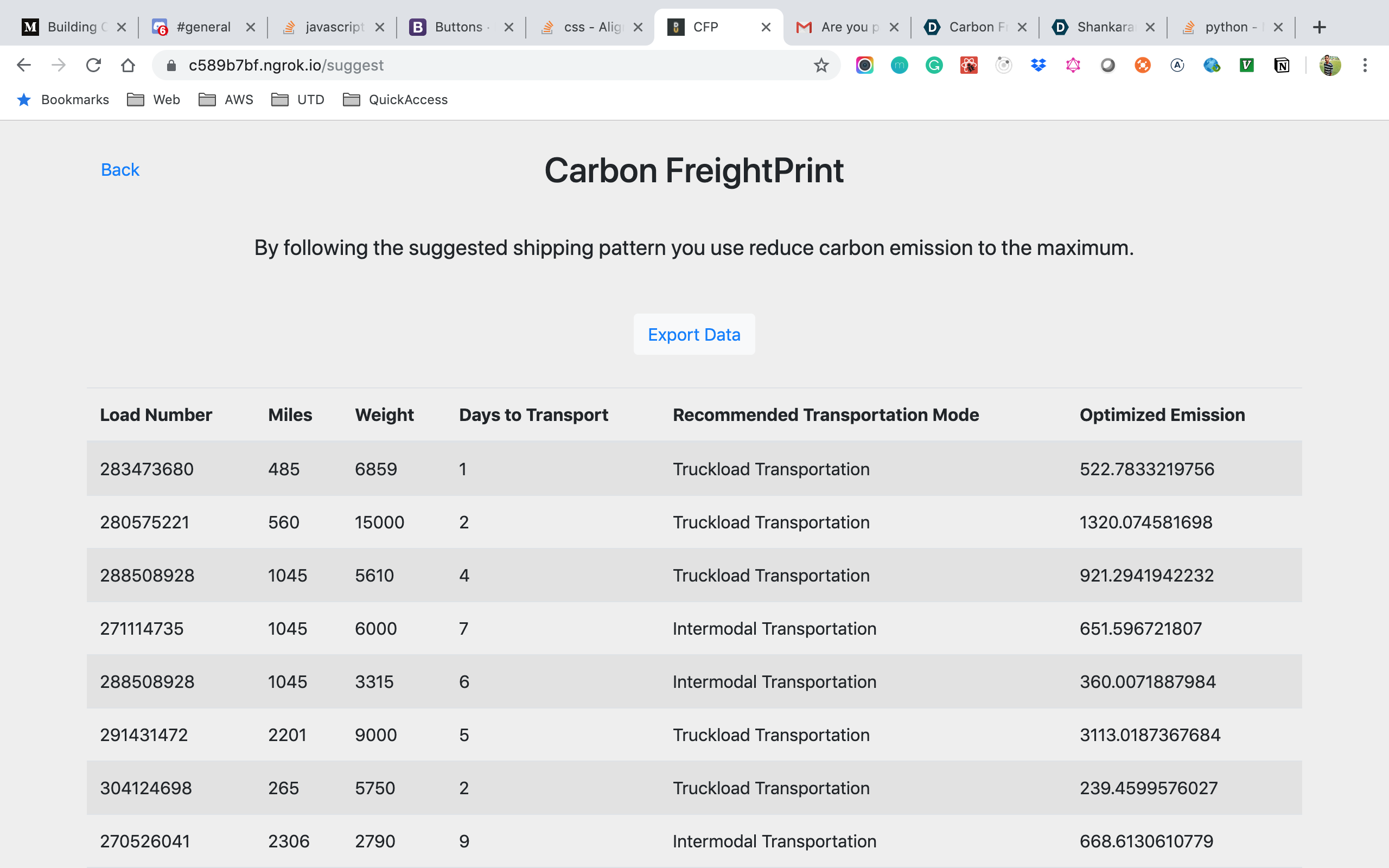
Our web app, called Carbon FreightPrint allows a user to upload either their previous history of full truckload shipments or upcoming full truckload shipments; they upload their shipping lane (origin/destination pair), the miles, the total freight weight, and their required transit times. Our app then finds lanes where the customer can switch their shipments to the more efficient mode of transport, intermodal, emitting much less carbon into our environment and still meeting their required transit. As an added bonus, customers save significant freight spend by switching to intermodal over full truckload which is an added incentive for them to utilize our web app.
How we built it
Our app utilizes data pulled from C.H. Robinson SQL servers with customer-identifying information scrubbed from the data to maintain security; so the data is real, but you won't be able to figure out from which customer the data came from (although Uzu swears the customer is his favorite cereal provider, Honey Bunches of Oats). We then used this data to test optimization tactics in Excel using the Solver tool before moving our logic to a more robust tool: Python. Our web app is designed to tap into an API we set up within Python; the web app accepts the CSV file of data, converts miles to km, pounds to metric tons, etc., then sends that data to Python to perform some machine learning magic, specifically model-less evaluation using constrained optimization. Our Python program figures out how to best optimize freight based off of carbon emissions and required transit and then determines which lanes have the most opportunity for carbon efficient improvement. After the magic, the Python program sends the data back to the javascript web app for displaying our findings to the user.
Challenges we ran into
Our first big challenge was actually figuring out what kind of project we wanted to tackle in this hackathon. Our problem was not that we disagreed or argued, it was more that we struggled to find something that hadn't already been done or that would have strong business value. This took up a huge chunk of our time before we came to our final project idea yesterday afternoon. However, it was great to discuss new ideas among the team and brainstorm how we could use technology to make something amazing.
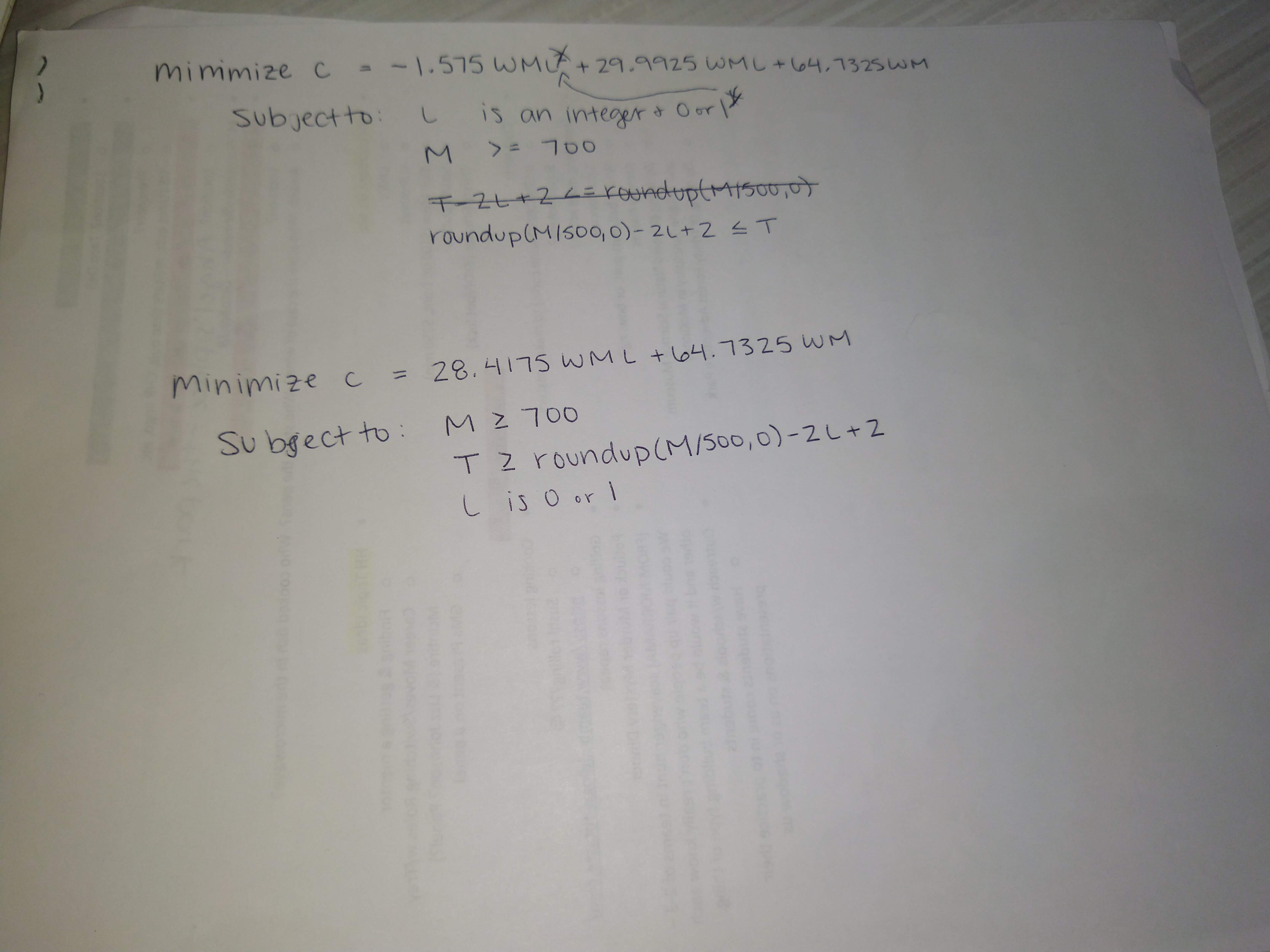
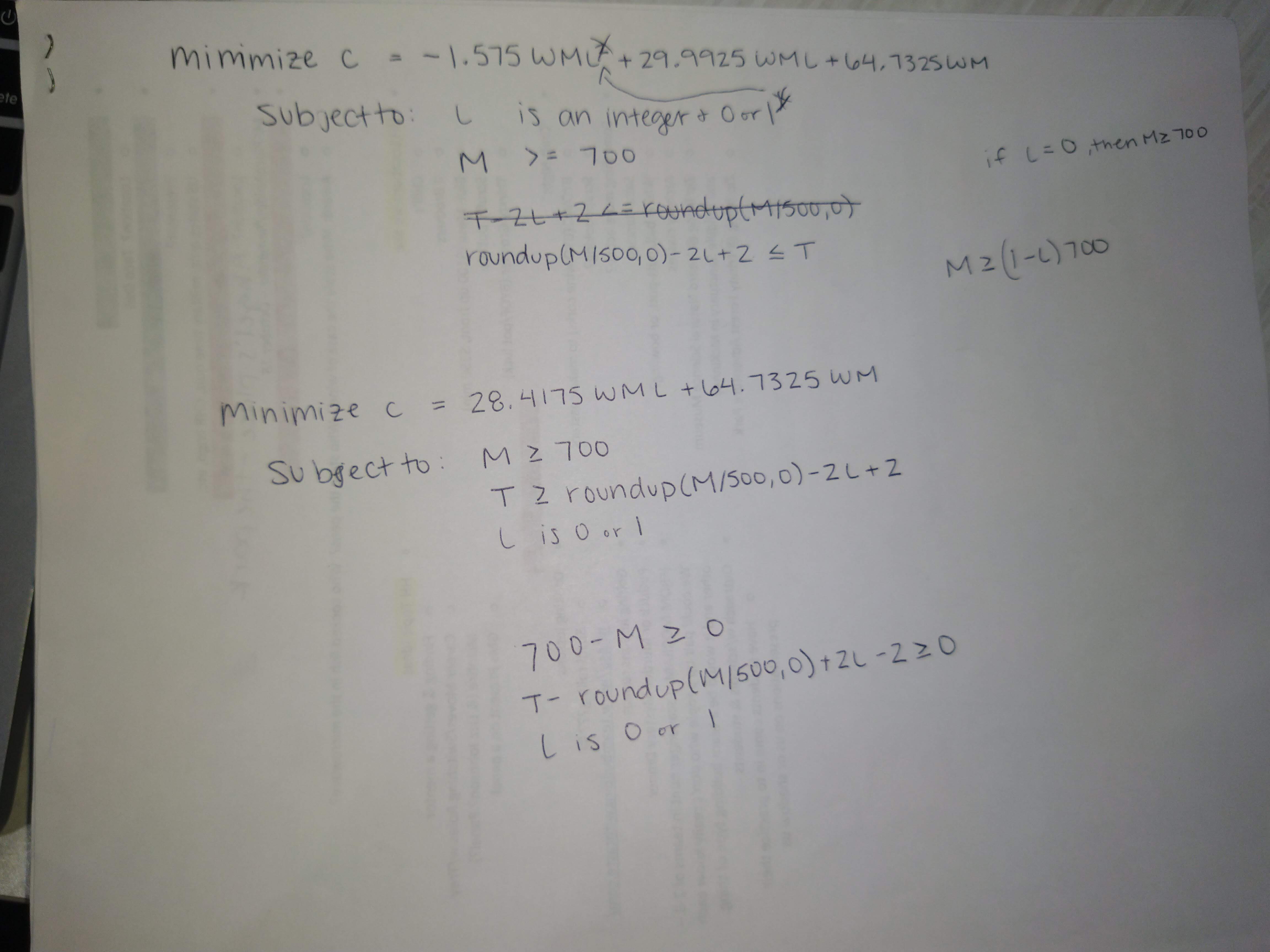
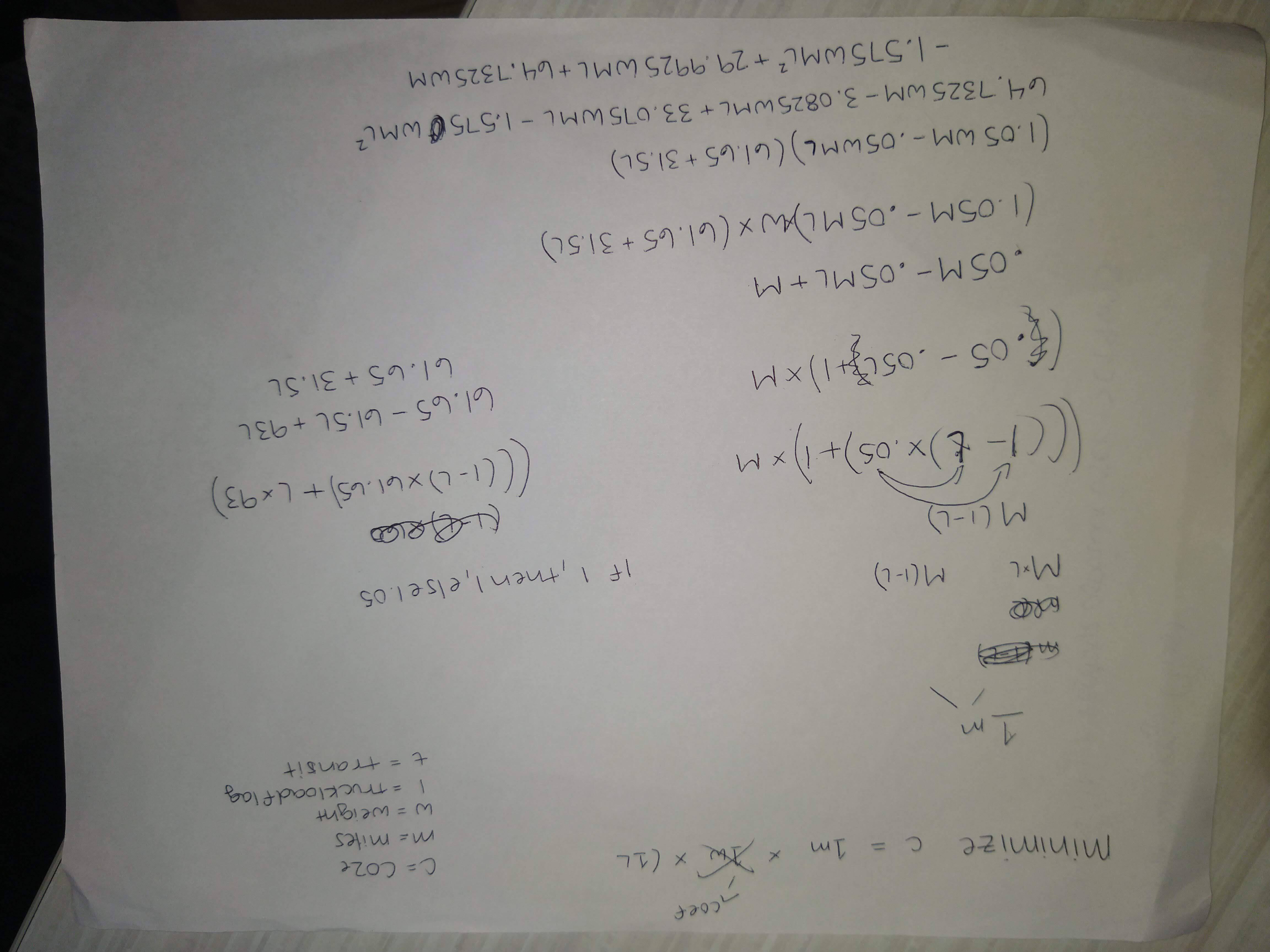
Our largest challenge was figuring out the extensive math behind our python program and figuring out how to convert Excel's Solver into either R or Python. We wrote it all down on many pieces of paper (pictures attached), discussing back and forth how to get it to calculate exactly as we'd expect it to. This part of the process was important to make sure that once we uploaded our math to Python that it optimized the data in the most correct way.
Accomplishments that we're proud of
We're very proud of our optimization function in Python. As previously mentioned, that math took a LOT of brain power and caused us all a headache, so it was a very satisfying feeling to know we finally made it work! We're also super pleased with our final scoring of shipping lanes to show the user where they have the opportunity to make the biggest difference in bettering our environment.
What we learned
As a group, we learned quite a bit from each other. Uzu and Shankar are from computer science backgrounds and Toni is from more of a business and data analytics background. We all utilized our individual expertise in this project; Uzu and Toni worked through the math, Toni focusing more on the data behind it and writing it down on paper and Uzu using his computer science background to translate the handwritten math into Python; Shankar focused on making the website work with the Python program. Overall, we all learned where we can best fit on a team and how to communicate with people from different technical backgrounds.
What's next for Carbon FreightPrint
Our team has many ideas to further expand Carbon FreightPrint. Currently, it is only looking at optimizing full truckload freight into intermodal and this kind of program could eventually include optimization of additional modes; in example, the app could include optimization of less-than-truckload (LTL, i.e. FedEx and UPS) and smaller full truckload (too heavy for LTL, but yet doesn't fill out the full truck), but this kind of addition would take much longer than our 24 hour hackathon! Also, the final results can be taken a step further by showing the user freight spend savings to further incentivize customers to make better choices, as often times the more carbon efficient choice is also the less expensive choice.
Our group plans to continue to work together on this project, eventually selling our machine learning logic to a larger company like C.H. Robinson.


Log in or sign up for Devpost to join the conversation.