-
Capacity
-
Inspiration
This is the first hackathon that we have ever been to, we did not really know what to expect or what to do until we sat down and starting brain storming. Ideas were thrown around until Ruben said to make a game out of LEDs and buttons using the Arduino that he brought from home. This later developed into a memory game pitched by John and refined by Xavier. As we made it over major roadblocks we were able to develop this small game into a console platform in which two more game modes were added that improve the users memory and reflex.
What it does
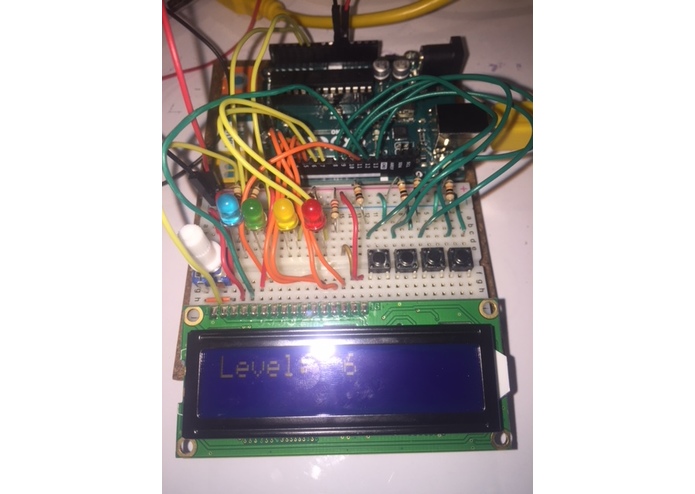
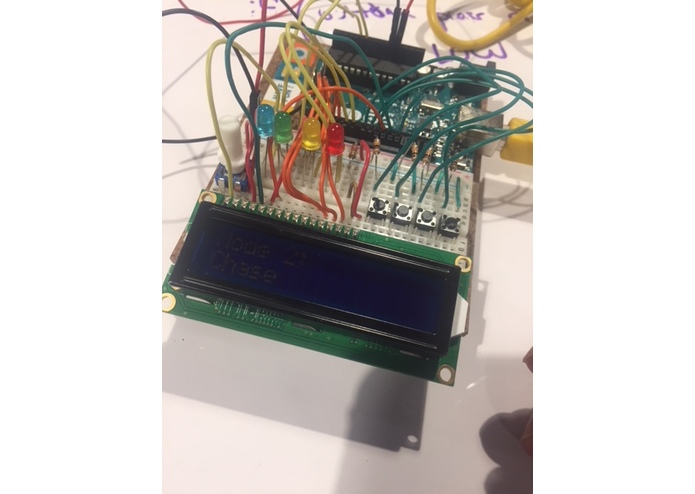
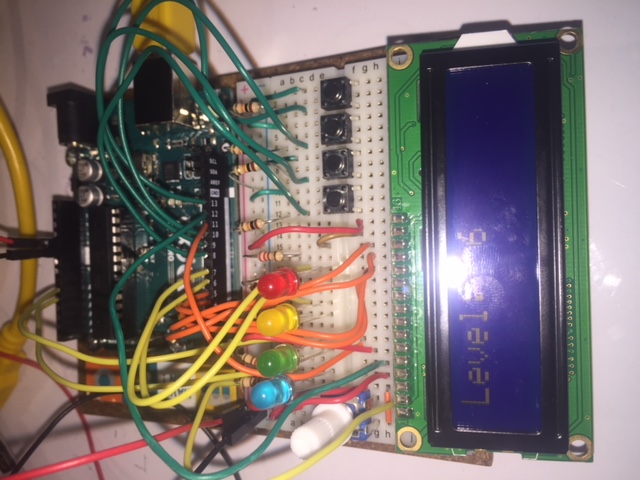
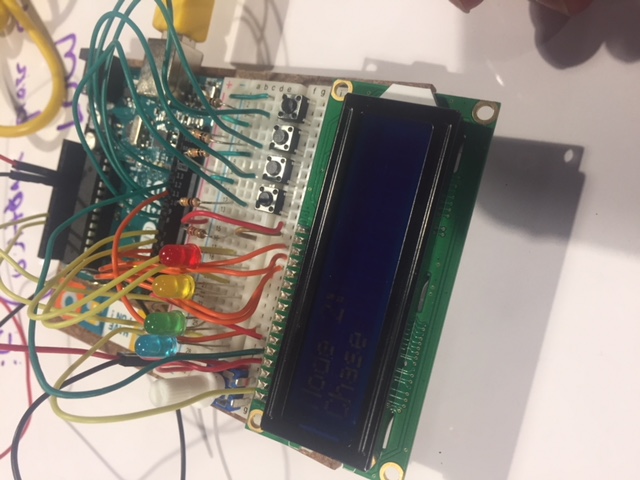
The capacity platform, as we call it, pushes the users memory and reflex through the use of simple mind games that stimulate mental capacity. The first game called Mem Game, lights up LEDs in a sequential order that the user must remember as it continues. The game gets progressively faster and more difficult for the user as it was designed to do. The second game on our platform is called Maze, in this game the user must remember the sequential order of the LED that does not flash in order to continue. The third and final game on our platform is called Chase, because a random LED will light up and the user must press its corresponding button before a timer runs out. This timer is designed to get shorter causing the user to "chase" the LED. All of the games are designed to display random sequences that the user must follow which makes it a mentally stimulating challenge.
How we built it
We started small with the Arduino by programming buttons to turn LEDs on and off and from there we gave the wheel to John, who built the first game with the help of his cohorts. Hardware was programmed and added as needed by Ruben. The software was contributed to by the whole team, Frankie was in charge of chase game, Ruben was in charge of Maze game, and Xavier programmed the LCD with the help of Frankie. We took the design and build process one step at a time, and refined as we progressed.
Challenges we ran into
We went through several roadblocks, one of the main ones was learning to program in the Arduino IDE. It took a lot of trial and error but we eventually were able to come to a solution and from there ran into debugging issues. Another major roadblock we ran into was finding the space on our tiny breadboard to implement the LCD. After that it was just a mess of debugging the hardware which eventually was resolved.
Accomplishments that we're proud of
We are very proud of ourselves as a team, as none of us have never done anything like this before. We are happy with what we produced because of how well we worked as a team. Our final product is a big accomplishment that none of us never thought we would have achieved.
What we learned
We learned many lessons in technology like coding in Arduino and how to interface c++ libraries. We also learned the importance of patience and commitment because of how many problems we had fixing our hardware, and debugging our code. When we showed up, we didn't think we would be making anything as significant as we did and if we hadn't have stayed with it our product would not have been as developed as it is.
What's next for Capacity
In the future, Capacity will be further developed into an affordable brain training application that will be useful for people who struggle to pay attention for long periods of time, or want some extra brain stimulation. It will provide a solution to the issue that many people of this generation face, which is the inability to pay attention for a long period of time. Capacity will serve to be an educational and entertaining tool that will engage users and improve the cognitive functions of their brain.


Log in or sign up for Devpost to join the conversation.