
Inspiration
It’s no secret that the COVID-19 pandemic ruined most of our social lives. ARoom presents an opportunity to boost your morale by supporting you to converse with your immediate neighbors and strangers in a COVID safe environment.
What it does
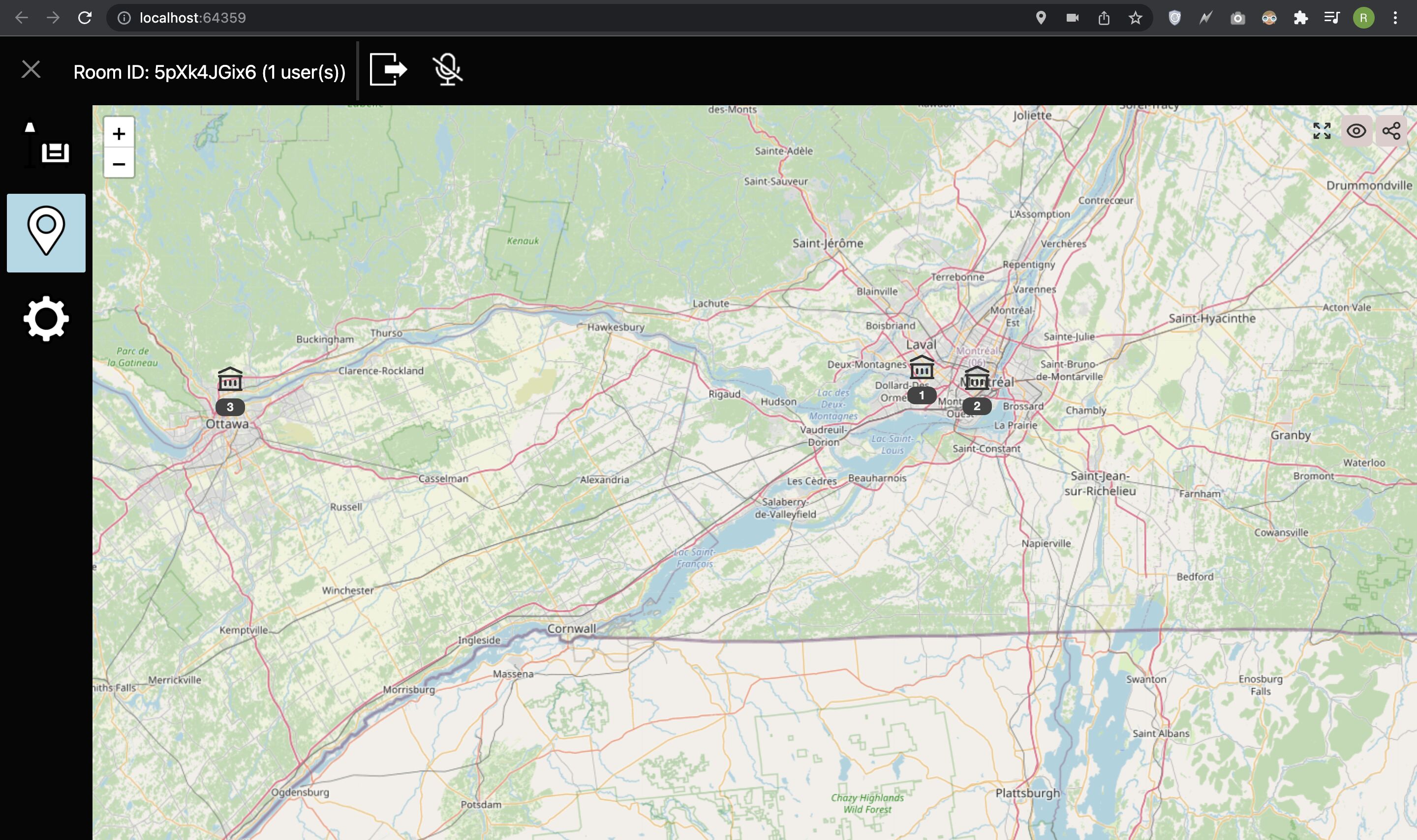
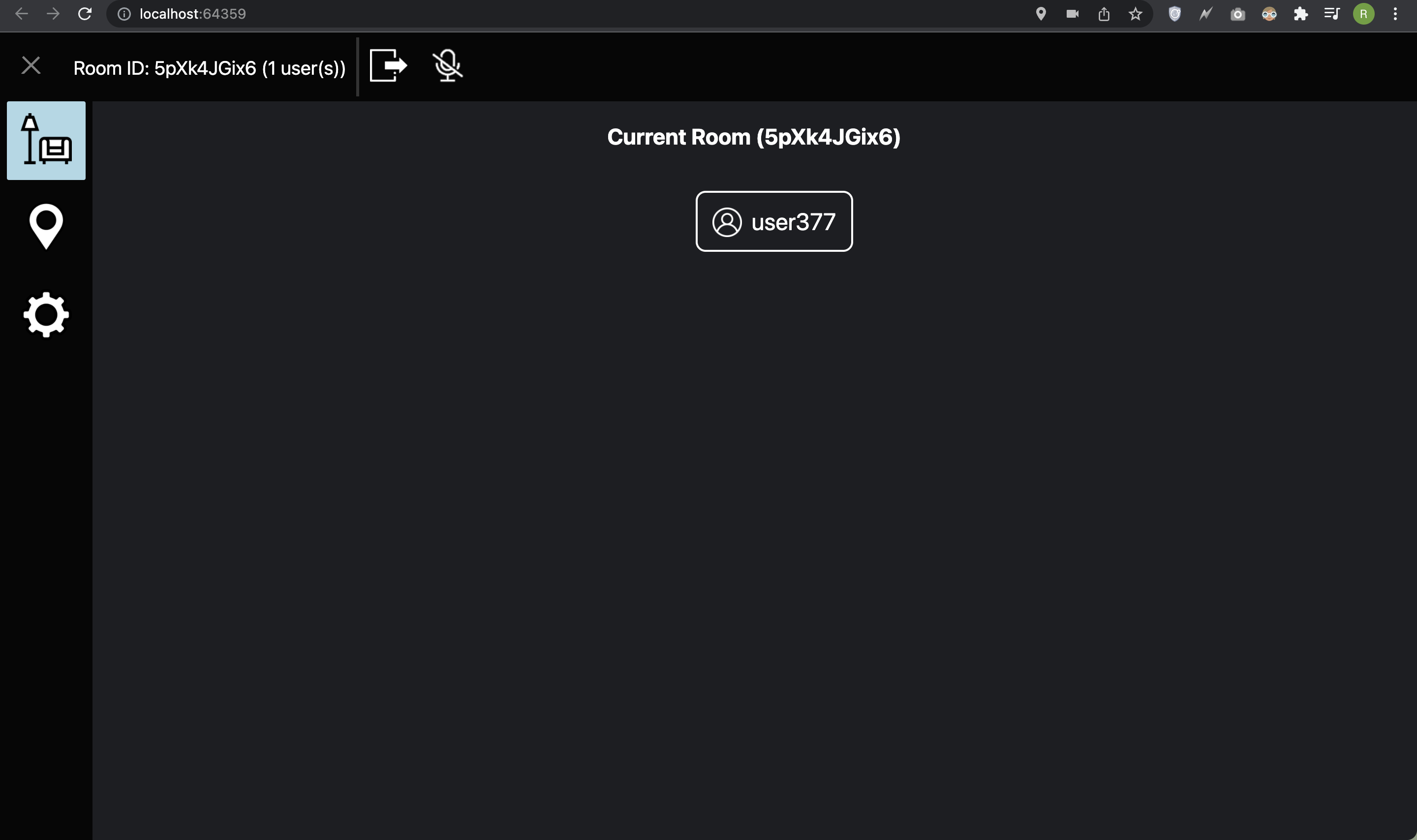
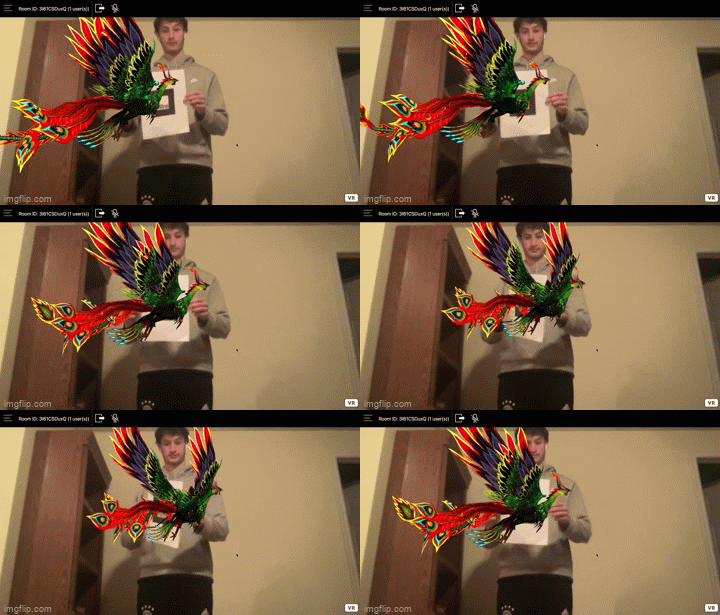
Our app is designed to help you bring your video chat experience to the next level. By connecting to your webcam and microphone, ARoom allows you to chat with people living near you virtually. Coupled with an augmented reality system, our application also allows you to view 3D models and images for more interactivity and fun. Want to chat with new people? Open the map offered by ARoom to discover the other rooms available around you and join one to start chatting!
How we built it
The front-end was created with Svelte, HTML, CSS, and JavaScript. We used Node.js and Express.js to design the backend, constructing our own voice chat API from scratch. We used VS Code’s Live Share plugin to collaborate, as many of us worked on the same files at the same time. We used the A-Frame web framework to implement Augmented Reality and the Leaflet JavaScript library to add a map to the project.
Challenges we ran into
From the start, Svelte and A-Frame were brand new frameworks for every member of the team, so we had to devote a significant portion of time just to learn them. Implementing many of our desired features was a challenge, as our knowledge of the programs simply wasn’t comprehensive enough in the beginning. We encountered our first major problem when trying to implement the AR interactions with 3D models in A-Frame. We couldn’t track the objects on camera without using markers, and adding our most desired feature, interactions with users was simply out of the question. We tried to use MediaPipe to detect the hand’s movements to manipulate the positions of the objects, but after spending all of Friday night working on it we were unsuccessful and ended up changing the trajectory of our project. Our next challenge materialized when we attempted to add a map to our function. We wanted the map to display nearby rooms, and allow users to join any open room within a certain radius. We had difficulties pulling the location of the rooms from other files, as we didn’t understand how Svelte deals with abstraction. We were unable to implement the search radius due to the time limit, but we managed to add our other desired features after an entire day and night of work. We encountered various other difficulties as well, including updating the rooms when new users join, creating and populating icons on the map, and configuring the DNS for our domain.
Accomplishments that we're proud of
Our team is extremely proud of our product, and the effort we’ve put into it. It was ¾ of our members’ first hackathon, and we worked extremely hard to build a complete web application. Although we ran into many challenges, we are extremely happy that we either overcame or found a way to work around every single one. Our product isn’t what we initially set out to create, but we are nonetheless delighted at its usefulness, and the benefit it could bring to society, especially to people whose mental health is suffering due to the pandemic. We are also very proud of our voice chat API, which we built from scratch.
What we learned
Each member of our group has learned a fair bit over the last 36 hours. Using new frameworks, plugins, and other miscellaneous development tools allowed us to acquire heaps of technical knowledge, but we also learned plenty about more soft topics, like hackathons and collaboration. From having to change the direction of our project nearly 24 hours into the event, we learned that it’s important to clearly define objectives at the beginning of an event. We learned that communication and proper documentation is essential, as it can take hours to complete the simplest task when it involves integrating multiple files that several different people have worked on. Using Svelte, Leaflet, GitHub, and Node.js solidified many of our hard skills, but the most important lessons learned were of the other variety.
What's next for ARoom
Now that we have a finished, complete, usable product, we would like to add several features that were forced to remain in the backlog this weekend. We plan on changing the map to show a much more general location for each room, for safety reasons. We will also prevent users from joining rooms more than an arbitrary distance away from their current location, to promote a more of a friendly neighborhood vibe on the platform. Adding a video and text chat, integrating Google’s Translation API, and creating a settings page are also on the horizon.
Built With
- a-frame
- css
- express.js
- github
- google-cloud
- html
- javascript
- leaflet.js
- mapbox
- node.js
- svelte
- vs-code


Log in or sign up for Devpost to join the conversation.