-
-
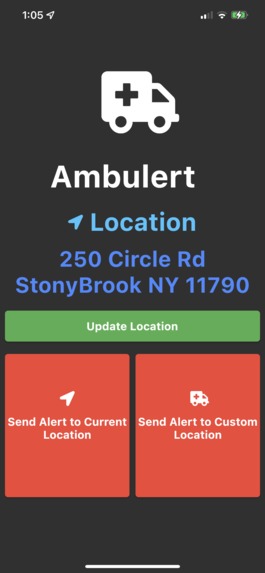
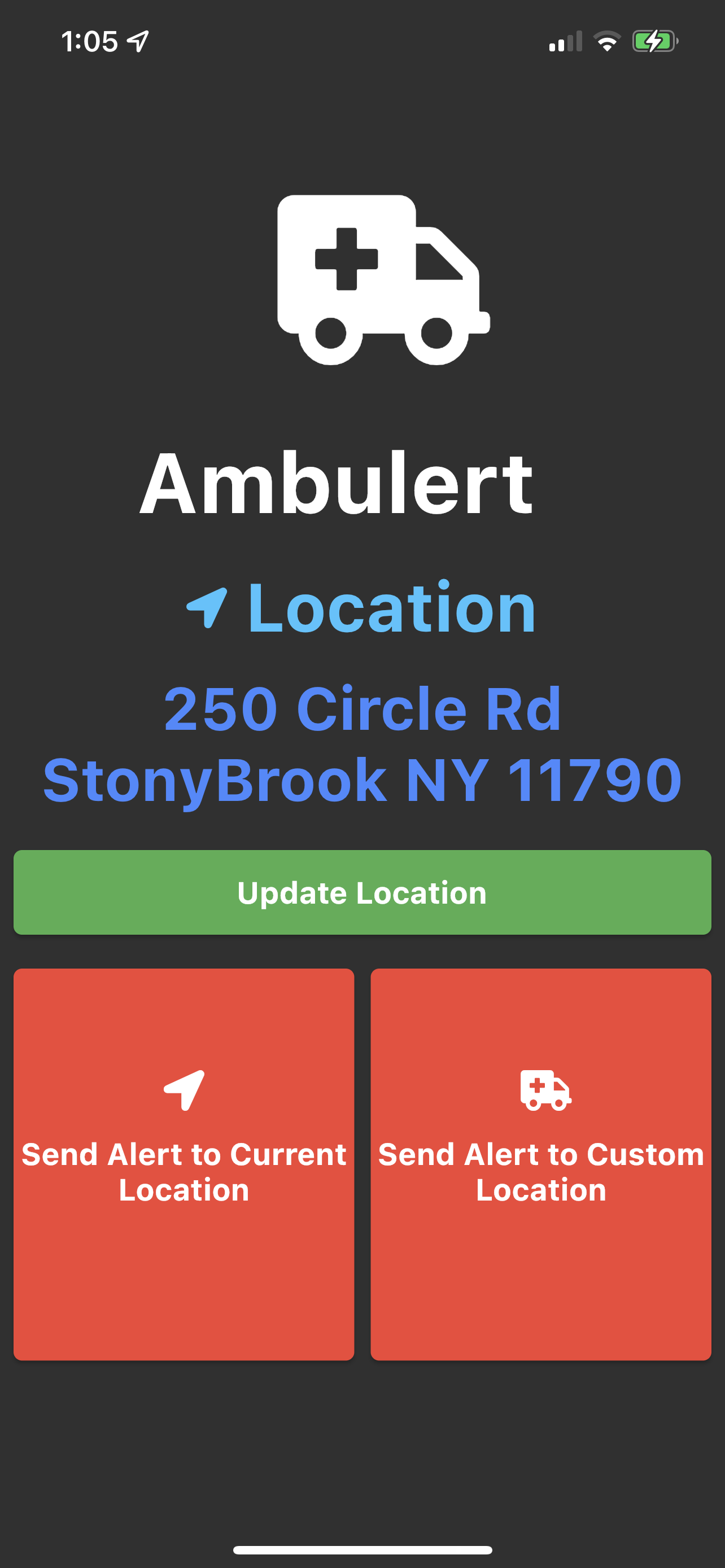
Main Screen
-
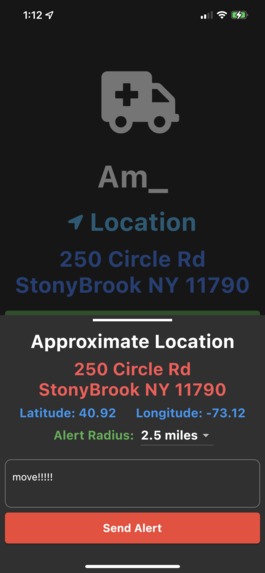
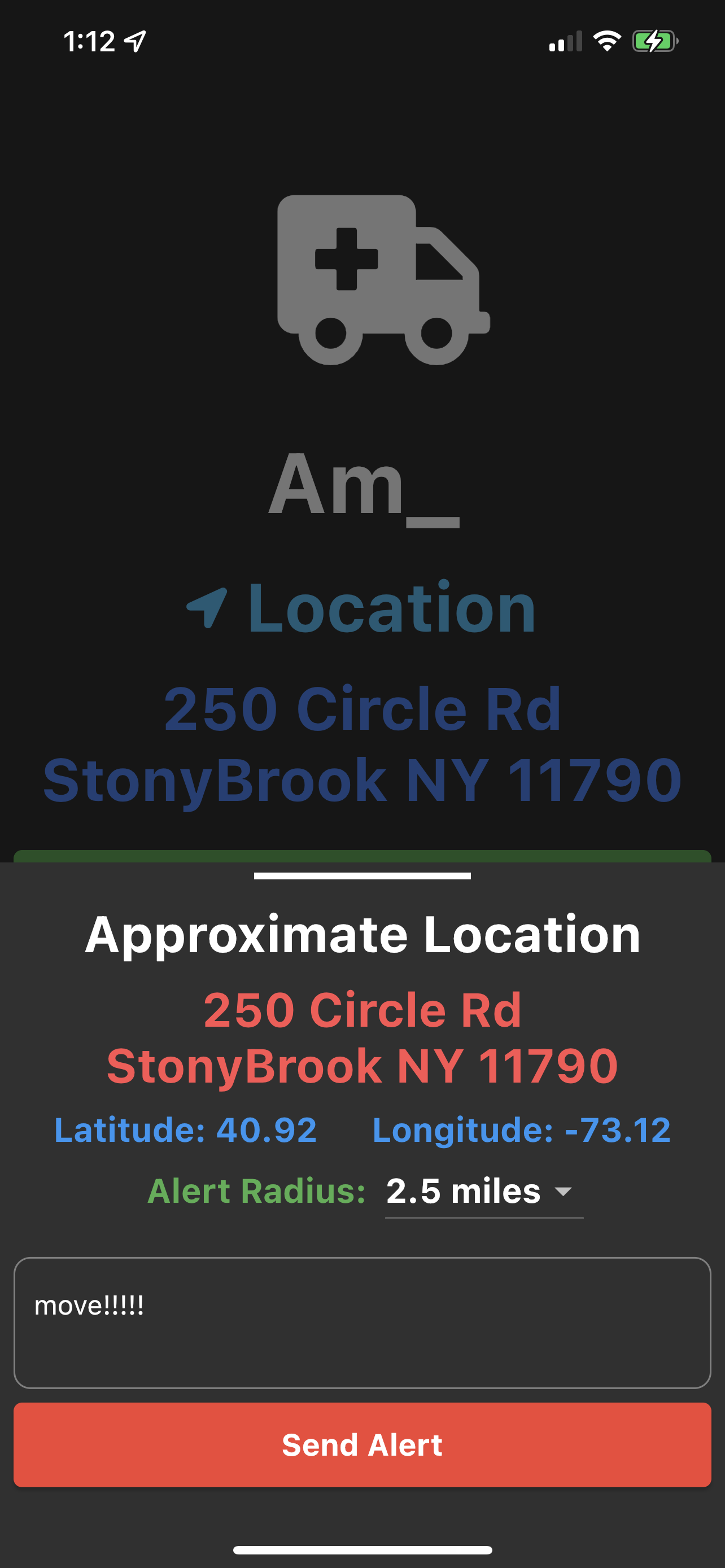
sending alerts to current location
-
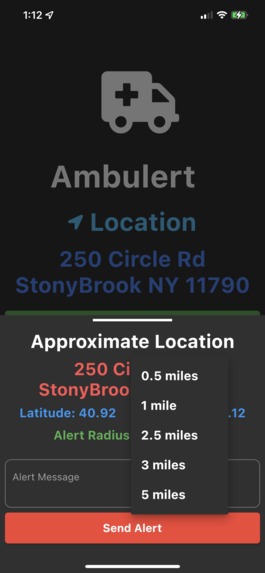
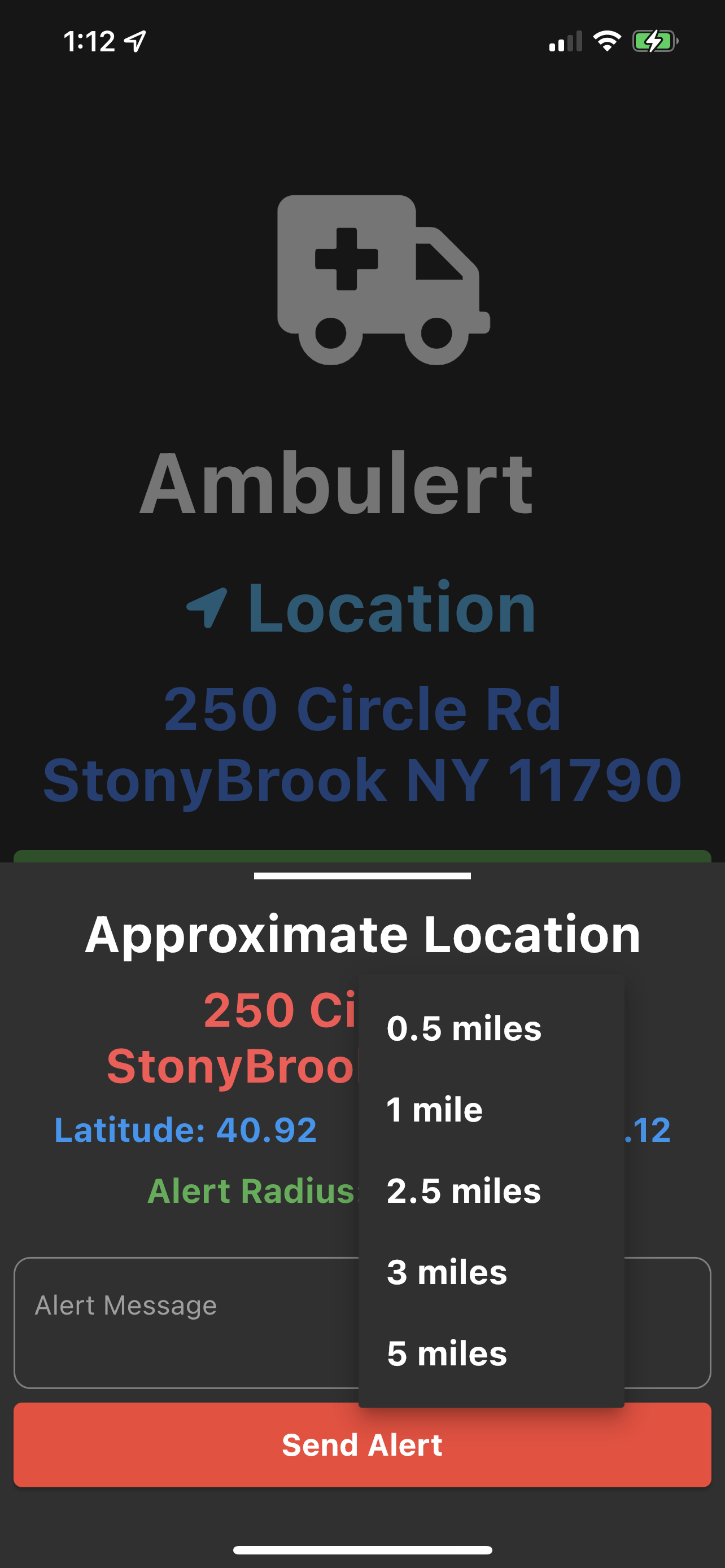
setting radius for alert notification
-
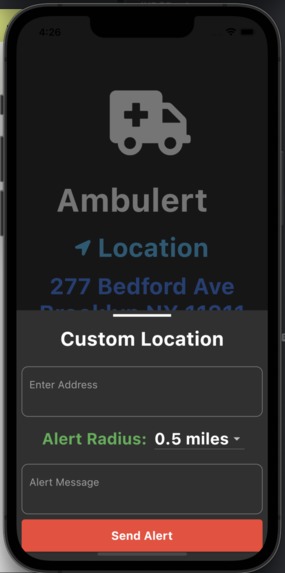
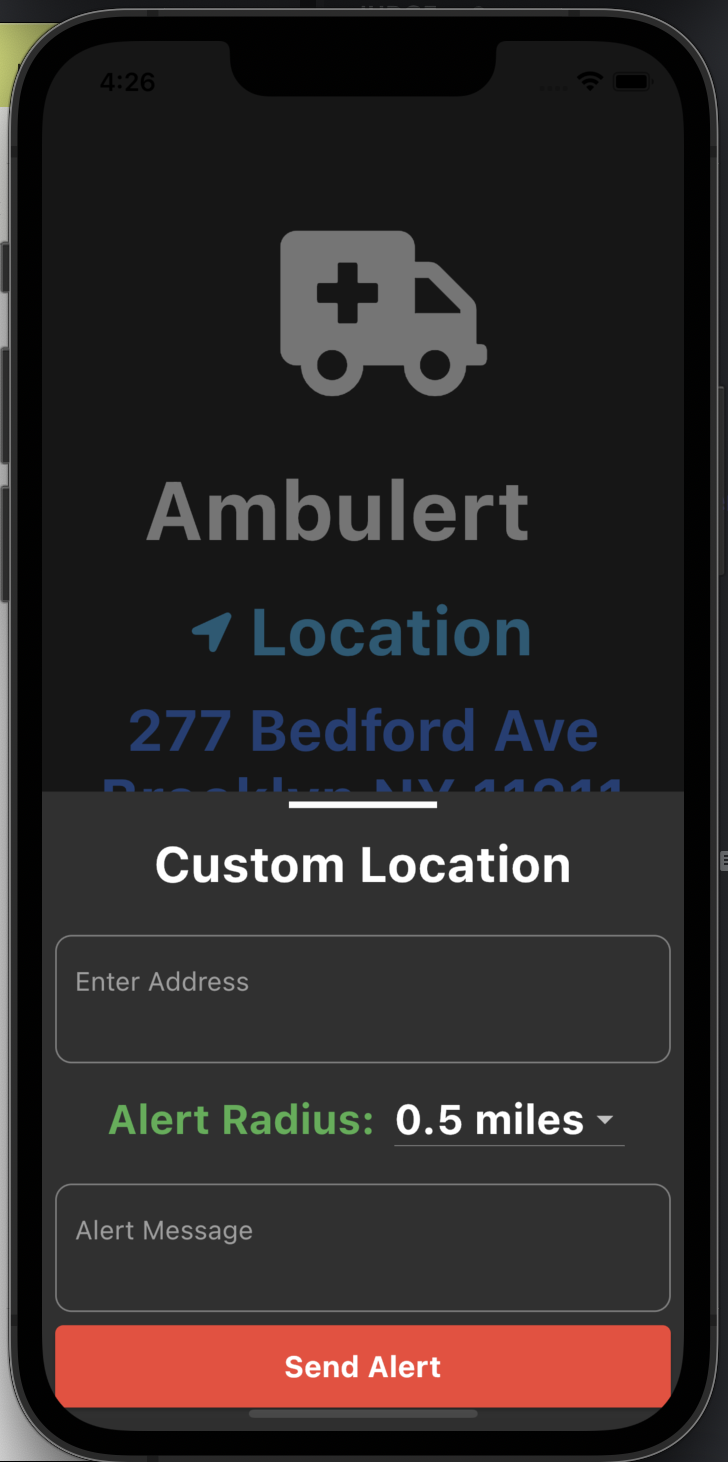
sending alerts to custom location
Inspiration
Ambulances sometimes cannot get to emergencies fast enough. Often, the reason first responders are unable to get to a hospital on time is because of traffic jams. Ambulert aims to tackle that issue by creating a system for emergency service vehicles to avoid traffic altogether.
What it does
Ambulert takes the form of a mobile application that allows emergency service vehicles to alert drivers that an emergency vehicle such as a fire truck or ambulance is approaching. That way, drivers can make way for the ambulance which results in ambulances arriving faster to emergencies.
How we built it
The mobile application was developed using Flutter. The Twilio API is used to simulate sending alerts via SMS, and the Google Maps API was used to collect a user's address through reverse geocoding.
Challenges we ran into
The challenges we ran into were learning how to use and integrate the Google Maps API and the Twilio API into our application.
Accomplishments that we're proud of
Creating a functioning mobile application that can be run on both IOS and Android with a simple, yet elegant design.
What we learned
From this application, we learned how to use Twilio's API to send text messages and how to use Google Maps API to reverse geocode to collect a user's data.
What's next for Ambulert
Ambulert looks to improve its technology in the way that it can notify drivers safely and add more functionality such that EMS operators can use it at ease.
Built With
- dart
- flutter


Log in or sign up for Devpost to join the conversation.