-
-
-
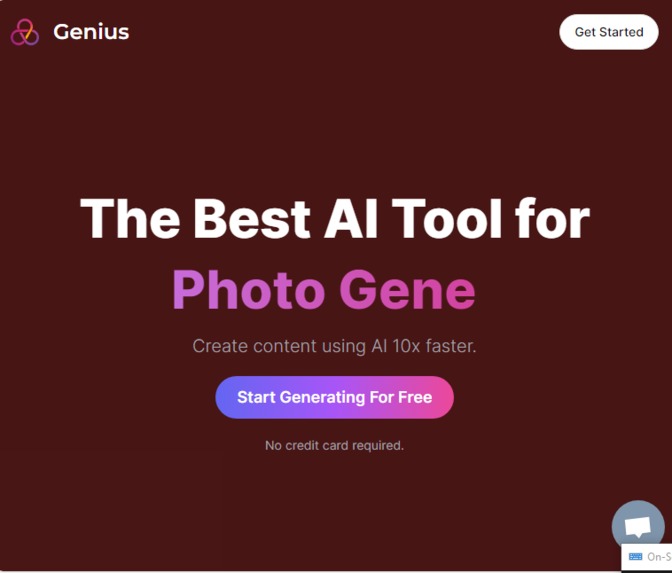
home page
-
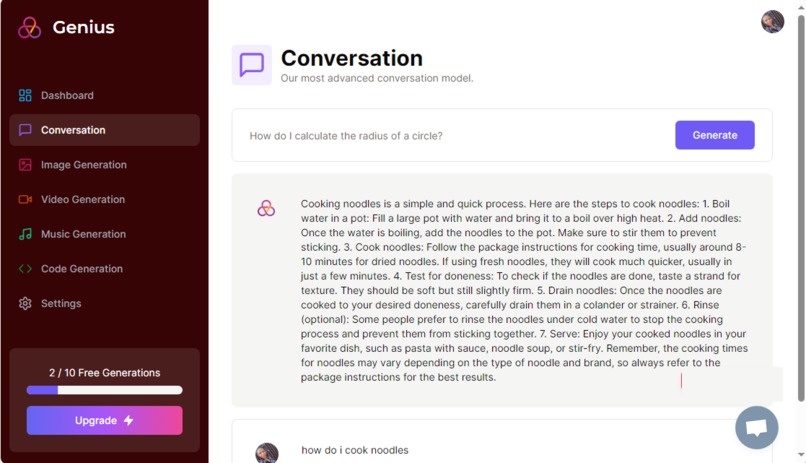
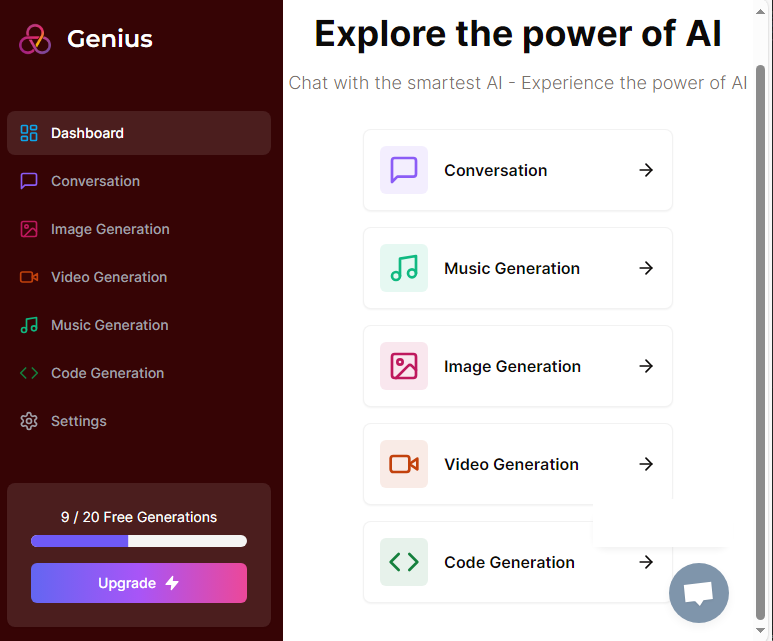
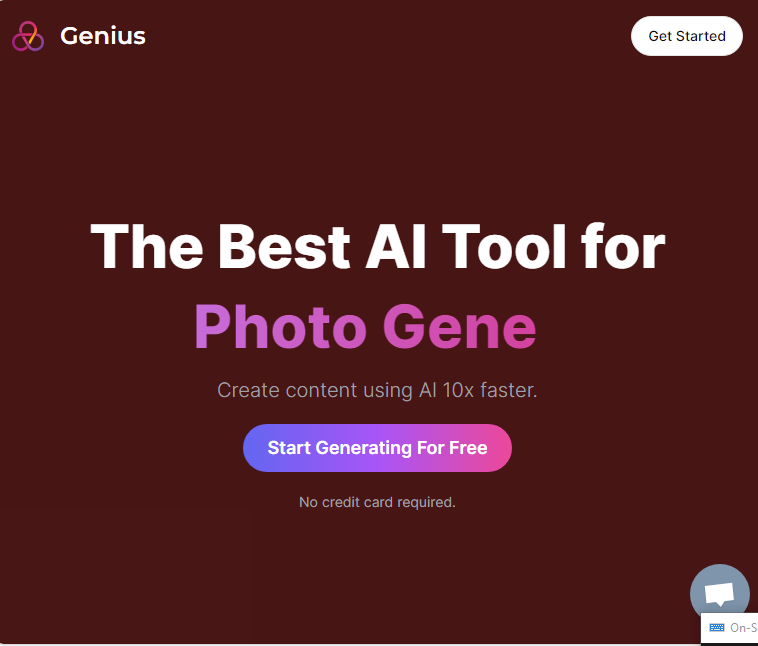
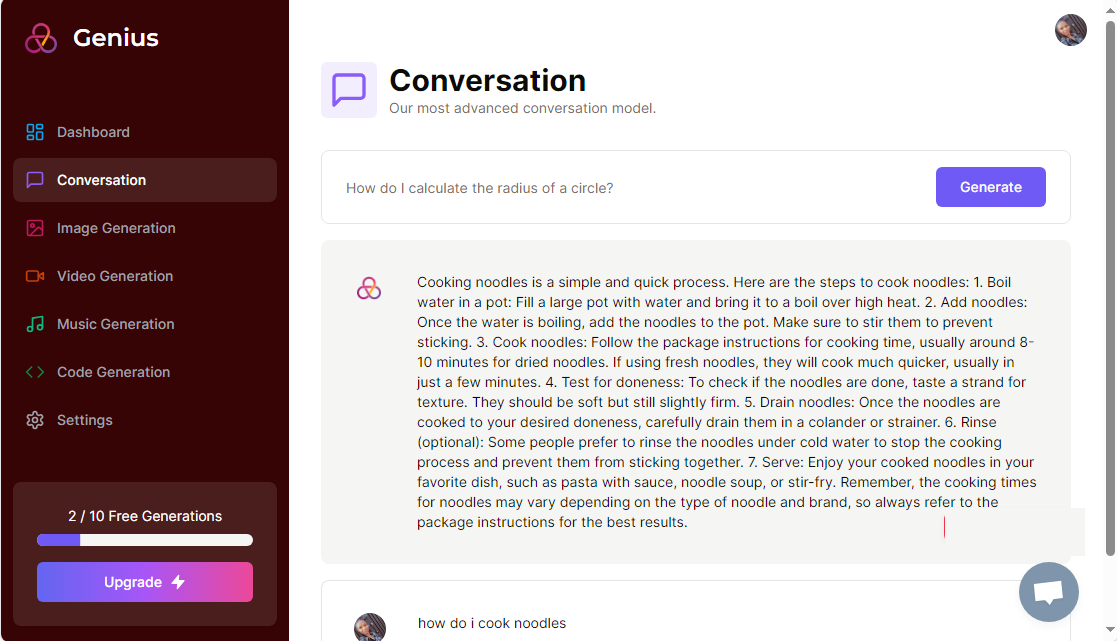
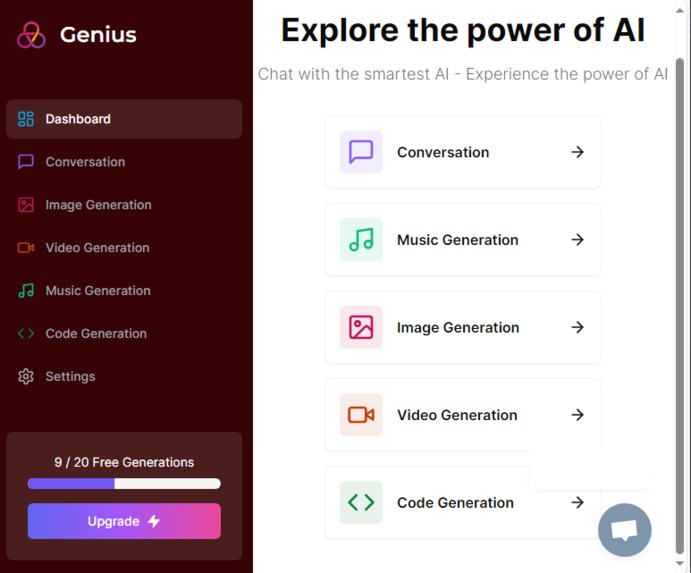
Genius - The Ultimate AI Creative Companion
Inspiration: The inspiration behind "Genius" stems from a deep fascination with the potential of artificial intelligence to augment human creativity across various domains. Drawing inspiration from the groundbreaking work of OpenAI in natural language processing and code generation, I envisioned a comprehensive platform that seamlessly integrates chat, code generation, music composition, and video synthesis capabilities. The aim was to provide users with a powerful tool that not only assists in creative endeavors but also inspires new possibilities through AI-driven innovation.
What I Learned: Developing Genius provided me with invaluable insights into the intricacies of AI-driven creativity tools and the challenges associated with integrating multiple functionalities. I deepened my understanding of OpenAI's API capabilities, explored novel approaches to music generation and video synthesis, and honed my skills in user experience design to create a seamless and intuitive interface. Moreover, I gained a profound appreciation for the ethical considerations involved in deploying AI systems for creative purposes, including issues related to bias, privacy, and content ownership.
Building the Project: The development of Genius involved a combination of leveraging OpenAI's API for chat and code generation while replicating AI models for music and video synthesis.
Chat and Code (OpenAI API): For the chat functionality, I integrated OpenAI's state-of-the-art natural language processing models, enabling Genius to engage in contextually relevant conversations with users. Additionally, I utilized OpenAI's code generation API to provide users with code snippets, suggestions, and solutions for programming tasks, thereby serving as a valuable coding companion.
Music (Replicated AI Model): To replicate AI capabilities for music generation, I employed deep learning techniques such as recurrent neural networks and transformer architectures. By training on diverse datasets of musical compositions, the AI model within Genius is capable of generating original melodies, harmonies, and rhythms, tailored to the user's preferences and input.
Video (Replicated AI Model): Similarly, for video synthesis, I developed AI models based on computer vision algorithms and generative adversarial networks. These models analyze scene compositions and generate visually stunning video sequences, incorporating user preferences and creative inputs to produce captivating visual content.
Challenges Faced: Building Genius presented several challenges, particularly in replicating AI models for music and video synthesis:
Model Training and Optimization: Training AI models for music and video generation required substantial computational resources and meticulous optimization to achieve satisfactory results in terms of creativity, coherence, and realism.
Data Acquisition and Preprocessing: Acquiring diverse and high-quality datasets for training the replicated AI models posed challenges, especially in ensuring sufficient diversity across musical genres and visual styles.
Algorithm Complexity: Developing AI models for music and video synthesis involved navigating the complexities of deep learning architectures and optimizing algorithms for efficient inference and generation.
Integration and Performance: Integrating multiple AI functionalities into a cohesive platform required careful attention to system architecture, API integration, and performance optimization to ensure seamless user experience and responsiveness.
Despite these challenges, the development of Genius represents a significant achievement in the realm of AI-driven creativity tools. By overcoming technical hurdles and embracing a user-centric approach, Genius empowers users to explore their creative instincts and unlock new possibilities with the assistance of artificial intelligence.


Log in or sign up for Devpost to join the conversation.